
Worldbuilding Themes
Frontier and Lawless Zones
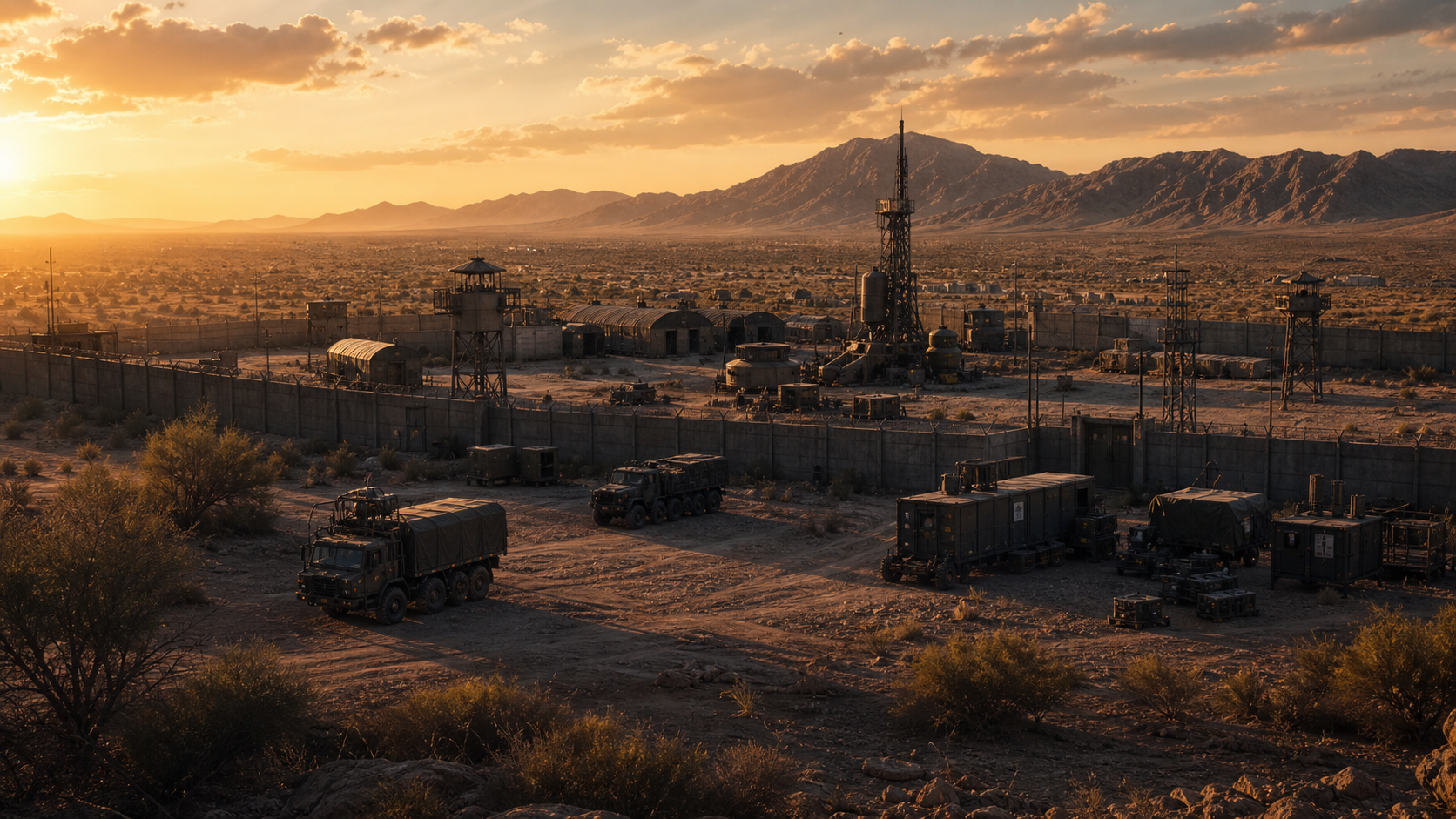
The frontier and lawless zones are the territories beyond routine Allied States control in the postwar Extinction Cycle. They include abandoned cities, ruined suburbs, remote farms, old military sites, tunnels, industrial corridors, damaged western regions, and rural areas too large or dangerous for permanent patrol. Some are nearly empty. Others contain Variants, independent survivors, homesteaders, raiders, prisoners, collaborators, laboratories, or organized New Gods forces.
Quick Facts
- Role
- Worldbuilding Themes
Overview
The term describes a condition of limited governance rather than a single legal district or fixed border. A road may be secure while an adjoining town remains unsearched. A former city may contain one defended human block, multiple Variant lairs, and infrastructure claimed by nobody. An outpost patrol can temporarily control an area without being able to settle or supply it. Boundaries therefore change with intelligence, weather, transport, migration, and military activity.
These zones define the central strategic dispute of Dark Age. General Mark Cornelius and the Freedom Party argue that leaving former cities and national territory outside control allows enemies to grow and abandons survivors. President Jan Ringgold and Dan Lemke argue that a near-extinct population cannot afford mass reclamation campaigns built on uncertain intelligence. Team Ghost represents the limited-penetration alternative, entering the frontier to investigate threats and rescue people without attempting permanent occupation.
The rise of the New Gods proves the frontier contains more than scattered remnants. Azrael's order develops laboratories, captive systems, collaborators, aircraft, ships, specialized forms, and living webbing beyond the outpost network's effective sight. The discovery does not make every lawless resident an enemy or every city suitable for bombardment. It makes discrimination between populations more important.
Topic information
- Field: Type; Detail: Geographic, political, and social worldbuilding category
- Field: Primary era; Detail: Postwar reconstruction and Dark Age
- Field: Relationship to Allied States; Detail: Outside continuous government control, though subject to patrols, claims, missions, or temporary occupation
- Field: Common terrain; Detail: Abandoned cities, suburbs, tunnels, roads, rural land, former bases, industrial sites, western regions, coastal ruins
- Field: Known inhabitants; Detail: Independent survivors, homesteaders, scavengers, raiders, collaborators, prisoners, Variants, Alphas, Scions, Chimeras, Thralls
- Field: Principal government force; Detail: Team Ghost and other targeted units
- Field: Principal political dispute; Detail: Whether to reclaim territory through conscription and mass force or retain defended outposts and selective missions
- Field: Strategic resources; Detail: Fuel, machinery, weapons, archives, hospitals, ports, farms, laboratories, rail lines, housing
- Field: Principal risks; Detail: Concealed enemy populations, false intelligence, ambush, contamination, civilian casualties, inability to hold cleared ground
- Field: Status; Detail: Remains contested after the New Gods war; no complete national reclamation is documented
Formation of the frontier
The frontier begins during the outbreak when governments lose the ability to distinguish controlled territory from places merely crossed by surviving units. Operation Liberty demonstrates that a map marked as friendly, cleared, or lightly infected can conceal enormous populations in buildings, subways, tunnels, and dormant clusters. Air observation records surfaces, while the enemy uses depth and shelter.
Operation Extinction and later countermeasures reduce Variant numbers, allowing survivors to consolidate. They do not repair bridges, restore utilities, remove every body, inspect every structure, or recreate local government. The result is a patchwork. A safe zone can be defended within kilometers of a ruined city that nobody can occupy. A naval patrol can control water beside a coastline full of abandoned buildings.
The Republic of Texas crisis adds human lawlessness. Armed movements can capture safe-zone or fleet assets and present secession as legitimate authority. Raiders and local strongmen exploit supply gaps. Some settlements refuse outside government because they fear conscription, resource seizure, or another failed command.
Over eight years, the Allied States secures a network rather than the entire former country. Restored regions become connected through outposts and transport. Areas beyond that network are described collectively as frontier or lawless because the government cannot guarantee protection, enforce decisions consistently, or maintain a permanent presence.
Abandoned cities
Cities are the most visible frontier because they combine symbolic value with extreme tactical risk. New York, Chicago, Los Angeles, Baltimore, and other metropolitan ruins contain towers, apartments, hospitals, warehouses, sewers, subways, tunnels, bridges, and utility corridors. Every layer can shelter Variants or people who do not appear in aerial surveillance.
The original war establishes a recurring pattern. Heavy weapons can destroy surface structures and kill exposed hordes, but they may drive enemies underground or collapse access to prisoners and evidence. A building cleared once can be reoccupied. A city entered for one objective may require thousands of personnel to hold.
Abandoned cities contain resources that outposts need. Medical equipment, generators, machine tools, vehicles, fuel, archives, weapons, and communications hardware cannot always be manufactured. Salvage teams therefore enter territory the government does not intend to reclaim immediately. Every recovery mission becomes a balance between the value of one item and the personnel, fuel, and ammunition required to retrieve it.
Cities also contain memory. Survivors may have homes, graves, family histories, or civic identities tied to them. The Freedom Party's promise of reclamation speaks to people who regard abandonment as a second loss. Ringgold's caution can sound like acceptance that the old world will never return, even when it is based on military reality.
Rural and suburban zones
Lawlessness is not limited to dramatic urban ruins. Suburbs contain houses, schools, shopping centers, drainage systems, and scattered supplies spread across wide areas. Low density makes permanent patrol expensive and provides many concealed approaches to an outpost route.
Rural land can support homesteaders who survive through distance, hunting, agriculture, and local knowledge. It can also support raiders, hidden laboratories, or Variant groups beyond ordinary surveillance. Farms are attractive because they combine food, animals, wells, fuel, and shelter.
The wounded outsider associated with the Turkey River crisis illustrates frontier ambiguity. A stranger approaching a defended community may be a warning messenger, infected victim, raider, coerced bait, or collaborator. Guards have seconds to decide whether opening a gate saves the settlement or exposes it.
Terrain further complicates control. Forest, mountains, snow, marsh, collapsed roads, and abandoned rail lines interfere with sensors and response times. A patrol may report no contact because the area is empty or because an organized enemy allowed it to pass.
Former military and scientific sites
Old bases and laboratories are especially dangerous because they may contain weapons, pathogens, archives, secure underground areas, and generators that outlast ordinary civilian infrastructure. The Greenland facility in Extinction Lost shows how a government research site can remain a strategic threat after its original command disappears.
Within the United States, abandoned facilities carry the legacy of VX-99 and the institutional culture that created it. Survivors cannot assume a sealed room is harmless. It may contain viable samples, infected personnel, automated systems, or records needed to understand a later mutation.
The New Gods exploit this inheritance. Dr. Murphy's transformation work, captive laboratories, and webbing research demonstrate that enemy organizations can reuse human science rather than developing everything independently. Collaborators provide the hands needed to operate equipment and maintain prisoners.
Destroying such a site may prevent reuse but eliminate evidence or release biological material. Recovering it may cost lives and create another containment problem. Frontier doctrine therefore requires scientific authority alongside military command.
Independent survivors and homesteaders
Not every person beyond the outposts is lawless in the sense of criminality. Some survivors never receive trustworthy contact. Others choose independence after seeing military and government failures. Some live in family farms or small settlements that have survived through their own rules and may reasonably distrust outsiders asking for registration, resources, or allegiance.
Independent communities create a political obligation the Allied States cannot satisfy through maps alone. If the government bombs a suspected Variant site, hidden civilians may die. If it orders evacuation without providing housing and food, the order may amount to displacement. If it ignores the area, residents remain vulnerable to raiders and the New Gods.
Contact therefore requires quarantine, identity checking, negotiation, and respect for local knowledge. A person who has survived years outside the network may understand terrain and enemy patterns better than an arriving patrol. That same person may conceal crimes, infection, or collaborator ties.
The existence of free homesteaders also tests the Allied States' claim to legitimacy. Membership cannot mean automatic subordination to distant officials. Ringgold's political model depends on communities believing alliance offers protection and exchange worth the obligations it imposes.
Raiders, bandits, and local powers
Raiders exploit the frontier because stored food and equipment are easier to seize than produce. They can observe harvest cycles, patrol gaps, and transport routes. A successful attack may leave few witnesses, making it difficult to distinguish human theft from Variant predation.
Not every armed group has the same motives. Some are organized criminals. Others are hungry families using violence. Former soldiers may create local commands after losing contact with lawful authority. Political movements can move between rebellion and banditry depending on whom they target and what authority they claim.
This variety matters tactically. A raider may surrender, negotiate, defect, or provide intelligence. An ideologically committed collaborator may prefer death to betraying the New Gods. Treating every armed outsider as identical wastes opportunities and increases civilian casualties.
The frontier allows local power to persist because enforcement is intermittent. Team Ghost can destroy a camp, but unless another authority follows, the vacuum may be filled by the next group with weapons.
Human collaborators
Collaborators are more strategically dangerous than ordinary raiders because they connect human systems to Variant or New Gods command. They can drive vehicles, operate radios, open doors, interpret documents, maintain aircraft, manage prisoners, and approach outposts without immediately appearing infected.
Motives vary. Some collaborators seek protection within the new hierarchy. Others are coerced through threats to family or bodily transformation. Some are conditioned or broken by captivity. The category describes conduct, not a complete moral biography.
Their presence turns trust into a security problem. A rescued prisoner may also be an infiltrator. A familiar uniform may conceal changed loyalty. A supply convoy can carry people who understand exactly which gate, clinic, or communications room to target.
The New Gods scale their power through such people. Altered bodies provide strength and biological advantages; collaborators provide fine manipulation of the old world's tools. Together they create an enemy state capable of more than direct assault.
Variant populations and regional forms
Frontier Variants are not one homogeneous remnant. Early Alphas can command local packs and preserve captives. Environmental forms develop gills, fur, wings, armor, or other traits. Dark Age adds Scions, Chimeras, Thralls, masterminds, and other controlled or engineered categories.
Variant evolution describes changes in anatomy and behavior. The webbing network describes living communication and control infrastructure. Azrael's ideology assigns religious and political meaning to transformation. A creature can be evolved without belonging to the New Gods, and webbing can connect a hierarchy whose categories have distinct functions.
The frontier provides the space in which these systems develop unseen. Abandoned tunnels and cities shelter nests. Remote laboratories support experimentation. Captives supply labor, information, and bodies. Human patrols may observe only isolated contacts while a larger network remains below or beyond them.
Team Ghost and limited-penetration doctrine
Under Fitz, Team Ghost is the principal Allied States force for frontier missions. It investigates missing communities, hunts confirmed threats, and rescues prisoners. Rico, Dohi, Tanaka, Stevenson, and later operators provide tracking, reconnaissance, heavy weapons, and local decision-making within a small formation.
The doctrine emphasizes specific objectives rather than territorial conquest. A team can travel quietly, distinguish a captive from a target, collect samples, and leave before a larger horde arrives. The method protects the general population from mass mobilization and limits the number exposed on any mission.
Its limitations are severe. Team Ghost cannot be everywhere. Operators age, accumulate injuries, and die. A small team cannot hold a city after destroying one enemy site. It also depends on intelligence accurate enough to define the objective before insertion.
Eight years of frontier work give Team Ghost the best available sense that Variant behavior is changing. Those observations become early warnings when outposts fall. The team's survival knowledge is one reason the Allied States can respond at all when the New Gods emerge.
New Gods infrastructure beyond the walls
The New Gods turn the frontier from unmanaged space into concealed enemy depth. Their system includes webbing, transformed ranks, collaborators, laboratories, prisoners, strongholds, aircraft, and maritime capability. The full network is larger than patrol reports suggest because it uses forms of communication human signals intelligence does not initially detect.
Webbing functions as living infrastructure. It can carry biological information and connect nodes without relying on ordinary radio towers or wires. Scientists such as Kate Lovato, Dr. Jeff Carr, and Sammy Tibalt become essential because destroying individual fighters does not necessarily disrupt the system directing them.
Azrael adds ideology. He presents altered bodies as a successor species and ordinary humans as obsolete. Frontier captivity becomes recruitment, labor control, experimentation, and public terror. A prisoner is not only food. The person may be transformed, used against relatives, forced to operate equipment, or displayed as proof that lawful government cannot protect anyone.
The discovery confirms that nonoccupation has risks. It does not prove a mass army would have detected the network sooner. A larger force operating without biological understanding might have entered connected strongholds and suffered the same fate on a greater scale.
Conscription and frontier-city politics
Cornelius and the Freedom Party frame frontier reclamation as national survival. Their proposed draft covers men and women from eighteen through thirty and would provide manpower for campaigns beyond the outpost system. Supporters see defended enclaves as temporary measures that have hardened into permanent retreat.
Ringgold and Lemke emphasize demographic fragility and the precedent of Operation Liberty. Every recruit is also a worker, caregiver, specialist, or potential parent. An army that clears a city but destroys the generation needed to inhabit it has not restored the country.
The New Gods war makes both arguments harder. Cornelius is correct that organized danger has grown in neglected spaces. Ringgold is correct that intelligence, science, and legitimate command determine whether force protects or wastes human life.
After Galveston, Reed and Cornelius move toward coalition. Their cooperation suggests a frontier policy combining stronger action with limits inherited from Ringgold. It does not establish universal bombardment, compulsory relocation, or enactment of the original draft proposal.
Law, sovereignty, and civilian protection
Calling a region lawless describes the government's reach, not the moral worth of everyone inside it. The Allied States cannot assume that former national boundaries automatically authorize any action. People who survived independently have claims to homes, property, community decisions, and bodily autonomy even when no court can enforce them immediately.
Military necessity can conflict with those claims. A webbing node near a settlement may threaten thousands. A laboratory may contain a pathogen that cannot be left intact.
Prisoners are central to this doctrine. Repeated lair discoveries prove that enemy-held territory may contain living humans. Bombing, fire, or biological countermeasures must account for them. Rescue is not an optional sentimental addition to strategy. It is evidence that the Allied States still recognizes people beyond its walls as part of the human community.
Narrative significance
The frontier is where the old world, rebuilt society, and possible future overlap. Ruins contain tools and memories needed by the outposts. They also contain the mistakes, enemies, and unresolved political claims that reconstruction cannot simply wall away.
The category prevents the postwar map from becoming falsely binary. Territory is not either fully Allied States or empty enemy land. It can be inhabited, contested, seasonally accessible, nominally claimed, scientifically hazardous, or controlled only at certain times of day.
The frontier also externalizes the characters' trauma. Reed, Fitz, Horn, Kate, and the next generation live within communities that appear stable, while the spaces beyond them hold the unfinished war. Dark Age begins when that separation fails and the hidden world crosses the walls.
Connections
- Outpost system: Defended network whose limited reach creates the frontier category.
- Team Ghost: Primary targeted force entering lawless zones for reconnaissance, elimination, and rescue.
- Freedom Party and conscription: Political program for mass reclamation.
- Independent survivors: People whose existence prevents the frontier from being treated as empty enemy territory.
- Human collaborators: Operational bridge between human infrastructure and Variant command.
- Variant evolution: Regional biological and behavioral change visible in unmanaged territories.
- Webbing network: Distinct living command infrastructure developed within hidden New Gods space.
- Operation Liberty: Historical warning about city campaigns based on incomplete intelligence.
- Galveston: Crisis that forces security and political factions toward a revised common policy.
Chronology and consequences
- Extinction Horizon through Extinction End - Establish abandoned-city and underground warfare during the original crisis.
- Extinction Aftermath and Extinction War - Show safe zones, political fragmentation, European remnants, and the transition toward reconstructed authority.
- Extinction Shadow - Defines the mature outpost-frontier relationship and first coordinated warning signs.
- Extinction Inferno and Extinction Ashes - Reveal collaborators, webbing, transformed ranks, and hidden infrastructure.
- Extinction Darkness - Brings frontier forces into direct war with the Allied States and reshapes post-Galveston policy.
Continue Exploring
Connected Universe
Books and Stories
Groups and Factions
Sources
- Extinction Aftermath
- Extinction Aftermath: Rome prologue, Piero and Antonio, repellent, winged juvenile.
- Extinction Aftermath: ROT, SZT 15, Flathman, Ringgold/Johnson crisis, Davis SOS.
- Extinction War: continuation of ROT and European front.
- Extinction Aftermath, Prologue, Rome sequence
- Extinction Aftermath, European and aftermath arcs
- Extinction War
- Extinction War, Prologue, Chicago rooftop sequence
- Extinction War, ROT and safe-zone infection arc
- Extinction Cycle: Dark Age Box Set, Dark Age box set