
Missions and Operations
New York Tunnel Escape
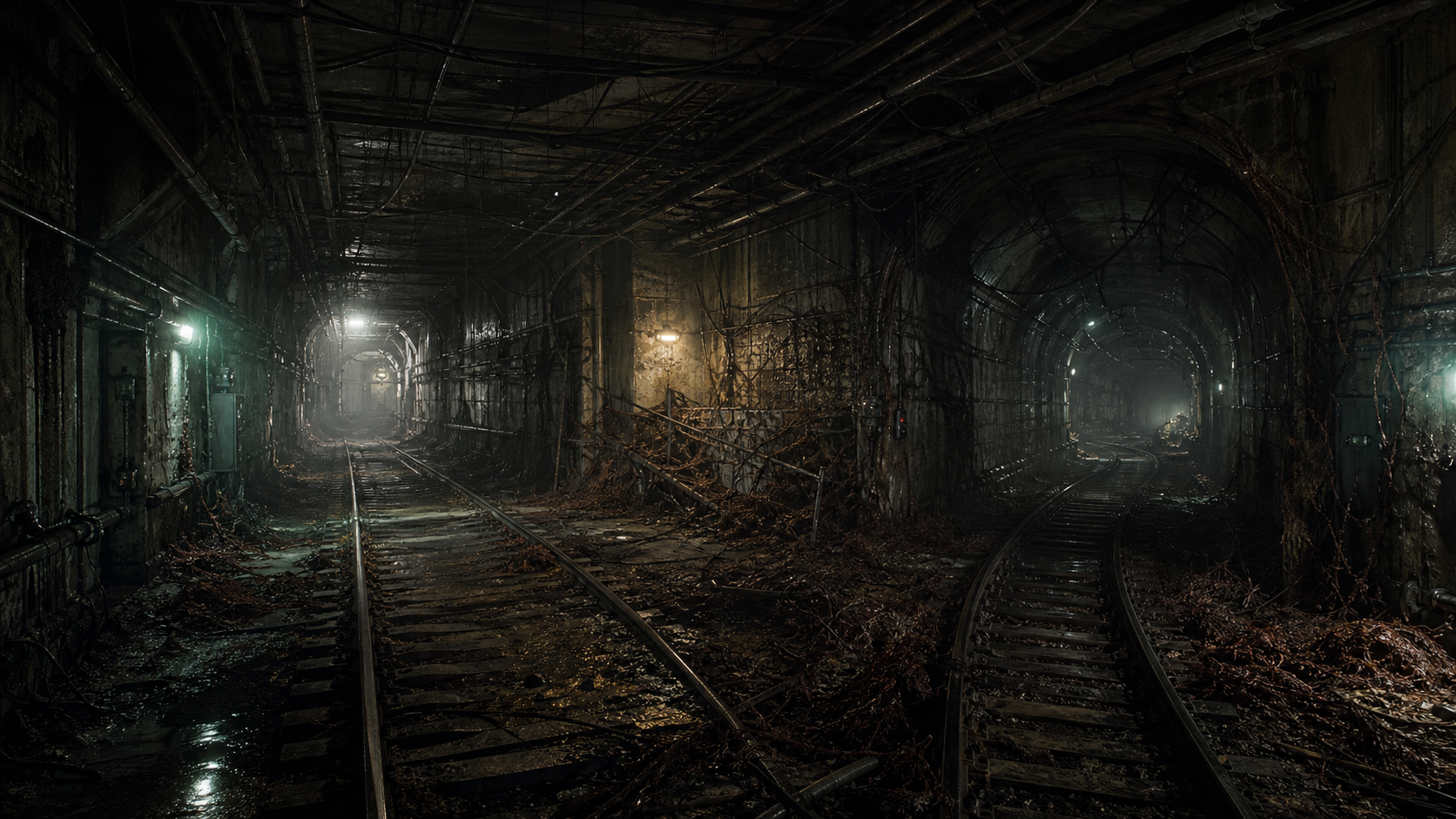
The New York tunnel escape is the withdrawal of seven survivors from the failed Operation Liberty campaign through Manhattan's sewer system and across the city to Pier 86 on May 7, 2015. The group consists of Reed Beckham, Jay Chow, General Ray Jensen, Timbo, Jinx, Ryan, and Valdez. During the escape they discover a large Variant lair containing hundreds of living human captives, rescue firefighter Meg Pratt, lose Jinx in a street-level attack, and reach a Black Hawk extraction under assault from both land and water.
Quick Facts
- Role
- Missions and Operations
- Aliases
- new-york-tunnel-escape
Overview
The event is not a planned mission. It begins after military command firebombs New York and the surviving force is driven below the streets. Beckham has a shrapnel wound in his shoulder, ammunition is almost exhausted, maps are incomplete, and no reliable unit remains outside the seven-person group. Their only objective is to reach a surviving Marine corridor and a helicopter pickup. The escape reveals that the Variants store human prey in webbing, use underground terrain as organized habitat, attack vertically, and can approach through water. These discoveries reshape the enemy from scattered post-infection survivors into a population with lairs, logistics, and coordinated hunting behavior.
Event information
- Field: Type; Detail: Unplanned combat withdrawal, civilian rescue, and helicopter extraction
- Field: Date; Detail: May 7, 2015
- Field: Preceding event; Detail: Failure and firebombing phase of Operation Liberty
- Field: Starting force; Detail: Reed Beckham, Jay Chow, Ray Jensen, Timbo, Jinx, Ryan, and Valdez
- Field: Rescued civilian; Detail: Meg Pratt
- Field: Underground location; Detail: Manhattan sewer and tunnel network, including a large Variant captive chamber
- Field: Surface route; Detail: Manhole exit, Humvee movement through Midtown, and Pier 86 on the Hudson River
- Field: Planned contact area; Detail: Marine corridor near West 50th Street and Seventh Avenue, followed by waterfront extraction
- Field: Principal threats; Detail: Darkness, limited ammunition, injury, webbed lair, pursuing Variants, fire damage, street hordes, and waterborne attackers
- Field: Fatalities during escape; Detail: Jinx, Ryan, and Valdez
- Field: Surviving core; Detail: Beckham, Chow, Jensen, Timbo, and Meg
- Field: Extraction support; Detail: Black Hawk crew and Parker Horn's rescue element
- Field: Primary work; Detail: Opening chapters of Extinction Age
Operation Liberty collapse
Operation Liberty is intended to retake major American cities after Operation Depletion kills most infected hosts. New York receives armor, ground troops, aircraft, and bombing support. Command assumes the surviving Variant population is small enough to be cleared by conventional force.
The assumption fails because surface reconnaissance misses the scale of the underground habitat. Variants use tunnels, sewers, buildings, and darkness to approach formations designed for open combat. Firepower destroys terrain without eliminating the enemy below it. Units fragment, communications fail, and survivors are forced into the same underground spaces the creatures control.
Beckham's group reaches the sewers after the campaign has ceased to function as an organized offensive. General Jensen, who helped authorize and direct the operation, is now one exhausted survivor among operators. Rank still matters for judgment and responsibility, but it cannot call back the destroyed force.
Initial condition of the survivors
The seven have little ammunition and no secure rear area. Beckham's shoulder has been torn by shrapnel after a grenade and Variant attack. Chow cleans or dresses the wound well enough for him to move, but treatment does not restore strength or remove the risk of bleeding.
Jensen gives Beckham a .45-caliber revolver, supplementing the remaining weapons with a reliable sidearm. The exchange also recognizes who is functioning as field leader. Beckham reads movement, assigns positions, and continues despite injury because stopping in the tunnel is more dangerous than moving wounded.
The sewer environment erases many conventional advantages. Radios have limited usefulness underground. Aircraft cannot see the group. Muzzle flashes disclose position, echoes confuse direction, and a missed shot can ricochet from concrete. The Variants can use walls and ceilings, while the humans must protect footing in foul water and debris.
Discovery of the captive chamber
The group reaches a large central chamber unlike an ordinary nest. Hundreds of human beings are attached to the walls and ceiling by organic webbing. Some remain alive, injured and suspended as stored prey. The scale proves that Variant captivity is systematic rather than the behavior of one creature.
The prisoners create an impossible rescue problem. Seven exhausted people cannot cut down hundreds of captives while an enemy population occupies the surrounding passages. Many prisoners are too injured to move, and each release would add a person who must be carried through the same escape route.
Meg Pratt is attached near a ledge and remains conscious enough to call for help and identify herself. Her position makes one rescue possible. Beckham and Chow cut her free. Severe wounds to her leg prevent independent movement at normal speed, but leaving her would repeat the command logic that reduced New York civilians to an acceptable loss.
Redemption continuity gives the moment additional meaning. Meg is not an anonymous prisoner whose story starts when Team Ghost arrives. She is a firefighter, Tim Pratt's widow, and a survivor of Queens and the firehouse network. The tunnel scene is a crossover between her existing branch and the main series.
Destruction of the lair
The group cannot save the other captives. Beckham uses two grenades against the chamber. The explosions kill nearby Variants, destroy part of the webbed system, and end the suffering of prisoners who would otherwise remain stored alive.
The act is tactically useful and morally devastating. It prevents the group from being trapped by the lair's defenders and denies the enemy a portion of its captive population. It also means Beckham deliberately kills people he came close enough to see but could not carry out.
Operation Depletion and the Atlanta bombing make the same logic visible at national scale. The tunnel chamber reduces it to a room. The choice is not presented as a rescue success, even though Meg survives. It becomes another burden attached to Beckham's command.
Planning the surface route
Meg tells the group who she is, and the survivors promise to get her out. They redistribute ammunition and avoid a long rest because the lair's destruction will attract more creatures. The route must reach the surface, locate surviving Marine activity near West 50th Street and Seventh Avenue, obtain a vehicle, and continue to Pier 86.
Each step depends on infrastructure that may no longer exist. A manhole can open beneath a horde. A Marine corridor may have collapsed after the last transmission. A Humvee may be damaged or out of fuel. The pier provides an open helicopter approach but exposes the group to movement from multiple streets and the Hudson.
Carrying or supporting Meg reduces speed. Beckham's injury further limits the people available for rear security. The group cannot afford to clear every route and must accept unknown contacts in exchange for forward movement.
Manhole exit and Jinx's death
The survivors emerge through a manhole into a city still burning from the operation. Street-level visibility is better than in the sewer, but the open space exposes them to creatures using buildings, vehicles, and vertical surfaces.
During the movement, Variants seize Jinx and drag him away. The group attempts to recover him rather than immediately abandoning the contact. Jinx is killed, and his body is retrieved. Recovering the body consumes time and ammunition, yet it preserves the military promise that a teammate will not be left as food if recovery remains possible.
The loss is especially severe because every fighter represents a large fraction of the remaining force. Jinx's death does not merely reduce morale. It removes another weapon and another person able to carry Meg or hold a flank.
Humvee movement through Manhattan
The survivors find a Humvee and use it to cross terrain they could not safely traverse on foot. The vehicle gives speed, armor, and the ability to carry Meg and Jinx's body. It also creates noise and restricts escape to roads that may be blocked.
Beckham drives or directs the vehicle through concentrations of Variants toward the waterfront. The streets provide a compressed record of Operation Liberty: abandoned military equipment, fires, bodies, and structures damaged by both the enemy and American bombing. The force sent to liberate the city has become material the escape group must salvage.
The Humvee cannot be treated as permanent protection. Creatures can climb, strike from above, or mass around obstacles. The group's success depends on maintaining speed and reaching the helicopter before the vehicle is immobilized.
Pier 86 extraction
Pier 86 provides a recognizable landing point on the Hudson and enough open space for a Black Hawk. It also funnels the survivors onto a narrow waterfront position with little concealment. Thousands of Variants converge through the surrounding streets as the aircraft approaches.
Parker Horn is part of the rescue element aboard the helicopter. His presence reconnects Beckham to the team split by Operation Liberty and gives the survivors covering fire from an operator who understands how few people remain.
The attack does not come only from land. Variants enter or use the water and approach the aircraft from the Hudson side. The pilots must lift or reposition to avoid being swarmed. The maneuver separates Ryan and Valdez from the immediate safety of the aircraft.
Ryan and Valdez are killed during the final stand at the pier. Valdez continues fighting while the aircraft pulls away, and Beckham forces himself to watch rather than turn the deaths into an unseen abstraction. Their sacrifice buys the seconds needed to lift Meg, the surviving operators, Jensen, and Jinx's body clear of the waterfront.
Casualties and survivors
Three of the seven original tunnel survivors die during the escape. Jinx is killed after the manhole exit, while Ryan and Valdez die at Pier 86. Beckham, Chow, Jensen, and Timbo survive the movement. Meg becomes an additional survivor after being rescued in the lair.
The casualty ratio shows that reaching the surface is not the end of the underground disaster. The group loses people in the more familiar tactical spaces of a street and extraction zone because the Variants adapt across environments.
Beckham's shoulder injury and Meg's leg wounds require treatment after evacuation. The psychological injuries include the chamber captives, Jinx's body, and the visible deaths at the pier. No debrief can separate those losses from the decision to attack New York in the first place.
Webbing and stored prey
The chamber confirms that Variants manufacture or use organic webbing to restrain living humans. Captives can be preserved above the floor and outside immediate reach, suggesting planned feeding, reproduction, or other organized use. Later Dark Age webbing networks develop this concept into broader biological infrastructure.
It is an early behavioral and material precursor. The encounter proves capability without establishing a single uninterrupted organization.
Vertical and underground movement
The creatures treat walls, ceilings, drains, and tunnels as normal routes. Human maps privilege streets and doors; Variant movement ignores those assumptions. Operation Liberty fails partly because its force geometry does not include the enemy's three-dimensional use of the city.
Aquatic approach
The pier attack confirms that water is not an absolute barrier. Variants can enter, cross, or attack from the Hudson closely enough to threaten a hovering helicopter. The discovery complicates island and ship security, both of which depend on screening the water rather than assuming separation.
Command and testing behavior
The attacks occur with timing and pressure that suggest coordination. The enemy does not need human-style radio command to exploit retreat routes. It can probe, mass, pursue, and strike a group when terrain narrows its options.
Consequences for Operation Liberty
The escape provides living witnesses to the operation's conceptual failure. New York was not an empty city containing a manageable remnant. It was an enemy habitat containing large prisoner populations beneath the surface. Firebombing and armor could kill visible creatures while driving humans into the concealed system.
Jensen survives long enough to carry responsibility and intelligence forward. Beckham's experience deepens his distrust of plans built around optimistic estimates. Chow and Timbo preserve direct tactical evidence. Meg supplies the civilian proof that people remain alive inside zones command may classify as lost.
The event also explains why later strategy depends on samples, targeted weapons, and reconnaissance rather than another immediate citywide assault.
Reed Beckham
Beckham leads while wounded, chooses to rescue Meg, destroys the chamber he cannot evacuate, recovers Jinx, and witnesses Ryan and Valdez die. The sequence concentrates his command ethic and its cost. He refuses easy abandonment but cannot save everyone.
Jay Chow
Chow treats Beckham, helps cut Meg free, supports movement, and repeatedly keeps the field leader alive. His role is practical evidence that Team Ghost leadership is collective under pressure.
Ray Jensen
Jensen enters the tunnel as the general associated with Operation Liberty and leaves as one of its survivors. The collapse narrows the distance between strategic authority and the bodies affected by its assumptions.
Meg Pratt
Meg's rescue connects Redemption's Queens narrative to the main continuity. Her survival is not passive. She communicates, endures movement with severe injuries, and becomes part of the post-New York network around Plum Island.
Important connections
- Operation Liberty: Failed reclamation campaign whose collapse creates the escape.
- Reed Beckham: Wounded field leader and decision-maker in the lair and at extraction.
- Jay Chow: Medic, rescuer, and combat partner throughout the withdrawal.
- Ray Jensen: Surviving commander forced to experience the failed plan at ground level.
- Meg Pratt: Webbed civilian rescued from the chamber and carried into main-series continuity.
- Jinx: Team Titanium operator killed after the surface exit; body recovered.
- Ryan and Valdez: Fighters killed during the Pier 86 extraction.
- Parker Horn: Member of the helicopter rescue element.
- Variant webbing: Evidence of captivity and organized habitat later developed in Dark Age.
Chronology and consequences
- Extinction Edge - Operation Liberty planning, city assault, Variant counterattack, and the conditions that drive the survivors underground.
- Extinction Age, opening chapters - Complete tunnel and surface escape, captive chamber, Meg rescue, Jinx's death, Humvee transit, Pier 86 fight, and evacuation.
- Emergence and the wider Redemption Trilogy - Meg's pre-capture history and the civilian New York branch.
- Later main-series and Dark Age works - Consequences for Variant-lair knowledge, webbing, aquatic threats, and the survivor family.
Continue Exploring
Connected Universe
Books and Stories
Characters
Locations, Events, and Lore
Sources
- Extinction Age, Extinction Age - Chapter 1
- Extinction Age, Extinction Age - Chapter 2