
Politics and Society
Allied States Response to Variant Evolution
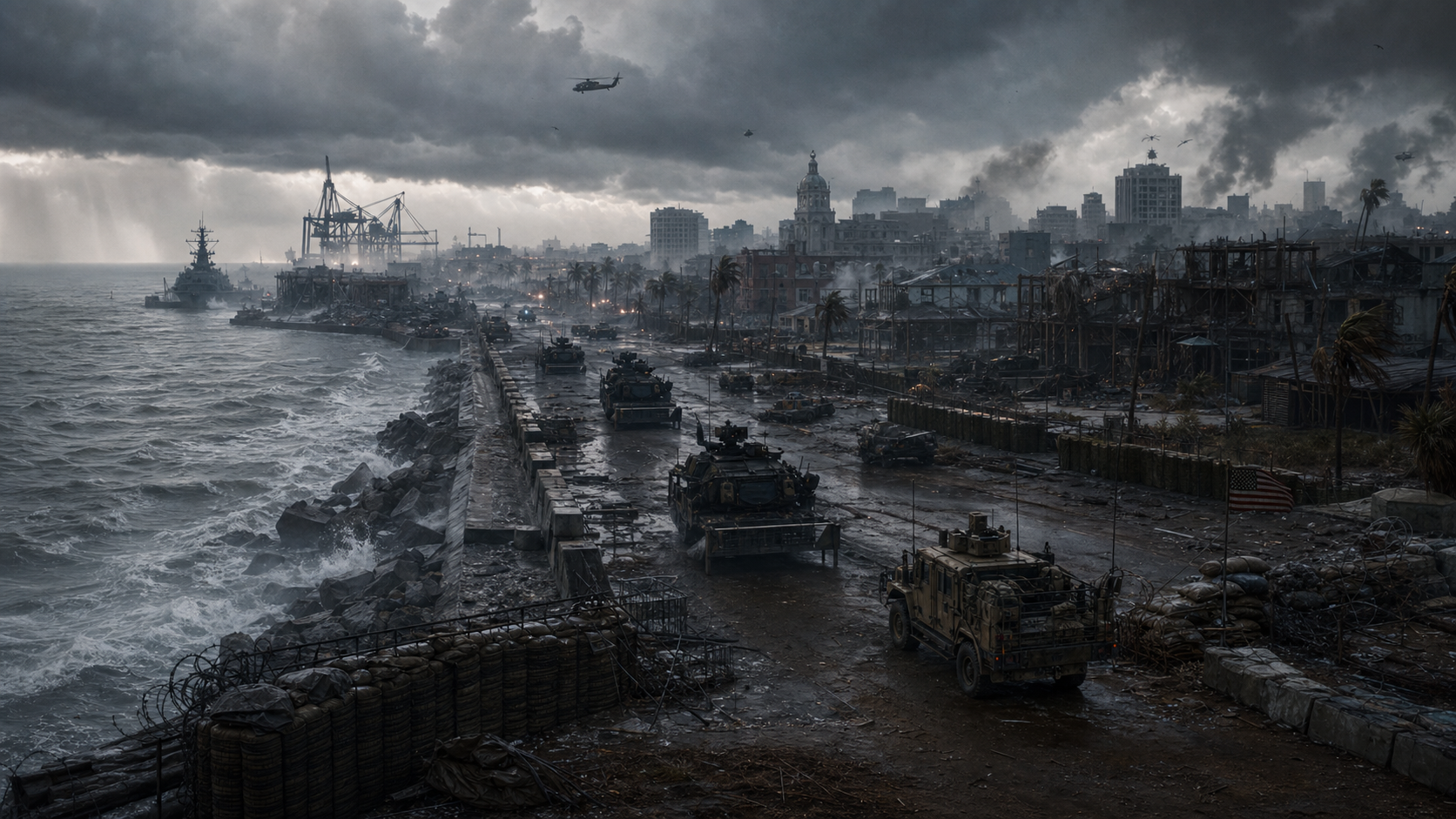
The Allied States is not just a setting in Dark Age. It is humanity's institutional answer to Variant evolution. The country grows out of the wreckage of the United States, the Safe Zone Territories, the ROT crisis, Operation Extinction, and years of rebuilding under Jan Ringgold. Its walls, outposts, laboratories, military branches, elections, convoys, and command centers exist because the enemy never stops changing.
Open the interactive Allied States Response to Variant Evolution view
Quick Facts
- Role
- Politics and Society
Overview
A simple enemy would require only firepower. The Variants require something harder: a society that can learn. Early survivors have to identify the Hemorrhage Virus, preserve scientists, and extract civilians. Later they have to fight juveniles, Alphas, mutated European forms, collaborators, webbing networks, Scions, Thralls, Chimeras, and Azrael's New Gods. Each new form pressures the Allied States to adapt scientifically, militarily, politically, and morally.
Phase one: quarantine, sample recovery, and survival command
The first human response is confused and compromised. CDC-linked scientists such as Kate Lovato and Michael Allen interpret the outbreak through public-health language, while Medical Corps and USAMRIID-linked figures know more about VX-99 than they admit. Team Ghost enters Building 8 expecting a dangerous mission, not a species-level breach.
This phase fails as containment but establishes the pattern for the rest of the saga. Scientists need operators to retrieve samples and survivors. Operators need scientists to explain what they are fighting. Command fails when it hides information, treats people as expendable, or assumes the enemy will behave like ordinary infected humans.
Phase two: Plum Island and the science-war alliance
Plum Island becomes the first major model of human adaptation. It is a lab, quarantine site, refuge, command post, and moral pressure chamber. Kate, Pat Ellis, Jensen, Beckham, Horn, Riley, Meg, Tasha, Jenny, and others all bring different needs into one place: study the virus, save the living, defend the island, and preserve enough humanity to make victory worthwhile.
The science-war alliance produces VariantX9H9 and later supports Kryptonite and Operation Extinction. These tools turn biology against the infected, but they also blur the moral line between cure and weapon. The Allied States inherits that burden. It survives because scientists make terrifying tools and soldiers deliver them, but the best characters never pretend the work is clean.
Phase three: outpost civilization
After the Great War of Extinction, the Allied States builds around fortified outposts. This model is a direct answer to Variant ecology. Walls, watch rotations, controlled roads, secure labs, airlift, naval assets, Rangers, Marines, militias, and family evacuation plans all exist because the enemy can return from outside the lighted line.
Outposts solve one problem and create another. They make life possible, but they also produce political fragility. Every isolated settlement must trust that the central government can protect it. When Turkey River falls and later attacks reveal New Gods organization, fear becomes political fuel. Citizens begin asking whether Ringgold's rebuilding strategy is enough, and Cornelius and the Freedom Party gain force by promising a harder war.
Phase four: military doctrine evolves
The Allied States military adapts in layers. Early doctrine focuses on headshots, rescue, quarantine, and heavy weapons. Mid-war doctrine adds bioweapon deployment, naval firepower, special operations, dog teams, and coordinated international campaigns. Dark Age doctrine adds outpost defense, drones, private security, infiltration teams, signal intelligence, and simultaneous target operations against command nodes.
Units such as Team Ghost, the Variant Hunters, the Marines, the Iron Hogs, and the Rangers matter because they translate science into field truth. They learn what ordinary Variants do, what Alphas can command, how juveniles move, how collaborators lure humans, how Reavers and Wormers break normal tactics, and how Scions and Chimeras fight more like soldiers than beasts.
Phase five: network warfare
Dark Age forces the Allied States to stop thinking only in terms of bodies. Webbing, masterminds, signals, and command nodes make Variant evolution infrastructural. Kate, Sammy, Dr. Carr, Ron, Leslie, and the science teams turn enemy tissue into an intelligence target. Computers, microelectric arrays, and signal analysis become as important as rifles.
The final response is not a bigger wall or a larger gun. It is interpretation. Sammy's work helps transform the webbing network from unknowable horror into something the Allied States can measure, map, and damage. Anthrax and Los Alamos become part of a biological-infrastructure campaign against the New Gods' organizing system.
Political adaptation
Variant evolution reshapes politics. The Allied States has elections, parties, press organs, command staff, and public debate, but none of these operate in normal conditions. Every attack changes the meaning of freedom and security. Lemke represents continuity and measured reconstruction. Cornelius represents aggressive militarization and a promise to take the war back into enemy territory. Ringgold tries to preserve legitimacy while acknowledging that the enemy is growing more dangerous.
Azrael's campaign attacks that legitimacy directly. By capturing and executing Lemke, he tries to break the constitutional future Ringgold wanted. By offering transformation and submission, he tries to turn biology into sovereignty. The Allied States answer at Galveston is political as much as military: old rivals fight together, Ringgold rejects surrender, and Beckham's later unity-ticket path suggests that survival requires reconciliation after victory.
Human adaptation and family stakes
The Allied States also adapts through families. Peaks Island, Plum Island, Fort Bragg, Outpost Portland, and Galveston matter because they contain children, scientists, wounded veterans, dogs, parents, and ordinary civilians. The country cannot define victory as only dead Variants. It has to preserve places where children can eat, sleep, learn, and grow without becoming soldiers too soon.
This is why the Beckham-Lovato family, the Horn family, Timothy Temper, Javier Riley Beckham, Tasha, Jenny, Bo, Donna, and other civilian survivor threads are central to the Variant-evolution page set. Every new enemy form raises the same question: can the human response remain human?
Failure modes
- Underestimation: Operation Liberty, early command assumptions, and repeated outpost shocks show that assuming the enemy is simple gets people killed.
- Secrecy: VX-99, Building 8, and Medical Corps failures prove that hidden science can become extinction.
- Over-militarization: The Freedom Party debate shows that fear can push the Allied States toward policies that may preserve bodies while damaging civic legitimacy.
- Complacency: The years after Operation Extinction make many believe the enemy is dying out. Turkey River and Dark Age prove the enemy has been adapting in the dark.
- Forgetting civilians: When command treats families, children, or refugees as secondary, the series pushes back through Horn, Beckham, Kate, Ringgold, and civilian POVs.
Narrative function
The Allied States response is the human mirror of Variant evolution. The enemy mutates biologically and socially. Humanity mutates institutionally. The result is one of the central arguments of the series: civilization survives only when government, science, soldiers, civilians, and families keep correcting one another.
The Allied States is flawed, frightened, and often militarized, but its best moments come when it refuses to become the thing it fights. It uses science without worshipping power, command without abandoning civilians, and violence without accepting Azrael's claim that strength is the only moral law.
Continue Exploring
Connected Universe
Books and Stories
Characters
Groups and Factions
Sources
- Extinction Horizon
- Extinction Horizon, Prologue, Building 8 chapters, ending quarantine and Kate scenes
- Extinction End
- Extinction End, Chapter 1, Kate prisoner sequence
- Extinction End, Ringgold infirmary and Plum Island report sequence
- Extinction Aftermath
- Extinction Aftermath: Rome prologue, Piero and Antonio, repellent, winged juvenile.
- Extinction Aftermath: ROT, SZT 15, Flathman, Ringgold/Johnson crisis, Davis SOS.
- Extinction War: continuation of ROT and European front.
- Extinction Aftermath, Prologue, Rome sequence