
Characters and Relationships
Every Major Extinction Cycle Character Death Ranked by Impact
A spoiler-heavy ranking of the Extinction Cycle's most important character deaths, from Team Ghost's early losses to Alex Riley, Sheila Horn and Jan Ringgold.
·
Category: Characters and Relationships
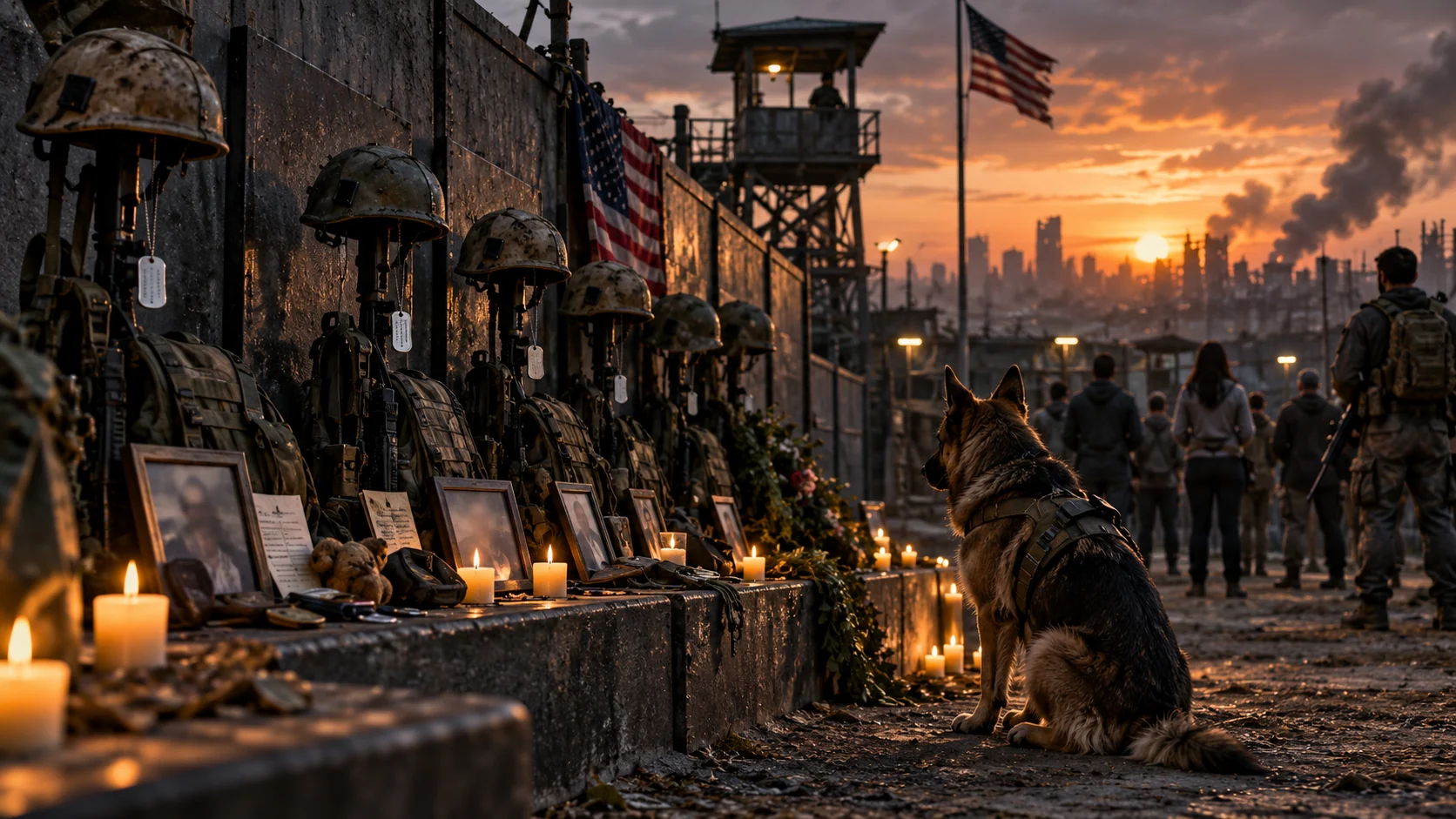
In Extinction Cycle, the dead continue shaping the survivors through names, rituals, institutions and memory.
Full spoiler warning: This article discusses major deaths across the original Extinction Cycle, selected expanded-universe stories and the four-book Dark Age continuation.
The Extinction Cycle kills people differently than many post-apocalyptic series.
Some deaths are sudden battlefield losses. Some happen before a character fully understands the scale of the disaster. Some are sacrifices. Some are executions. Some become the reason another survivor changes permanently. And a few matter less because of the moment itself than because the dead person continues shaping decisions books later.
That makes a simple "saddest deaths" list too shallow.
This ranking measures impact. How much does the death change another major character? Does it alter Team Ghost's command culture? Does it change Kate Lovato's scientific decisions? Does it affect the political future of the Allied States? Does it become part of the franchise's mythology?
The list focuses on major named losses with clear consequences. It does not attempt to catalogue every soldier, civilian, scientist or side-story casualty in a universe where billions die.
Ranking criteria
Each death is judged on four things:
- Emotional impact on surviving characters.
- Plot impact on the direction of the story.
- Strategic impact on the human war effort.
- Legacy in later books.
A death can therefore rank highly even if the character had limited page time. If that loss permanently changes Reed Beckham, Parker Horn, Kate Lovato, Team Ghost or the Allied States, it matters.
Quick ranking
| Rank | Character or loss | Why it matters |
|---|---|---|
| 10 | Tim Pratt | Turns Meg Pratt from civilian spouse into a survivor driven to help others |
| 9 | Ray Stanford | Defines the Variant Hunters' culture of remembrance and Jose Garcia's grief |
| 8 | Panda, Tenor and Edwards | Team Ghost's first devastating rupture and Reed Beckham's burden of command |
| 7 | Dr. Michael Allen | Scientific mentor whose sacrifice shapes Kate's moral burden |
| 6 | Pat Ellis | Removes one of the outbreak's original scientific witnesses and deepens Reed's rage at political violence |
| 5 | Jinx | Shows that even experienced operators can be hunted and forces Beckham into a dangerous rescue decision |
| 4 | Sheila Horn | Transforms Parker Horn's life and makes Tasha and Jenny central to Team Ghost's family identity |
| 3 | Alex "The Kid" Riley | One of the saga's most personal Team Ghost losses and a permanent symbol for Reed and Kate |
| 2 | The repeated loss of Team Ghost generations | Turns the unit itself into a memorial institution and shapes Fitz's later command |
| 1 | President Jan Ringgold | Her death becomes the political and symbolic bridge into the Allied States' future |
10. Tim Pratt
Tim Pratt's death matters because it establishes the apocalypse at the most personal scale possible.
Before Meg Pratt becomes one of the franchise's most memorable civilian heroes, she is a firefighter with a husband and an ordinary morning. The outbreak enters her life not as a military briefing or a classified laboratory emergency, but through the person closest to her.
Tim's transformation and death destroy any illusion that the crisis can remain "out there."
Meg's response defines her character. She is devastated, but her professional instinct survives. Even while grieving, she tells soldiers that she is a firefighter and can help.
That decision becomes the foundation of everything she does afterward.
Tim's death is therefore less important as a tactical event than as a moral origin story. Meg does not become useful because the apocalypse removes her empathy. She becomes useful because she refuses to let grief eliminate the part of her that runs toward people who need help.
In a series dominated by elite military operators, that distinction matters.
9. Ray Stanford
Ray Stanford is one of the losses that shows how the expanded Extinction Cycle universe deepens the emotional cost of the war.
Marine Staff Sergeant Jose Garcia carries the names of fallen comrades on a cross tattooed on his forearm. Stanford becomes another name added after a mission outside New York.
The tattoo is more than a visual detail.
It turns Garcia's body into a record of attrition.
Before the outbreak, names accumulated slowly across years of military service. After the Hemorrhage Virus, the available space disappears frighteningly fast. That contrast tells the reader more about the scale of the new war than a casualty statistic could.
Stanford's death also helps define the Variant Hunters. They are not monster-killing action figures. They are Marines who understand that every mission may add another name to the list.
That culture of remembrance mirrors Team Ghost and reinforces one of the universe's central themes: surviving soldiers carry the dead forward.
8. Panda, Tenor and Edwards
The deaths of Staff Sergeant Carlos "Panda" Spinoza, Sergeant Will Tenor and Sergeant Jim Edwards belong together because the impact comes from the rupture of the original Team Ghost family.
The loss happens around the Building 8 operation, when Ghost is still trying to understand what it has been sent into.
The mission was supposed to be controlled. The team had specialized protective equipment, elite training and clear objectives. Instead, the operators discover that they are facing a biological nightmare that invalidates normal assumptions.
Their deaths hit Reed Beckham hard because command responsibility is personal for him.
He does not treat the casualties as abstract consequences of mission necessity. These are men who trusted him. Horn later reminds him of that trust, trying to stop Reed from turning grief into self-destruction.
This is the first major proof that the apocalypse can dismantle even the most capable military family.
It also establishes a pattern that will follow Reed for the rest of the saga. He survives, and survival itself becomes a burden because every mission leaves fewer of the people who began beside him.
7. Dr. Michael Allen
Dr. Michael Allen represents the scientific side of sacrifice.
He is Kate Lovato's mentor and one of the people who understands the scale of the biological disaster early enough to recognize that normal procedure is collapsing.
His final importance comes from the way Kate remembers him.
One of the ideas associated with his sacrifice is that defeating a monster may require creating one. That thought becomes a moral shadow over Kate's work.
The scientific teams in Extinction Cycle are not safely removed from the consequences of their research. Their decisions can kill millions, save millions or do both at different stages of the crisis.
Michael's death pushes Kate into that responsibility without the mentor who helped shape her.
It also prevents the science story from becoming a simple sequence of laboratory breakthroughs. Every new countermeasure carries the memory of what previous experiments produced.
Kate survives, but the people who taught her do not always survive with her.
6. Dr. Pat Ellis
Pat Ellis is part of the franchise's scientific spine from the beginning.
He enters the Building 8 crisis alongside Team Ghost and becomes one of the witnesses who understands how badly the situation has escaped the boundaries of a laboratory.
Later, his execution becomes one of the images that haunts Reed Beckham during Extinction War.
That matters because Ellis is not killed by a mindless Variant in a random encounter. His loss is tied to human political violence.
Extinction Cycle repeatedly makes the point that ending the biological outbreak does not automatically end the human capacity for tyranny. The Resistance of Tyranny and other power struggles turn scientific knowledge, fear and government legitimacy into weapons.
Ellis's death therefore marks the point where the apocalypse's origin story and its political aftermath collide.
A scientist who helped humanity understand the threat becomes a casualty of humans fighting over what the post-apocalyptic order should be.
5. Jinx
Jinx's death is one of the clearest demonstrations that the Variants are learning how to hunt soldiers.
During the New York fighting, Variants seize Jinx and drag him away rather than simply killing him in place. Reed immediately gives chase.
That decision is understandable and tactically dangerous.
Beckham knows he is breaking rules by pursuing a captured teammate through a city filled with Variants. He also knows what abandoning Jinx would mean to Team Ghost.
The rescue attempt draws the team deeper into danger as the creatures probe their formation. The Variants are no longer behaving like individual attackers. They are testing weaknesses, isolating targets and using movement in ways that resemble pack hunting.
Ryan eventually shoots the creatures dragging Jinx, and Ghost reaches him.
They are too late.
Jinx dies from the wound to his neck with Beckham beside him.
The scene matters for two reasons.
First, it shows that bravery cannot always reverse the damage already done.
Second, it exposes the psychological vulnerability of an elite team. The Variants do not need to understand military doctrine if they can exploit loyalty.
Beckham will risk himself for a teammate.
The enemy learns that.
4. Sheila Horn
Sheila Horn's death is one of the most consequential family losses in the wider universe.
The tragedy is especially cruel because she succeeds at the most important thing: protecting her daughters.
During the collapse, Sheila hides with Tasha and Jenny, fights infected attackers and keeps the girls alive. She is ultimately found dead after another attack, and Chow removes her wedding ring with the knowledge that someone will have to tell Parker Horn.
Her story does not entirely end there. The epilogue of The Fall of Fort Bragg shows her transformed after death, a final reminder that the infection steals not only life but identity.
For Parker Horn, the loss permanently changes the meaning of survival.
He is no longer simply fighting beside Reed Beckham. He is fighting as the father of two girls who have already lost their mother.
Tasha and Jenny become part of the emotional center of Team Ghost. Reed, Chow, Kate and the others help protect them. The unit becomes something larger than a tactical team.
It becomes family.
Sheila's absence is what makes that transformation necessary.
3. Staff Sergeant Alex "The Kid" Riley
Riley's death is devastating because the character represents the part of Team Ghost that still feels young enough to imagine life after the next mission.
Even after catastrophic injuries leave him in a wheelchair, Riley remains one of the team's bright spirits. He jokes. He gives Horn's daughters rides. He stays connected to the group.
That makes his eventual death hit differently from a first-book battlefield casualty.
Readers have already watched him survive.
Survival creates expectation.
When the Bone Collector kills Riley, the loss becomes part of Reed Beckham's permanent emotional landscape. Dark Age still invokes Riley's death years later. Reed remembers the same huge creature that killed the Kid. Kate and Reed name their son Javier Riley, preserving the name inside the next generation.
That is legacy in the most literal sense.
Riley's death does not remove him from the story.
It turns him into part of the family's identity.
2. The deaths that keep remaking Team Ghost
This entry is deliberately collective because no single casualty explains what Team Ghost becomes.
Panda, Tenor, Edwards, Jinx, Riley and many later operators are part of an accumulating institutional memory. By Dark Age, Fitz thinks about the men and women the unit has lost across multiple wars and multiple generations.
The team that enters Building 8 is not the team that fights in New York.
The team that fights in New York is not the team that operates eight years after Extinction War.
Yet Team Ghost still exists.
That continuity is one of the franchise's most important ideas.
Military units are built around names, rituals, stories and inherited standards. The people change. The identity remains.
Fitz eventually leads Ghost while carrying his own history of loss. He remembers old teammates and Apollo. He worries about losing Rico because experience has taught him that nobody is protected by narrative importance.
The accumulated deaths are therefore more consequential than a single dramatic scene.
They turn Ghost into a living memorial.
Every new member joins a unit populated by the dead.
1. President Jan Ringgold
Jan Ringgold's death ranks first because it affects the largest number of people even after she is gone.
Ringgold survives the original Great War and helps transform scattered survivors into the Allied States. The Dark Age historical recap credits her administration with rebuilding basic infrastructure, agriculture, manufacturing and the energy grid across roughly one hundred defended outposts.
That is an extraordinary transition.
War leaders are often remembered for winning battles. Ringgold's greater achievement is helping society become something other than a permanent army camp.
Her death therefore creates a political vacuum, but the final Dark Age scene refuses to let the story end in that vacuum.
A repaired naval vessel is christened the USS Jan Ringgold.
Reed Beckham speaks about the hope she carried during the darkest periods of the war and the responsibility of survivors to carry that hope forward.
The symbolism is precise.
The ship is patched and imperfect, just like the Allied States. It may never be what it was before, but it can function again. It can serve. It can carry people into the future.
Ringgold's death matters because her legacy becomes institutional rather than personal.
She does not merely leave grieving friends.
She leaves a country.
Why Alex Riley's death may still be the saddest
Ranking Ringgold first by impact does not mean her death is the most emotionally painful scene.
Riley has a strong claim to that title.
The relationship between Team Ghost members is built across missions where trust is immediate and physical. Each operator knows that the person beside him may have to drag him out, make a medical decision, or keep fighting when ammunition is almost gone.
Riley then survives serious injury and remains present inside the team family.
That creates hope that he has already paid his price.
Extinction Cycle does not honor that assumption.
When he is killed, the story tells the reader that prior suffering does not purchase immunity from future loss.
The later choice to give Reed and Kate's son the middle name Riley is one of the most effective ways the series shows remembrance without lengthy speeches.
Why Sheila Horn's death changes more than Horn
It would be easy to describe Sheila primarily as the tragedy that motivates Parker Horn.
That understates her importance.
Sheila's actions during the outbreak establish that courage in this universe is not owned by soldiers. She protects her daughters under circumstances that would overwhelm many trained people.
Her death also changes Chow and the rest of Ghost. The team members become guardians to children who are not theirs.
That transformation helps explain why later safe zones matter so much emotionally.
They are not defending a flag in the abstract.
They are defending specific children whose parents were killed because the old systems failed.
Death and the leadership of Reed Beckham
No character is more shaped by loss than Reed.
The first Team Ghost casualties make him question command.
Jinx's capture tempts him into a dangerous pursuit.
Riley's death becomes a permanent wound.
Pat Ellis's execution becomes part of Reed's anger at political betrayal.
By Extinction War, Reed's body and memory are both covered in scars.
That is important because the series never turns him into an emotionally invulnerable super-soldier.
He continues functioning because he feels responsibility, not because he stops feeling grief.
His leadership style is built around the knowledge that orders have names attached to them.
Death and the science of Kate Lovato
Kate's losses create a parallel burden.
Scientists can become detached in apocalypse fiction, reduced to people who explain the pathogen. Kate never gets that luxury.
Michael Allen, Ellis, Riley and countless civilians give every experiment moral weight. Her countermeasures may save humanity, but they also participate in the biological arms race that produces new consequences.
That is why the later domestic life with Reed and Javier matters.
Kate does not simply survive her decisions.
She has to build a life after them.
Why the series keeps the dead present
Extinction Cycle uses memory as a continuity device.
Characters carry photographs. Garcia tattoos names. Reed remembers teammates. Fitz thinks about Apollo. Children receive names connected to the dead. Ships are named for presidents.
This is more than sentiment.
In a world where billions die, memory becomes a form of civilization.
The dead matter because survivors refuse to let them become anonymous numbers.
That is one of the clearest lines separating the Allied States from the New Gods.
Azrael treats people as material for transformation, labor, sacrifice or food.
The survivors build monuments, families and institutions around individual lives.
Frequently asked questions
Does Alex Riley die in Extinction Cycle?
Yes. Alex "The Kid" Riley is killed by the powerful creature associated with the Bone Collector conflict. His death remains important years later, and Reed and Kate's son carries Riley's name.
Does Sheila Horn die?
Yes. Sheila dies while protecting Tasha and Jenny during the outbreak. Her story is explored in The Fall of Fort Bragg, later collected in Missions from the Extinction Cycle.
Does Jinx die?
Yes. Variants seize Jinx during the New York fighting. Team Ghost pursues and reaches him after killing the creatures dragging him away, but he dies from his wounds.
Who are Panda, Tenor and Edwards?
They are members of Team Ghost killed during the early Building 8 crisis. Their deaths become some of Reed Beckham's earliest major losses in the outbreak.
Does President Jan Ringgold die?
Yes. Ringgold dies during the Dark Age era. The saga's closing scene honors her by christening a repaired Allied States Navy vessel the USS Jan Ringgold.
Does Reed Beckham die?
No. Reed survives through the end of the Dark Age continuation.
Does Kate Lovato die?
No. Kate survives and is present with Reed at the final Dark Age ceremony.
Does Parker Horn die?
No. Horn survives through the Dark Age ending and is present with Javier and his daughters.
Does Fitz die?
No. Fitz survives the Dark Age storyline and remains one of Team Ghost's central leaders.
Final ranking verdict
The most important Extinction Cycle deaths are not necessarily the bloodiest.
They are the ones that keep happening after the character is gone.
Tim Pratt continues through Meg's decision to help. Sheila continues through Horn and the girls. Riley continues through Reed, Kate and Javier. The early Ghost casualties continue through Reed's leadership. Ringgold continues through the Allied States and the ship carrying her name.
That is why Jan Ringgold ranks first in impact.
Her death arrives after humanity has already survived the biological apocalypse. What is at risk now is political continuity.
The final answer of Dark Age is that good institutions can outlive good leaders.
The USS Jan Ringgold sails because the people who survived learned how to turn grief into infrastructure.
In Extinction Cycle, that may be the closest thing anyone gets to defeating death.
Canon and source notes
This ranking relies on the original Extinction Cycle novels, the Dark Age continuation, Missions from the Extinction Cycle and the Redemption side-story material for selected character backstories. The scope is major named deaths with lasting franchise consequences rather than every casualty in the wider universe.
Recommended next pages
Sources and editorial scope
- Canon treatment
- Independent fan analysis grounded in the supplied Extinction Cycle source audit and clearly separated from compared franchises or real-world science.
- Spoiler scope
- Full spoilers through Extinction Cycle: Dark Age