
Walking Dead character survival test
How Walking Dead Characters Would Fit Into Extinction Cycle
Which Walking Dead survivors could handle Extinction Cycle Variants, Team Ghost missions and Allied States outpost discipline? A speculative comparison.
·
Category: Analysis and Opinion
A speculative comparison of field leaders, scouts, medics, community builders and lone operators against Variant speed, adaptation, military missions and Allied States outpost discipline.
Spoiler warning: Major character developments from The Walking Dead and broad events from the Extinction Cycle follow. The crossover is entirely speculative and is not canon in either universe.
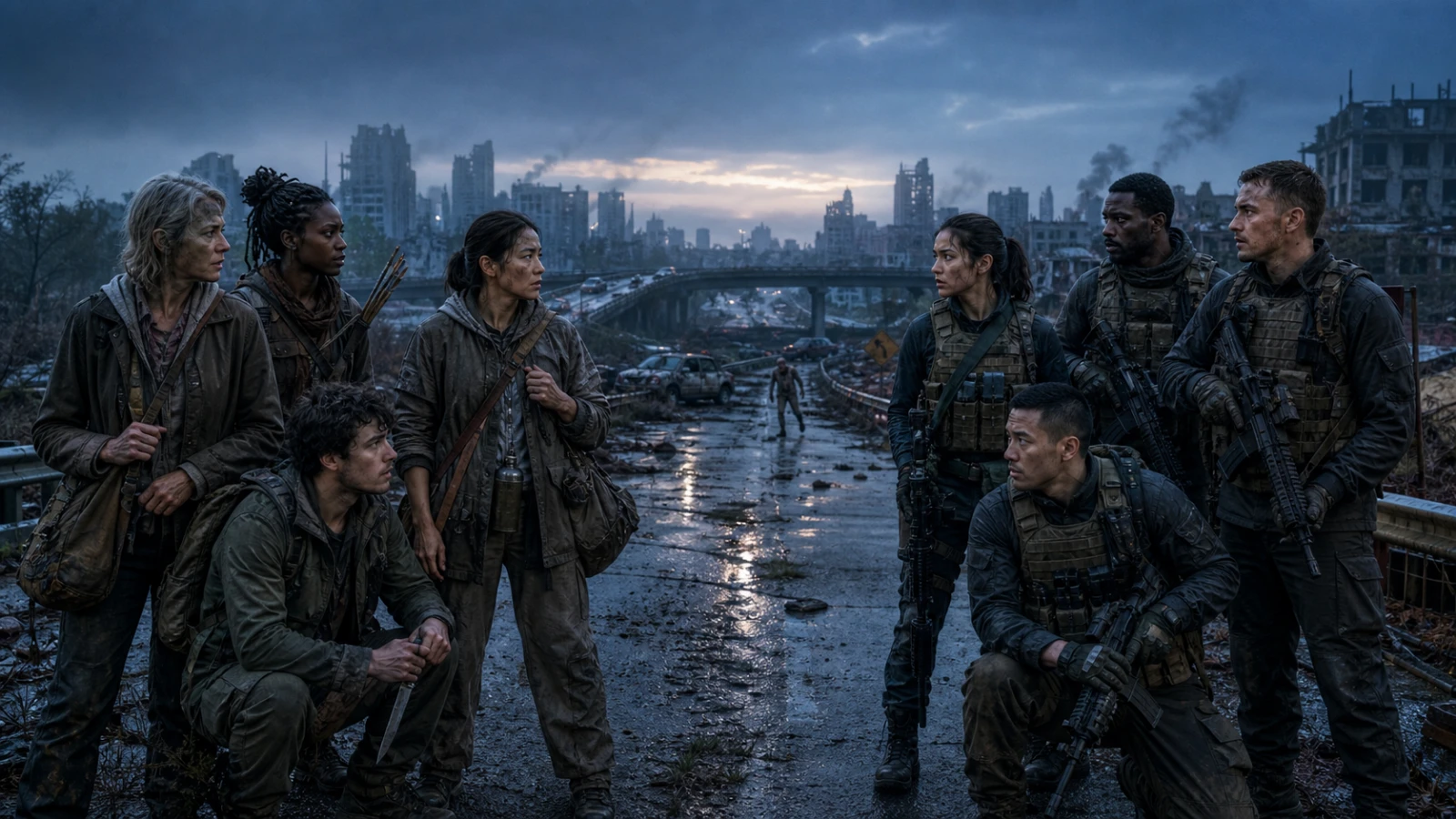
The easiest mistake in comparing The Walking Dead with the Extinction Cycle is assuming that experience surviving walkers would translate cleanly into experience surviving Variants.
It would not.
The survivors of The Walking Dead are extraordinarily capable by the standards of their own world. Rick Grimes learns to command communities through collapse, war and reconstruction. Daryl Dixon becomes one of the most reliable trackers and scouts in the franchise. Michonne is lethal at close range and unusually composed when operating alone. Carol Peletier evolves from a vulnerable civilian into a patient, deceptive and ruthless problem solver. Maggie Greene develops into a political and community leader capable of managing both people and resources. Glenn Rhee repeatedly proves that speed, nerve and route-finding can be as important as firepower. Hershel Greene represents a different kind of survival asset: medical judgment, moral steadiness and agricultural knowledge.
Drop those same people into Nicholas Sansbury Smith's Extinction Cycle, however, and the survival equation changes immediately.
The problem is not merely that Variants are "stronger zombies." The threat model itself is different. The infected of the Extinction Cycle are fast, predatory, biologically altered hunters created through the VX-99 and Hemorrhage Virus catastrophe. They climb, stalk, ambush and adapt. Across the series, Variant behavior becomes more complex rather than more predictable. Military teams are repeatedly forced to revise assumptions because the enemy does not remain static. Later forms survive environments that would once have seemed safe, and the postwar Dark Age setting makes clear that humanity's recovery depends on fortified outposts, patrols, organized logistics, standing military forces and strict security procedures.
That means the question is not simply, "Which Walking Dead characters are toughest?"
The more useful questions are:
- Who recognizes fast enough that walkers have taught them the wrong habits?
- Who can operate inside a professional chain of command?
- Who can learn military communications, sectors, mission planning and extraction discipline?
- Who remains useful when the enemy is too fast for improvised melee fighting?
- Who brings community skills that Team Ghost does not specialize in?
- Who becomes a liability because independence, ego or moral hesitation conflicts with mission requirements?
The answer produces a much more interesting crossover than a simple power ranking.
Some Walking Dead survivors would adapt remarkably quickly.
Some would survive only after a brutal first lesson.
And a few of the most dominant personalities in their own world would discover that Team Ghost has no interest in being dominated.
The First Rule of the Crossover: Forget What Walkers Taught You
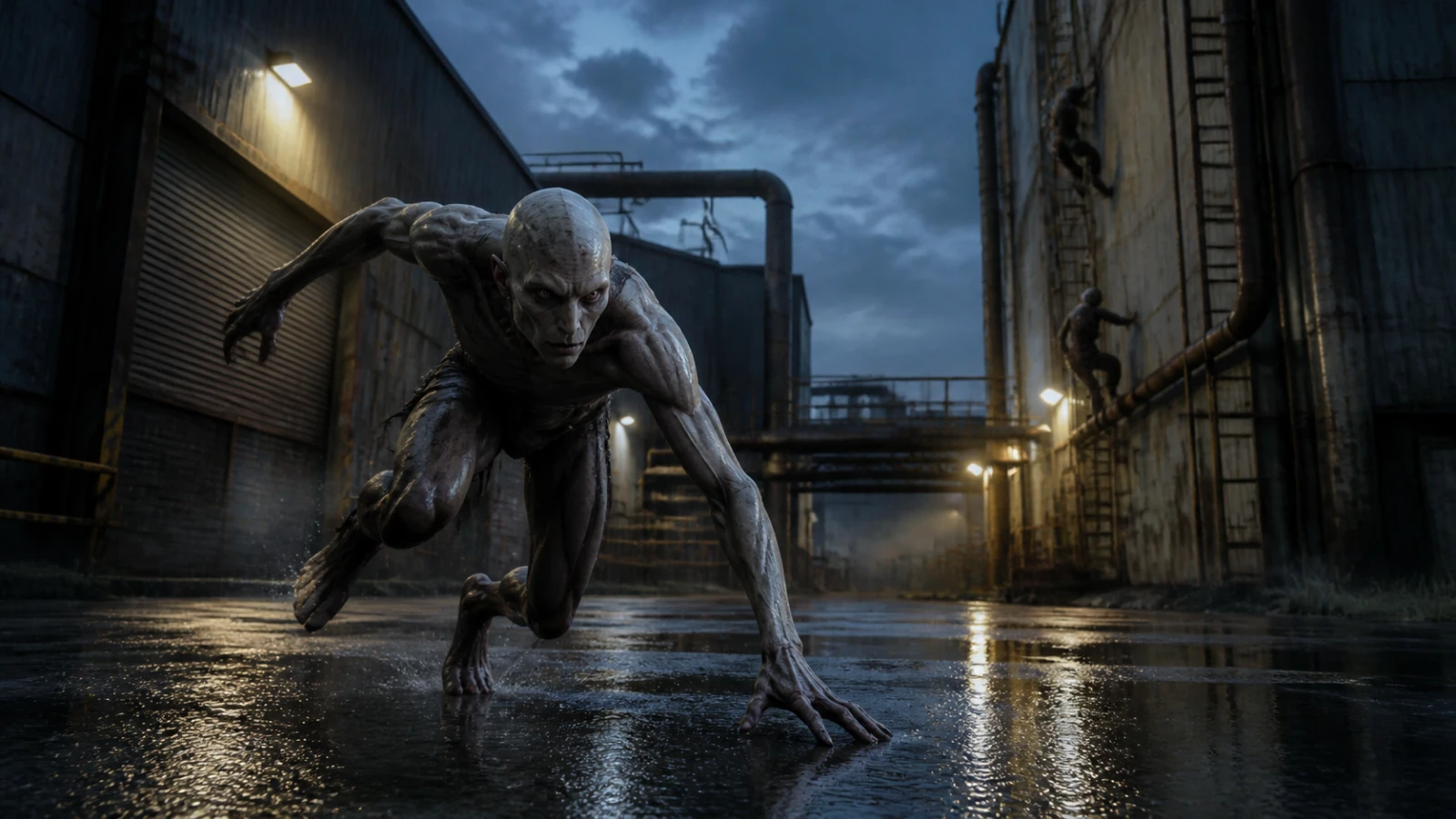
Walkers create one enormous tactical advantage for experienced survivors: time.
Even when there are many of them, the traditional walker is usually slow enough to observe, redirect, evade or destroy with controlled movement. Survivors learn to read streets before entering them. They learn to conserve ammunition. They become comfortable fighting at close range because one walker can often be handled quietly with a knife, blade or improvised weapon. Large herds are catastrophic, but individual walkers are usually understandable.
Variants remove that comfort.
The Extinction Cycle establishes from its earliest books that infected humans have become predators rather than shambling corpses. In Extinction Age, Reed Beckham and Team Ghost are chased through Manhattan tunnels by creatures capable of moving across walls and ceilings, probing the team's defenses and forcing highly trained operators to keep moving with almost no ammunition. In Extinction Evolution, reconnaissance teams encounter evidence that the Variants continue changing, including threats that undermine assumptions about coastlines and water. The larger series repeatedly treats intelligence about Variant behavior as perishable information.
That single difference would reorder almost every Walking Dead survivor's skill set.
A knife-first fighter would need to become gun-first.
A scout accustomed to watching a walker herd from fifty yards away would need to assume the creatures might already be watching back.
A survivor who relies on disappearing into a building could discover that the walls, roofline or upper floors provide no protection.
A leader used to sending one trusted person ahead might learn that reconnaissance against Variants should rarely mean "one person alone."
Most importantly, the Walking Dead survivors would have to abandon the psychological assumption that experience guarantees familiarity.
The Extinction Cycle punishes that assumption constantly.
Why Team Ghost Changes the Leadership Test
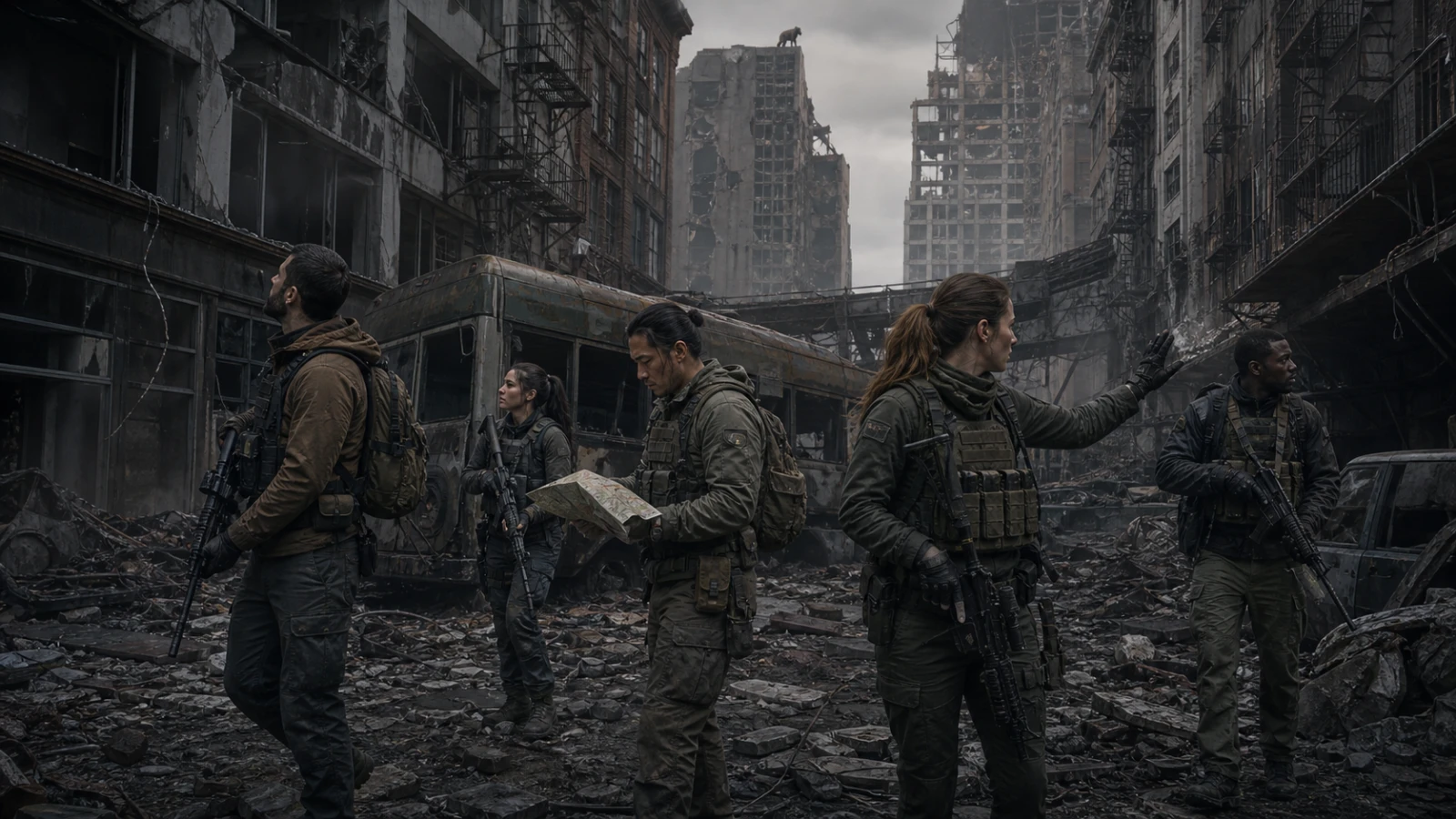
The second major adjustment would not come from the Variants. It would come from the humans fighting them.
Team Ghost is not a loose survivor group. It is a special operations unit shaped by professional military training, clear roles, radio discipline and a culture of mission execution. Reed Beckham's original Team Ghost and the later unit under Joe Fitzpatrick survive because individual competence is subordinated to coordinated action.
That would feel alien to several Walking Dead characters.
Rick's groups frequently operate through personal authority. People follow Rick because of history, trust, loyalty and earned legitimacy. Daryl often works best when given broad freedom. Carol is most effective when she can hide her intentions. Michonne is capable of integrating into groups but has a strong independent streak. Negan's original leadership model is based on domination, ritual and fear.
Team Ghost does not care about any of those reputations.
Inside a Ghost operation, the most important questions are simpler.
What is your role?
What is your sector?
What is the objective?
Do you understand the contingency plan?
Can the team trust you to do exactly what you said you would do when the situation collapses?
This is where some Walking Dead survivors would rise immediately and others would clash.
Field Leaders: Rick Grimes, Maggie Greene and Negan
Rick Grimes: Excellent leader, difficult subordinate
Rick Grimes would be one of the most valuable Walking Dead survivors to enter the Extinction Cycle, but not because Team Ghost needs another rifleman.
His real value is leadership under social collapse.
Rick has spent years making decisions for people who are not soldiers. He understands fear, morale, grief, factional tension and the way desperation changes otherwise reasonable people. That matters enormously in the Extinction Cycle, particularly in the later Allied States period when survival is no longer limited to clearing buildings and killing Variants.
In a refugee convoy, evacuation center or damaged outpost, Rick would be useful almost immediately.
He can organize frightened civilians.
He can establish watches.
He can identify unreliable personalities.
He can make hard choices before consensus arrives.
And because he has repeatedly lived with the consequences of his mistakes, he is less likely than an inexperienced politician to believe authority is clean.
His first problem would be tactical recalibration.
Rick is aggressive when necessary and comfortable with firearms, but even an experienced walker survivor would initially underestimate just how little reaction time a Variant allows. The first time a creature crossed a wall, came through a second-story opening or attacked at a sprint would probably cure that mistake permanently.
Rick's larger challenge would be command.
He would respect Reed Beckham once he saw Beckham operate. Competence matters to Rick. He follows people he believes are protecting the group rather than protecting their status.
But Rick is not naturally passive inside someone else's decision structure.
If a mission order threatened civilians he believed could still be saved, he would argue.
If command withheld information, his suspicion would grow quickly.
If Reed made a call Rick believed sacrificed people unnecessarily, the disagreement would not remain private for long.
That tension would not necessarily be destructive. Reed himself becomes deeply skeptical of commanders who conceal critical information. The two men could understand each other faster than their backgrounds suggest.
The likely result is that Rick would not become a permanent Team Ghost operator. He would become something potentially more useful: a civilian or outpost leader whom Team Ghost trusted.
Adaptation speed: High Variant survival outlook: High after first-contact recalibration Team Ghost compatibility: Moderate Best role: Outpost commander, civilian evacuation leader, coalition liaison
Maggie Greene: Better fit for the Allied States than for Team Ghost
Maggie might be the Walking Dead character who fits most naturally into the Dark Age version of the Extinction Cycle.
By that period, the Allied States is attempting something far more complicated than survival. It is maintaining agricultural production, defended settlements, infrastructure and political legitimacy while still facing Variant attacks, raiders and human collaborators.
That environment needs people who understand both communities and hard security.
Maggie does.
She has experience with food production, settlement leadership, diplomacy, loss and conflict with rival communities. Unlike a pure tactical commander, she understands that the number of rifles in an outpost matters less if people no longer believe the settlement is worth defending.
She would probably struggle less than Rick with formal authority because her later leadership style is more institutional. She can negotiate with other leaders without treating every disagreement as personal.
She is not the person Team Ghost wants breaching the first room of a Variant nest.
She is exactly the kind of person the Allied States would want running the settlement everyone returns to when the mission is over.
Adaptation speed: High Variant survival outlook: High within organized defenses Team Ghost compatibility: High as a partner, not an operator Best role: Outpost governor, agricultural coordinator, regional civilian leader
Negan: Useful in a fight, corrosive in the chain of command
Negan is where the crossover becomes volatile.
He is charismatic, observant, fearless under pressure and capable of understanding the psychology of violence. He can organize large groups. He can impose rules. He can identify weakness.
Those are real survival assets.
They are also exactly why Team Ghost would distrust him.
The Savior model of leadership is built around personal domination. Team Ghost's command structure is built around professional responsibility. Those systems may both look hierarchical from a distance, but morally and operationally they are opposites.
Negan expects the structure to reinforce his personality.
A special operations unit expects the personality to serve the structure.
If Negan proved useful, Beckham might use him in a narrow role. He could help read a hostile faction, evaluate coercive personalities or assist with controlled prisoner handling under supervision.
But Reed would never surrender command culture to him.
Negan's greatest danger would be assuming that charisma could substitute for competence in front of people such as Horn, Fitz or Beckham. It could not.
Against Variants, he would also have to abandon theatrical close-range confidence. A bat is not a credible primary answer to a creature capable of crossing a room before a human finishes reacting.
Adaptation speed: Moderate Variant survival outlook: Moderate to high if disciplined Team Ghost compatibility: Low Best role: Controlled human-threat specialist, never independent operational command
Scouts and Trackers: Daryl Dixon and Glenn Rhee
Daryl Dixon: Probably the fastest overall adapter
If the Walking Dead survivors arrived in the Extinction Cycle with no preparation, Daryl Dixon might adapt faster than anyone.
His biggest strength is not the crossbow.
It is field perception.
Daryl notices tracks, disturbed vegetation, sound patterns and signs other people ignore. He is comfortable living outside fortified communities. He can move quietly, hunt, improvise and remain functional with minimal support.
Those traits translate extremely well.
His major adjustment would be understanding that Variant tracking is two-sided.
A walker does not deliberately circle downwind to find you.
A more intelligent predator might.
A walker does not exploit elevation with the same speed.
Variants can.
Daryl's hunting mentality would help him make that conceptual shift. He already thinks in terms of predators, prey, scent, terrain and escape routes. Once he saw that Variants behaved more like aggressive hunting animals than walkers, his entire mental model would update.
His equipment would change immediately.
The crossbow would remain useful for hunting and occasional silent kills, but it would become a secondary tool. Daryl would need a suppressed rifle, night-vision training, radio procedure and a much greater respect for ammunition planning.
The surprising question is whether he could function inside Team Ghost.
At first, probably badly.
Daryl hates unnecessary authority. He does not respond well to people who demand obedience before earning respect.
But Team Ghost is different from bureaucracy for bureaucracy's sake. Its rules exist because one undisciplined movement can expose the whole unit.
Daryl would test the structure.
Then he would probably accept it once he realized the people giving orders were going through the same door he was.
He could become an exceptional reconnaissance asset, especially paired with an operator capable of translating his tracking instincts into military reporting.
Adaptation speed: Very high Variant survival outlook: Very high Team Ghost compatibility: Moderate at first, high after trust is earned Best role: Scout, tracker, forward reconnaissance, rural Variant hunter
Glenn Rhee: The underrated mission specialist
Glenn is easy to underestimate because his earliest defining skill is moving through cities and retrieving supplies.
In the Extinction Cycle, that becomes extremely valuable.
Glenn is fast, spatially aware, willing to move through dangerous urban spaces and generally less ego-driven than many of the group's dominant personalities. He listens. He learns. He can execute a narrow task without needing to control the entire plan.
Team Ghost would appreciate that.
The problem is that Glenn's traditional solo or small-team supply runs would become far more dangerous. Variants eliminate the cushion that lets a clever runner improvise after being spotted.
His success would depend on training.
If Team Ghost taught Glenn radio brevity, route planning, movement discipline, observation reporting and the rule that extraction plans must exist before contact, he could become one of the best crossover mission assets.
He would never outshoot an experienced Delta operator.
He would not need to.
The value of reconnaissance is returning with the information.
Adaptation speed: Very high Variant survival outlook: High with training Team Ghost compatibility: Very high Best role: Urban scout, courier, logistics reconnaissance, extraction support
Lone Operators: Michonne and Carol Peletier
Michonne: Elite instincts, dangerous preference for close combat
Michonne's psychological fit with the Extinction Cycle is excellent.
Her preferred weapon is not.
She is disciplined, patient, difficult to intimidate and comfortable surviving alone. She has excellent situational awareness and rarely needs emotional reassurance to keep functioning.
Those qualities would impress Team Ghost.
Her sword would worry them.
Against walkers, the katana is efficient. It is quiet, reusable and devastating in practiced hands.
Against Variants, voluntarily entering blade range would be an unnecessary gamble.
The series itself contains operators who use blades, but that does not make melee the preferred solution to an intelligent, fast-moving biological predator. Michonne would need to reclassify the sword from primary weapon to emergency tool.
If she accepted that change, she could become formidable.
She has the mentality for stealth reconnaissance, prisoner movement and high-risk missions where composure matters more than brute force.
She also has enough experience with authoritarian personalities to remain alert around command without automatically rejecting it.
Of the Walking Dead's strongest lone operators, Michonne might be the easiest to integrate into a disciplined military team.
Adaptation speed: High Variant survival outlook: Very high once she abandons melee-first habits Team Ghost compatibility: High Best role: Reconnaissance, security, special mission support
Carol Peletier: The person Team Ghost would never fully stop watching
Carol is a different kind of dangerous.
She wins by being underestimated.
That makes her extraordinarily effective against human threats in the Extinction Cycle. Collaborators, infiltrators and hostile settlements would have difficulty reading her until she had already decided what to do.
She is patient enough to wait.
She is emotionally capable of carrying actions other people cannot.
She can look harmless while planning violence.
Against Variants, however, deception has limited value. A biological predator does not care that Carol appears nonthreatening.
Her greatest adaptation would therefore be moving from social stealth to operational stealth.
She would need firearms proficiency appropriate to the new threat, movement discipline and a willingness to stop improvising independently when her actions could compromise a larger operation.
That final requirement would create friction.
Carol's instinct is often to act alone because she believes secrecy protects other people from the moral weight of the decision.
Team Ghost would see secrecy inside an operation as a potential mission failure.
Reed would respect her ability.
He would not tolerate hidden objectives.
That relationship could become one of the most interesting in the crossover.
Adaptation speed: High Variant survival outlook: High Team Ghost compatibility: Moderate Best role: Counter-infiltration, intelligence support, human-threat operations
Medics, Healers and Knowledge Keepers: Hershel Greene
Hershel's survival value demonstrates why crossover comparisons cannot be reduced to combat rankings.
He would not belong on a Team Ghost assault.
He might be more important to an outpost than several people who could.
The Extinction Cycle repeatedly separates battlefield survival from biological understanding. Kate Lovato and other scientists matter because the Variants cannot be defeated solely through marksmanship. In a rebuilding society, medicine, sanitation, food production and calm judgment become strategic resources.
Hershel brings all four.
His veterinary background would not turn him into an infectious-disease scientist. But practical medical care is desperately important in any outpost. So is his knowledge of animals and farming. So is his capacity to tell frightened people the truth without turning every decision into panic.
His greatest weakness would be physical exposure.
The Extinction Cycle offers less room for a slower older survivor to improvise his way out of a perimeter breach.
Put Hershel outside the walls during a Variant attack and his odds decline sharply.
Put him inside a functioning agricultural outpost with guards, supplies and a clinic and he becomes exactly the kind of person reconstruction depends on.
Adaptation speed: Moderate Variant survival outlook: Low in open combat, high inside secure community systems Team Ghost compatibility: High in support role Best role: Clinic support, livestock care, agriculture, civilian counsel
Community Builders: Maggie, Ezekiel and the People Who Make Survival Worthwhile
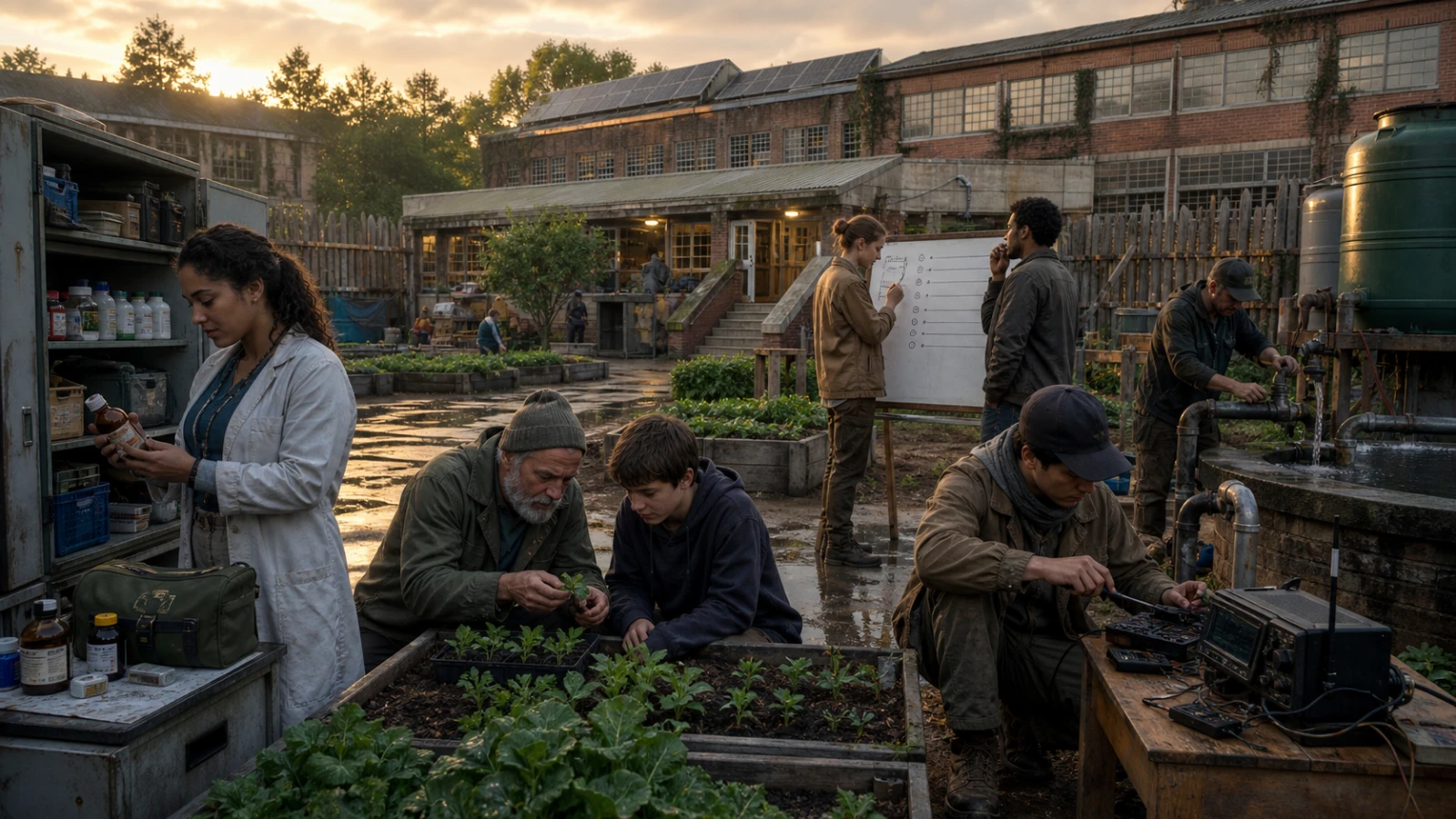
A military apocalypse story can create the illusion that the person with the rifle is always the most important person.
The Dark Age era argues otherwise.
The Allied States survives because people restore agriculture, manufacturing, energy and defended communities. Team Ghost can rescue prisoners and destroy threats, but soldiers cannot substitute for an entire society.
This is where Walking Dead community builders become disproportionately valuable.
Maggie understands agricultural settlement leadership.
Ezekiel understands morale, ceremony and the psychological importance of making a community feel larger than its fear.
Even characters who are not elite fighters can become essential once the immediate extinction event becomes a reconstruction problem.
The strongest crossover settlement would therefore not be a giant version of Team Ghost.
It would combine Ghost's security discipline with the Walking Dead survivors' hard-earned understanding of civilian community.
That is where the two franchises complement each other best.
Who Adapts Fastest?
If the Walking Dead group were given forty-eight hours of briefing before being sent into an Extinction Cycle outpost, the fastest adapters would probably be Daryl, Michonne, Glenn, Maggie and Carol.
1. Daryl Dixon
Daryl already thinks like a tracker facing dangerous animals. The conceptual jump from walker to Variant would happen quickly.
2. Michonne
Her composure and discipline translate immediately. The main adjustment is weapon doctrine.
3. Glenn Rhee
Glenn's humility is an advantage. He is less likely to insist that old methods remain correct simply because they worked before.
4. Maggie Greene
Maggie would recognize quickly that the outpost system is not merely military authoritarianism. It is also logistics, agriculture and civil defense.
5. Carol Peletier
Carol adapts to environments by reading what people expect from her and then changing faster than they do. The risk is whether she adapts to the chain of command or merely works around it.
Rick would be close behind, but he would spend more time questioning the human structure.
That could be healthy.
It could also be dangerous during the first mission.
Who Is Most Likely to Underestimate the Threat?
The most dangerous characters are not necessarily the weakest.
They are the people whose existing success teaches them the wrong lesson.
Negan
Negan's confidence is built partly on controlling the emotional temperature of a room. Variants do not negotiate, fear humiliation or respond to theatrical dominance.
The first encounter would be a brutal correction.
Early-series Rick
Rick becomes enormously adaptable, but an early Rick arriving directly from the walker crisis might assume that a firearm, a barricade and a determined group provide more time than they actually do.
Any melee-first fighter
The biggest crossover trap is believing that because a blade works against walkers, it remains a rational default against Variants.
It does not.
Anyone who believes walls are safety
The Extinction Cycle repeatedly attacks this assumption. Fortifications matter, but Variant climbing, adaptation and evolving forms mean walls buy time rather than guaranteeing survival.
Who Clashes Most with Team Ghost?
Negan: Severe conflict
Negan wants hierarchy centered on himself.
Team Ghost centers hierarchy on mission responsibility.
That conflict is structural.
Rick: Productive conflict
Rick would challenge orders he considered morally or tactically unsound, but he understands responsibility. Reed would dislike the challenge less than he disliked incompetence.
Carol: Quiet conflict
Carol's secrecy would create the problem. Team Ghost can tolerate independent thinking. It cannot tolerate undisclosed mission changes.
Daryl: Early friction, later respect
Daryl resists authority until he trusts the person exercising it. Ghost operators earn respect by competence and shared risk, which gives this relationship a path to success.
Michonne: Low conflict
Michonne is independent without needing to control everyone around her. She would likely integrate better than expected.
Glenn: Minimal conflict
Glenn's willingness to listen and perform a defined task makes him an unusually clean fit.
What Team Ghost Would Actually Do With Them
A realistic crossover would not simply make every Walking Dead survivor a Ghost operator.
That would waste their strengths.
A better structure would look something like this:
| Character | Likely Extinction Cycle role | Team Ghost fit | Major adjustment |
|---|---|---|---|
| Rick Grimes | Outpost security / civilian commander | Moderate | Accept professional mission authority |
| Daryl Dixon | Tracker / reconnaissance | High after acclimation | Replace crossbow-first doctrine with suppressed rifle and radio discipline |
| Michonne | Recon / protective detail | High | Avoid unnecessary melee range |
| Carol Peletier | Counter-infiltration / intelligence | Moderate | Stop concealing independent objectives |
| Maggie Greene | Outpost leadership / logistics | Very high as civilian partner | Learn military threat reporting |
| Glenn Rhee | Urban scout / courier / extraction support | Very high | Never scout Variants as if they were walkers |
| Hershel Greene | Medical / agriculture support | High in outpost | Remain inside protected systems during attacks |
| Negan | Human-threat consultant under supervision | Low | Submit personality to command structure |
| Ezekiel | Morale / community organization | High in civilian role | Replace symbolic security with real perimeter doctrine |
The core lesson is that Team Ghost would not ask, "Who is the coolest survivor?"
It would ask, "Where does this person's competence increase the whole system's chance of survival?"
That is a very different standard.
The Outpost Test
The Allied States outposts create another challenge for the Walking Dead survivors.
Many of them spent years learning not to trust systems.
The Extinction Cycle's postwar society requires systems to survive.
Food production has schedules.
Walls require maintenance.
Weapons need inventories.
Patrols need rotations.
Medical supplies have priorities.
Civilians cannot simply leave a gate open because someone they know is approaching.
Unscheduled movement can expose everyone.
A survivor culture built around personal discretion would have to become a civil-defense culture built around predictable procedure.
Maggie would probably embrace that fastest.
Rick would support it but remain watchful of leaders who used emergency rules to accumulate permanent power.
Daryl would hate paperwork and follow the rules that visibly kept people alive.
Carol would obey until she believed the rules prevented necessary action.
Negan would immediately search for where the rules created leverage.
Hershel would remind everyone why rules exist without treating rules as morality themselves.
This is where the Walking Dead survivors might actually improve the Allied States.
They have experienced the danger of both chaos and authoritarianism.
They know walls can create false confidence.
They know leaders can become threats.
They know communities need more than fear to hold together.
The best crossover outcome would not be the Walking Dead group becoming more military.
It would be both groups learning from each other.
What the Walking Dead Survivors Could Teach Team Ghost
The transfer of knowledge would not be one-sided.
Team Ghost has superior formal tactical training.
That does not mean Team Ghost has mastered every form of survival.
Walking Dead survivors possess deep expertise in civilian collapse.
They know what happens when frightened people live together for months with no reliable state.
They know how quickly grief can become factional conflict.
They recognize how charismatic personalities can build dangerous parallel authority.
They understand the importance of rituals, meals, farming, schools, children and ordinary routines in convincing people that survival has a purpose.
Special operations forces are designed to accomplish missions.
Communities are designed to continue existing.
The Allied States needs both.
Rick and Maggie could help military leaders understand when security rules are damaging legitimacy.
Carol could identify human infiltrators who did not behave like conventional enemy soldiers.
Daryl could teach rural scouts to read terrain at a level that formal military training does not always prioritize.
Hershel could reinforce the connection between food, medicine, livestock and morale.
The Extinction Cycle world might make the Walking Dead survivors better tacticians.
The Walking Dead survivors might make the Allied States better at being a society.
Final Ranking: Who Has the Best Chance?
This is not a ranking of who is "best" as a character. It is a speculative ranking of who would most quickly become useful in the specific threat environment of the Extinction Cycle.
| Rank | Character | Overall fit | Why |
|---|---|---|---|
| 1 | Daryl Dixon | Excellent | Tracking, adaptability, low-resource survival and comfort outside walls translate immediately |
| 2 | Michonne | Excellent | Discipline, composure and independent survival skills fit high-risk reconnaissance |
| 3 | Maggie Greene | Excellent | The Allied States needs durable civilian leadership as much as fighters |
| 4 | Glenn Rhee | Very strong | Fast learner, urban mobility, low ego and excellent mission support potential |
| 5 | Rick Grimes | Very strong | Elite crisis leader whose main friction would be command authority |
| 6 | Carol Peletier | Very strong but risky | Exceptional against humans, but secrecy conflicts with professional operations |
| 7 | Hershel Greene | High strategic value | Low combat fit but extremely important for medicine, agriculture and stability |
| 8 | Ezekiel | Strong community value | Morale and institution building matter in reconstruction |
| 9 | Negan | Powerful but dangerous | Useful against human adversaries, poor fit for Team Ghost culture |
Daryl probably adapts fastest.
Michonne probably makes the cleanest transition into high-risk field work.
Maggie may be the most important long-term addition.
Glenn may surprise everyone by becoming the easiest person for Team Ghost to actually train.
Rick may become the strongest bridge between military authority and civilian legitimacy.
Carol may become the person intelligence officers value and operations officers worry about.
Negan may be the one person Reed Beckham refuses to ever stop monitoring.
Final Verdict
The Walking Dead survivors would not enter the Extinction Cycle as helpless civilians.
They would enter with the wrong apocalypse education.
That difference matters.
They already know how to lose homes, bury friends, ration food, read strangers and keep moving after civilization collapses. They understand the emotional realities of survival better than most people ever could.
What they do not know is how fast the monster can move.
They do not know that the thing hunting them may climb the building instead of entering the door.
They do not know that yesterday's Variant may not represent tomorrow's Variant.
They do not know what it means to conduct a military reconnaissance mission against an enemy whose biology is changing while scientists race to interpret what soldiers are seeing.
And most of them do not know what it means to operate inside a unit where personal instinct must sometimes submit to a preplanned role.
The survivors who live are the ones who recognize that quickly.
Daryl changes his weapon.
Michonne changes her distance.
Glenn changes his reconnaissance assumptions.
Maggie changes from settlement survivor to outpost administrator.
Rick changes from unquestioned group leader to a partner inside a larger security system.
Carol learns that secrecy can protect a person while endangering a mission.
The characters who fail are the ones who try to force the Extinction Cycle to behave like The Walking Dead.
That is the central conclusion of the crossover.
Walker experience is valuable.
Variant humility is essential.
And Team Ghost would judge every newcomer by the same unforgiving standard the Extinction Cycle applies to everyone else:
Not whether they were legends in the world they came from.
Whether they can learn fast enough to survive the world they are in.
---
Quick Verdict
Fastest adapter: Daryl Dixon Best field integration: Michonne Best civilian/outpost leader: Maggie Greene Best bridge between civilians and military command: Rick Grimes Best urban mission trainee: Glenn Rhee Most useful against human infiltrators: Carol Peletier Most strategically valuable noncombatant: Hershel Greene Biggest Team Ghost command conflict: Negan
---
FAQ
Would Rick Grimes survive the Extinction Cycle?
Probably, but his first encounters with Variants would force a rapid tactical reset. Rick's leadership, firearms experience and willingness to make difficult decisions translate well. His greatest friction would be working inside an established military chain of command rather than leading his own survivor group.
Would Daryl Dixon be useful to Team Ghost?
Yes. Daryl's tracking, hunting and wilderness skills would make him a strong reconnaissance asset. He would need to replace his crossbow-first approach with modern firearms, night-vision capability and radio discipline for Variant missions.
Could Michonne kill Variants with a sword?
Possibly in an emergency, but deliberately fighting Variants at sword range would be far more dangerous than fighting walkers. Her greatest adaptation would be retaining the sword as a backup while relying on firearms and distance as primary doctrine.
Who from The Walking Dead would fit best in an Allied States outpost?
Maggie Greene may be the strongest overall fit because she combines settlement leadership, agricultural understanding, diplomacy and security awareness. Hershel would also be extremely valuable in medicine, livestock care and agriculture.
Which Walking Dead character would clash most with Team Ghost?
Negan. His personality-centered model of authority conflicts directly with a special operations culture built around mission roles, professional hierarchy and collective accountability.
Is this crossover canon?
No. This is speculative fan criticism comparing established character traits and survival archetypes across two separate fictional universes. No crossover between The Walking Dead and the Extinction Cycle is being claimed as canon.
---
Source and Canon Basis
The Extinction Cycle comparison draws on the primary series and source-indexed canon records:
- Nicholas Sansbury Smith, Extinction Horizon, for Team Ghost, the outbreak, military secrecy and the first Variant encounters.
- Nicholas Sansbury Smith, Extinction Edge and Extinction Age, for the escalation of Variant hunting behavior, New York operations, Team Ghost under pressure and military command failures.
- Nicholas Sansbury Smith, Extinction Evolution, for explicit emphasis on Variant adaptation, changing behavior and reconnaissance against evolving forms.
- Nicholas Sansbury Smith, Extinction End, Extinction Aftermath and Extinction War, for sustained war, human collaborators, rescue operations and post-collapse military responsibility.
- Nicholas Sansbury Smith and Anthony J. Melchiorri, Extinction Cycle: Dark Age, for the Allied States, approximately one hundred outposts, restored agriculture and infrastructure, Joe Fitzpatrick's continued Team Ghost operations and the return of organized Variant threats.
The Walking Dead character analysis draws on the completed flagship television series and AMC's own retrospectives, including its Daryl and Carol character discussion, Maggie episode collection, and series-finale discussion of Rick, Michonne and Ezekiel.
The crossover outcomes are interpretive judgments based on those long-running characterizations, not facts within either canon.
Editorial Disclosure
This is independent fan criticism. Extinction Cycle Wiki is not affiliated with or endorsed by Nicholas Sansbury Smith, his publishers, AMC, Skybound or other rights holders discussed. Every illustration is original, AI-generated, unofficial editorial artwork created for the site; none uses franchise media or an actor likeness.