
Apocalypse leadership comparison
Reed Beckham vs. Other Zombie-Apocalypse Leads
Compare Reed Beckham with Rick Grimes, Joel Miller, Gerry Lane, Robert Neville, and Lee Everett across tactics, trust, politics, and governance.
·
Category: Analysis and Opinion
Where the Delta Force veteran excels as a tactical response leader, and where community legitimacy, politics, and long-term governance reveal the limits of military competence.
Spoiler warning: This analysis discusses Reed Beckham's development across the original Extinction Cycle saga and the later Dark Age era. It also refers to the basic premises and leadership arcs of The Walking Dead, The Last of Us, World War Z, I Am Legend, and Telltale's The Walking Dead.
The quick verdict
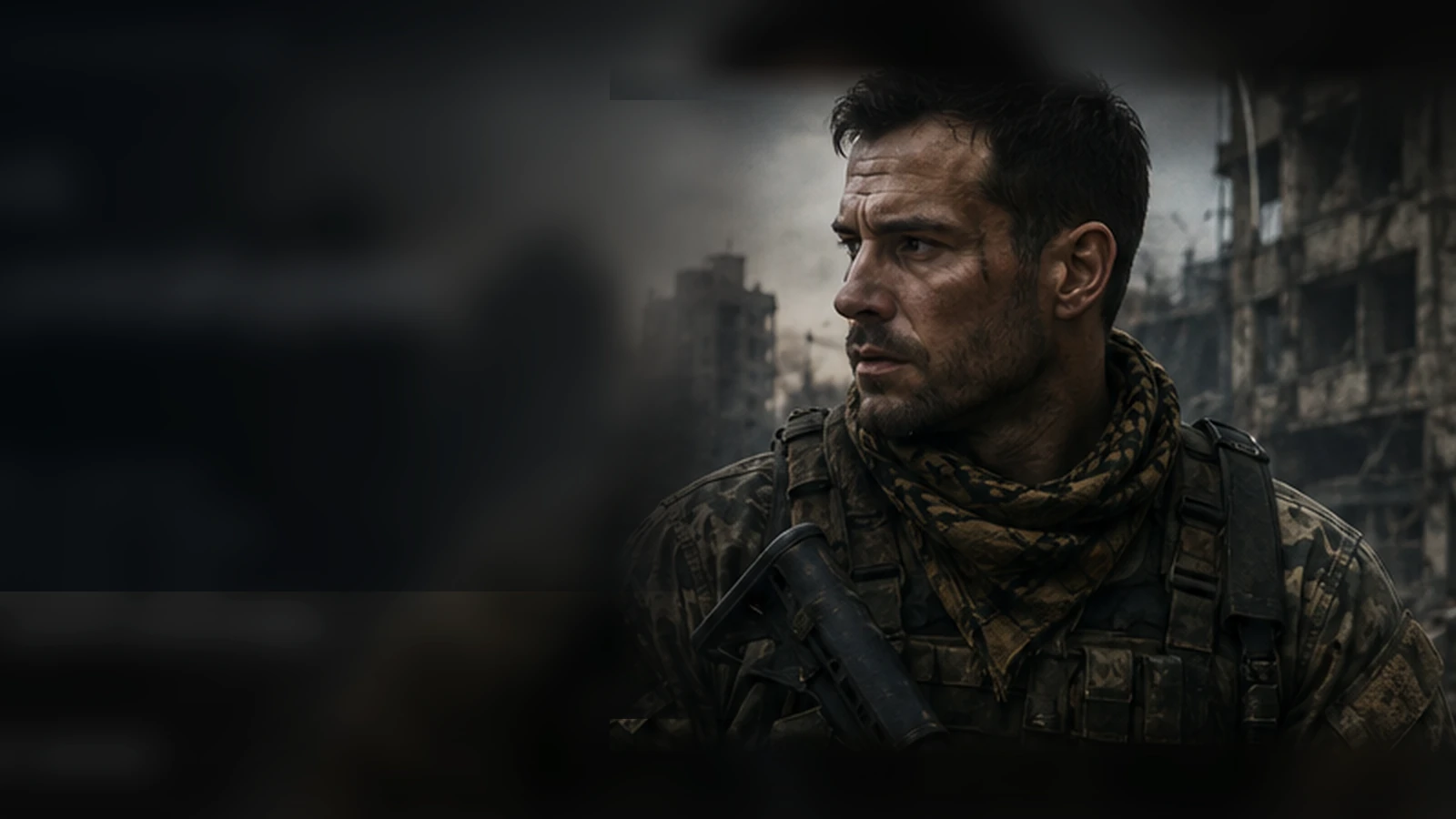
Reed Beckham is one of apocalypse fiction's strongest tactical response leaders. He is trained to enter bad situations before anyone else, identify the immediate objective, organize a small team, act with incomplete intelligence, and keep moving after a plan collapses. In the opening stages of an extinction event, very few familiar genre protagonists are better equipped to lead.
That does not make him the best leader for every phase of the apocalypse.
The traits that make Beckham exceptional inside Team Ghost do not automatically provide democratic legitimacy, civilian trust, political patience, economic vision, or the ability to govern a large and divided population. His authority is strongest when danger is immediate and the objective is clear. It becomes less complete when the central problem is no longer how to survive the next hour, but how to distribute power, rebuild institutions, reconcile factions, and persuade people who are not under his command.
That distinction is the key to comparing Beckham with other major apocalypse leads. Rick Grimes develops community legitimacy. Joel Miller embodies intimate protection and personal loyalty. The film version of Gerry Lane operates as a global investigator and systems thinker. Robert Neville represents isolated scientific persistence. Lee Everett builds trust through care, moral example, and mentorship. Beckham surpasses most of them in tactical preparation, mission discipline, and small-unit command. Several surpass him in areas that become more important after the shooting stops.
The most accurate conclusion is therefore not that Beckham is the single best apocalypse leader. It is that he may be the best person to lead a high-risk response mission, provided someone else is prepared to build the society that mission is meant to save.
Why Reed Beckham is a different kind of apocalypse protagonist
Many zombie-apocalypse leads become leaders by accident. They wake after the collapse, lose contact with the old world, gather a few survivors, and discover through failure what authority now requires. Their leadership is improvised. It grows from personality, relationships, trauma, and the willingness to make decisions when nobody else will.
Beckham begins from a different position. He enters the Extinction Cycle as a professional special-operations soldier and the leader of Team Ghost. Before society collapses, he already understands reconnaissance, communications, weapons, extraction planning, command discipline, and the psychology of operating under lethal pressure. He does not have to discover how to move a team through hostile terrain. He has already spent years doing it.
That difference matters because the Variants are not slow, stable, or predictable undead. They are living predators created through the fictional VX-99 program and the Hemorrhage Virus. They sprint, climb, use darkness, exploit terrain, and evolve. The normal advantage enjoyed by a clever survivor against one slow walker disappears. A Variant can punish hesitation before an untrained person has finished deciding what to do.
Beckham is built for that compressed decision window. His skill is not simply that he can shoot well. It is that he can recognize the shape of a tactical problem while everyone around him is still reacting emotionally to the existence of the problem.
His introduction during the Building 8 crisis establishes the pattern. Team Ghost is sent on a supposedly limited mission, only to discover that command has withheld essential information and the facility contains a threat far beyond the briefing. Beckham has to protect scientists, control frightened personnel, preserve his remaining operators, and locate an exit while the mission's original assumptions collapse. His leadership is already being tested on two levels: against the enemy in front of him and against the institutional failure behind him.
That combination follows him through the series. Beckham is rarely given enough truth, enough time, or enough people. He continues to lead anyway.
Apocalypse leadership is phase-specific
A useful comparison begins by separating the apocalypse into phases. Different kinds of leadership dominate each one.
Phase one: shock and immediate survival
The first requirement is rapid threat recognition. Leaders must move people, secure exits, stop panic, control noise, and make decisions before the danger is fully understood. Beckham is exceptionally strong here.
Phase two: organized resistance
The survivors need patrols, intelligence, defensive plans, specialists, logistics, and a chain of command. Beckham remains highly effective because this phase resembles unconventional warfare and special operations.
Phase three: community formation
The problem changes. Food production, medical care, conflict resolution, family safety, education, labor, and civilian consent become as important as combat. Beckham can defend this system, but other characters are better suited to create it.
Phase four: political reconstruction
Large populations require institutions, laws, representation, public trust, succession, and limits on force. Military competence remains necessary, but it is no longer sufficient. This is where figures such as President Jan Ringgold become more important than even the most capable operator.
Phase five: long-term governance
The surviving society has to decide what it is. It must balance security with freedom, veterans with civilians, scarcity with fairness, and emergency authority with legitimate government. Beckham understands the stakes, but the Dark Age material repeatedly shows that he is uneasy with political life and aware that combat leadership does not automatically translate into public office.
This phase model explains why arguments over the “best” apocalypse leader often go nowhere. A leader can be excellent in one stage and dangerous in another. Beckham's great strength is that he knows what he is. His limits become most visible when the world asks him to become something else.
Military training: built for extreme response
Beckham's foundation is elite military training. Within the story, he is a Delta Force operator and the leader of a covert small unit. That background gives him advantages most genre protagonists must slowly develop, if they develop them at all.
He understands small-unit movement
Team Ghost operates through sectors, fields of fire, rear security, spacing, hand signals, communications, and mutual support. Beckham does not treat a group of armed people as a crowd. He treats them as a coordinated system in which every person has an assigned function.
This is a major difference from early Rick Grimes. Rick has law-enforcement experience and strong instincts, but much of his development comes from learning how to lead civilians, negotiate with unstable allies, and turn survivors into defenders. Beckham begins with a trained unit that already understands how to move, clear, cover, and respond.
He can plan for extraction, not only contact
Untrained survivors often focus on the threat directly ahead. Beckham thinks about what happens after the objective is reached. Where is the exit? How much ammunition remains? Who is injured? What route is still open? What noise will the next action create? What enemy response will follow?
That extraction mindset is visible throughout the series. Even when Team Ghost is reduced to improvised options, Beckham continues counting resources and searching for an end state. He is not merely trying to win the current exchange. He is trying to preserve enough capability to survive the next one.
He remains functional while injured and exhausted
Apocalypse fiction often turns physical punishment into a test of will. Beckham's endurance is more than stubbornness. Military conditioning allows him to keep processing information while wounded, sleep-deprived, grieving, and under pursuit. In Extinction Age, he is injured, low on ammunition, and pursued through Manhattan tunnels while the city is being bombed above him. He still checks his team, considers their ammunition, uses the terrain, and creates time for movement.
Joel Miller also operates effectively while injured and exhausted, but his methods are more personal and improvisational. Joel is an experienced survivor whose intelligence is grounded in caution, violence, and familiarity with a broken world. Beckham is better at converting several capable people into one coordinated element.
He knows how to use specialists
A strong commander does not need to be the best at every task. Beckham works with scientists, pilots, medics, intelligence personnel, conventional troops, and other special operators. His value is often his ability to protect expertise long enough for it to matter.
This becomes central to his relationship with Kate Lovato. Beckham cannot solve the biological problem with a rifle. Kate cannot reach every sample, captive, or research site without protection. Their partnership gives the series a model of combined leadership: tactical force and scientific knowledge working together without pretending they are interchangeable.
Mission judgment under uncertainty
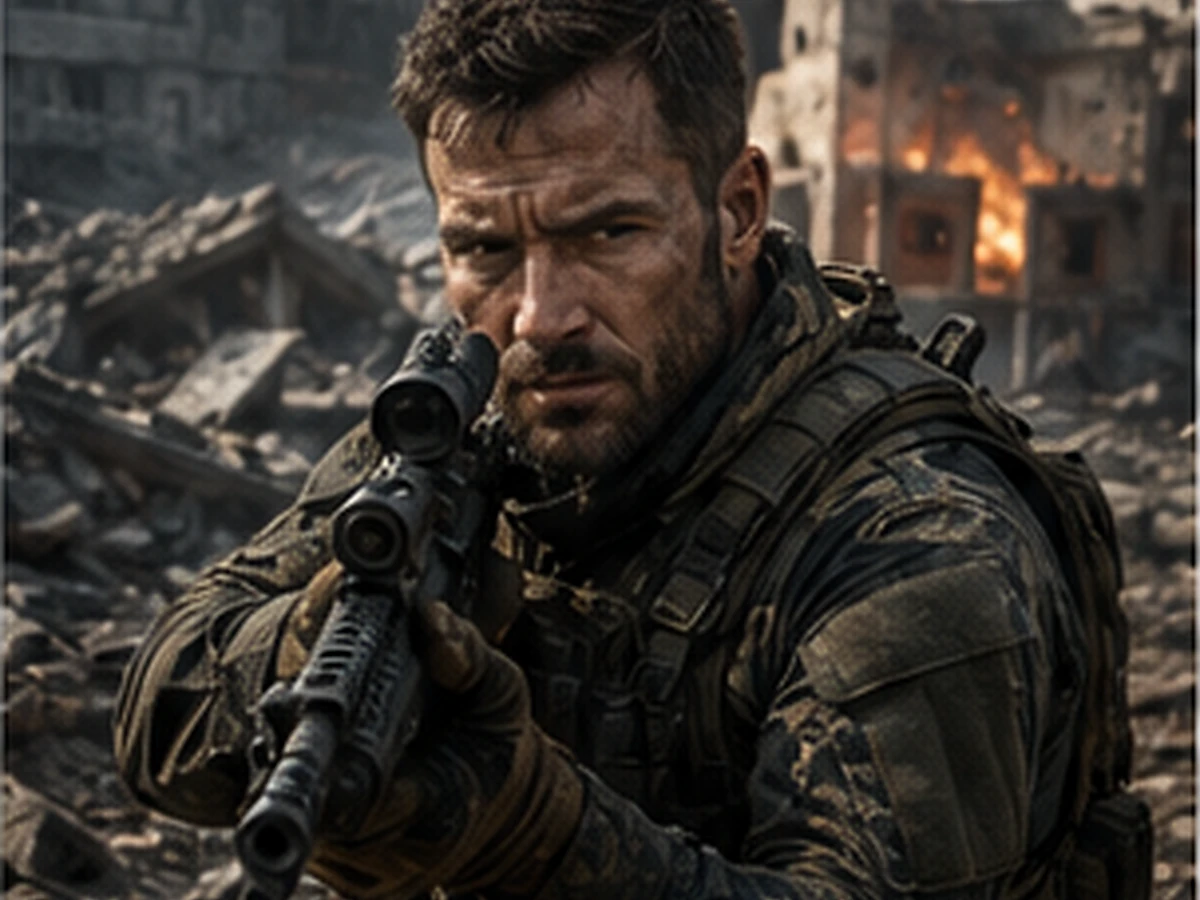
Beckham's most important quality is not weapons proficiency. It is mission judgment when the information is incomplete, false, or changing.
The Building 8 operation begins with deception. Team Ghost is asked to perform a mission without being told the full nature of the threat. Beckham quickly realizes the briefing does not match reality. The normal military danger is multiplied because the institution giving the orders has compromised the operator's ability to plan.
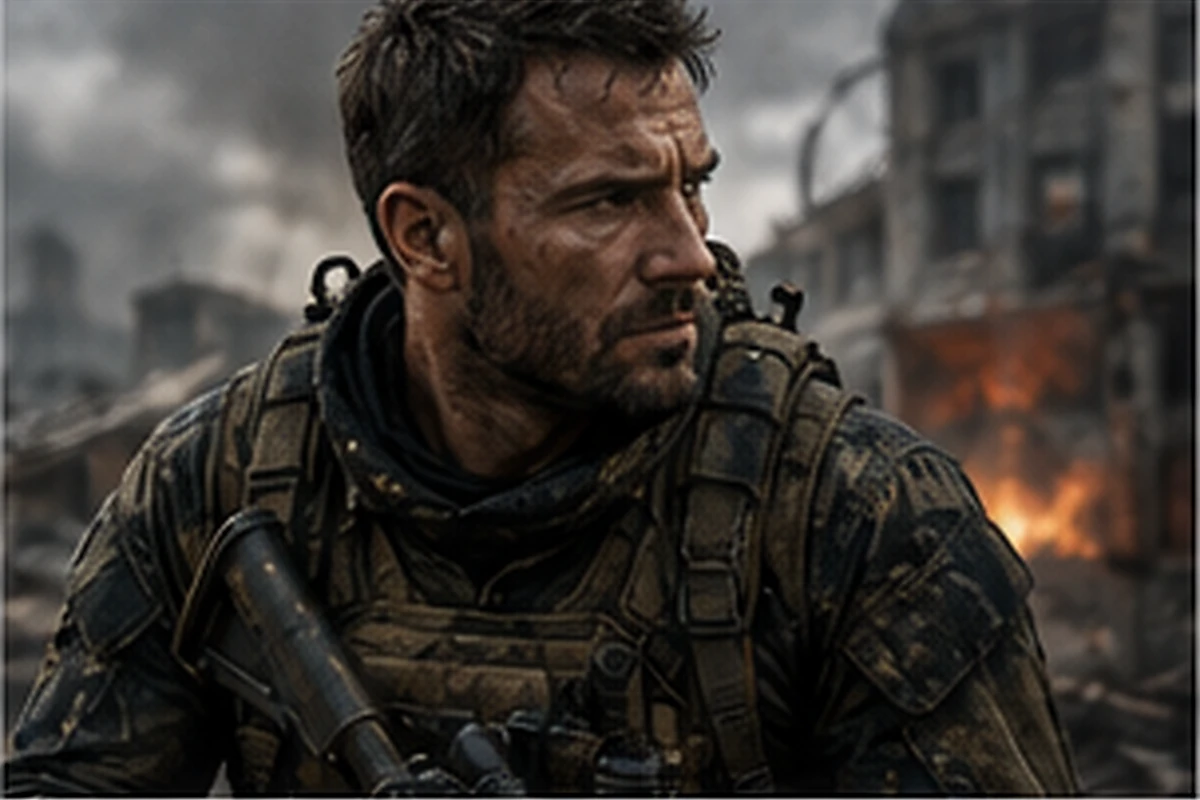
Later, Operation Liberty exposes an even larger failure. Beckham and other soldiers discover that command has used ground forces as bait in a desperate effort to draw Variants into position for aerial attack. The decision may have a strategic logic, but the people carrying it out were not given meaningful consent or enough warning. Beckham's anger is not the anger of a soldier who refuses sacrifice. It is the anger of a leader who understands that trust is itself a combat resource.
When command withholds truth, it does more than insult the people in the field. It prevents accurate risk assessment, destroys confidence in future orders, and forces junior leaders to improvise inside traps created by their own side.
Beckham's response is not open rebellion. He continues to fight for the mission because civilians, scientists, and his own people still depend on him. This reveals a defining tension in his character. He is loyal to the purpose of the institution even when individuals inside that institution fail him.
Beckham versus Gerry Lane
The film version of Gerry Lane is the closest comparison in intelligence use. Lane travels through a global crisis looking for patterns, anomalies, and weak signals. His greatest strength is not firepower but the ability to notice what others dismiss and connect observations across different locations.
Lane is better positioned for macro-level investigation. He moves among governments, laboratories, military units, and international settings with an analyst's flexibility. Beckham is better when the intelligence has to become immediate action. He can take a partial answer and turn it into a route, a breach, a defensive position, or a rescue plan.
Lane asks, “What does this mean?” Beckham asks, “What do we do in the next thirty seconds?”
Humanity needs both questions.
Beckham versus Robert Neville
Robert Neville represents technical persistence and the solitary search for a cure. Depending on the version, his intelligence is scientific, observational, and deeply isolated. Neville can generate knowledge that no ordinary field commander could produce.
Beckham is the stronger leader because he does not need to work alone. He can integrate information from others and maintain a team under pressure. Neville's isolation increases concentration but weakens social judgment, succession, and the ability to distribute responsibility. Beckham understands that knowledge must move through people, not remain inside one exceptional individual.
Team leadership: trust built through shared risk
Team Ghost follows Beckham because he is competent, but competence alone does not explain the bond. His operators trust him because he shares danger.
He does not issue instructions from a protected distance. He takes exposed positions, helps hold the rear, enters contaminated or compromised spaces, and continues moving when his own body is failing. The series repeatedly places him where the cost of his decisions can reach him directly.
This does not mean every decision is correct. It means his people know he is not spending their lives cheaply.
Trust as a tactical asset
In a fast-moving Variant attack, hesitation between teammates can be fatal. A leader needs people to act before a complete explanation is possible. That only works when earlier decisions have created confidence.
Beckham's authority inside Team Ghost is therefore relational as well as formal. Rank gives him the right to command. Shared experience gives the command weight.
The burden of surviving subordinates
Beckham carries the deaths of his operators. He does not treat casualties as abstract costs. This strengthens his loyalty but also creates survivor guilt and a tendency to take more danger onto himself. He can become the leader who believes he must personally absorb every failure.
That is heroic in a firefight and unhealthy as a long-term governing model. A society cannot depend on one wounded person repeatedly volunteering to be the last line.
Beckham versus Lee Everett
Lee Everett begins without Beckham's training, but he develops a form of leadership that Beckham does not naturally prioritize: patient, relational trust with civilians and children. Lee's most important authority comes from how he speaks to frightened people, protects Clementine, admits mistakes, and models the kind of person he hopes she will become.
Beckham is better at commanding trained adults through extreme danger. Lee is better at turning care into legitimacy among people who have no obligation to obey him.
In a rescue corridor, choose Beckham. In a frightened room where people need to decide whether they believe one another, Lee may be the better leader.
Crisis decision-making: speed without moral surrender
The Extinction Cycle repeatedly gives Beckham choices in which every available option carries harm. His value lies in deciding quickly without fully surrendering the moral distinction between humans and monsters.
One of the clearest examples comes from the New York tunnel and sewer material. Beckham encounters captives being stored as food by Variants. The situation forces rescue, triage, and terrible decisions under conditions where time, ammunition, and mobility are nearly gone. The aftermath stays with him because tactical necessity does not erase moral injury.
A weaker story would present survival choices as proof that morality no longer matters. Beckham's arc argues the opposite. The fact that a decision may be necessary does not make it emotionally clean. A leader should remember what it cost.
The same boundary appears whenever Beckham refuses to reduce vulnerable people to mission cargo. During Operation Liberty, he gives scarce armored-vehicle space to Jake and Timothy Temper while soldiers remain exposed to the approaching strike. On the Niantic specimen mission, he carries an infected child to extraction even though the capture serves a grim research program. These decisions do not make the surrounding operations clean. They show that Beckham continues to recognize the person inside a category such as civilian, prisoner, patient, or specimen.
Beckham versus Joel Miller
Joel's leadership is intensely protective and personal. He can endure almost anything for someone he loves, and his loyalty is powerful because it is not abstract. At the same time, Joel is willing to place one relationship above a broader social objective.
Beckham also has deep personal loyalties, especially to Kate, Horn, Team Ghost, and the children in their extended family. The difference is that he is more practiced at keeping a mission larger than himself in view. He may bend orders, reject bad command, or take extraordinary risks, but he continues to think in terms of teams, civilians, institutions, and species-level consequences.
Joel is the more singular protector. Beckham is the more disciplined public servant.
That does not mean Beckham would always make the morally correct choice. It means his training gives him a framework for asking who else will be affected before he acts.
Intelligence use and information discipline
Beckham is often described through combat, but the intelligence dimension of his leadership is just as important.
He questions the briefing
After Building 8, he has strong reason to distrust sanitized orders. He learns to compare what command says with what the field shows. This protects him from becoming a passive instrument of institutional failure.
He observes enemy behavior
Variants change. Tactics that worked in one phase may fail in the next. Beckham notices movement, coordination, environmental use, and changes in aggression. His field observations become part of the scientific response.
He protects information sources
Scientists, captured specimens, survivors, recordings, and physical evidence can be strategically more important than one tactical victory. Beckham understands why a mission may require restraint, capture, or extraction rather than simple destruction.
He communicates uncertainty
Good intelligence is not certainty. It is a disciplined statement about what is known, what is suspected, and what remains dangerous. Beckham does not always receive this standard from his superiors, but his best decisions attempt to restore it at the team level.
His limitation: field intelligence is not national intelligence
Beckham is excellent at turning fragments into action within an operation. Running a country requires a broader system: analysts, regional reporting, diplomacy, public communication, counterintelligence, law, and oversight. Figures such as Ringgold and Ben Nelson operate in that larger institutional space.
Beckham can tell a government what the threat looks like at the point of contact. He is not, by himself, the system that decides how an entire population should respond.

Where Beckham excels over other apocalypse leads
Tactical preparation
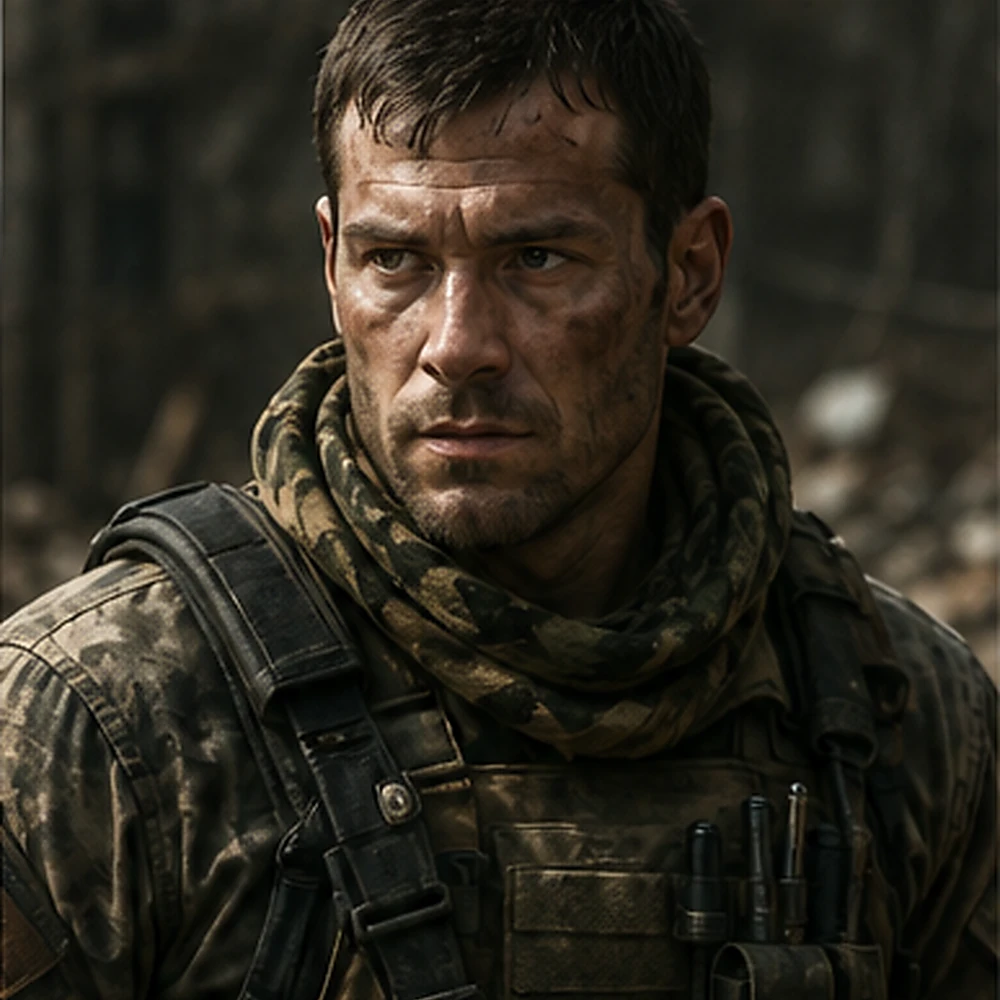
Beckham begins with the highest formal combat and mission-planning baseline in this comparison. Rick Grimes and Joel Miller are dangerous and experienced, but Beckham is trained for coordinated direct action, reconnaissance, extraction, and high-risk operations.
Team coordination
He can organize specialists rather than relying only on personal capability. That gives him greater reach than isolated survivor figures.
Decision speed
Variants compress reaction time. Beckham can make a workable decision while others are still processing fear.
Controlled aggression
He understands when overwhelming force is necessary and when noise, ammunition, or exposure will create a worse situation.
Mission persistence
Injury, grief, and betrayal do not easily remove him from the objective. This endurance repeatedly saves lives.
Respect for expertise
His relationship with Kate shows that he does not confuse military confidence with universal knowledge. He can defer to science without abandoning responsibility for security.
Loyalty without blind obedience
Beckham believes in service but learns not to trust every commander. This distinction allows him to preserve purpose after institutional credibility collapses.
Where military competence reaches its limits
Beckham's limits are not failures of courage. They are category limits. The skills needed to win a firefight are not identical to the skills needed to build a legitimate society.
Community legitimacy
Inside Team Ghost, authority is clear. Members are trained, ranks are established, and the mission provides a shared purpose. Civilian communities are different. People bring competing needs, histories, fears, beliefs, and claims to authority. They may respect Beckham without consenting to permanent military rule.
Rick Grimes becomes stronger than Beckham in this category because Rick's authority grows through repeated public conflict, negotiation, failure, and community defense. People follow Rick not only because he can fight but because they have watched him argue over what their community should become.
Beckham can protect the meeting. Rick is more naturally positioned to lead it.
Politics
Politics requires compromise with people who are not enemies and cannot be ordered into agreement. It also requires symbolic communication. A military leader may make the correct decision and still lose public trust if the decision is not explained, debated, and connected to a legitimate process.
The Dark Age material makes this tension explicit. Ringgold sees Beckham as a possible political figure because his sacrifices give him enormous public credibility. Beckham is reluctant because he recognizes that credibility is not the same as aptitude.
His reluctance is evidence of judgment. The most dangerous military hero is the one who assumes that battlefield success entitles him to govern everyone else.
Long-term governance
A functioning state needs agriculture, energy, trade, health systems, education, courts, succession, civilian administration, and accountability. Beckham can defend those systems, advise them, and intervene when they are threatened. He is not shown as the principal architect of them.
President Ringgold is the stronger leader in this phase. She has to make decisions without controlling every soldier, every settlement, or every local official. Her power depends on coalition, continuity, public meaning, and the ability to keep an institution alive beyond one mission.
Civilian autonomy
Command culture values speed and clarity. Civilian life often values participation and the right to disagree. A society that remains permanently organized like a combat unit may survive attacks while losing the freedom it claims to protect.
Beckham's moral instincts help prevent this outcome, but instinct is not a constitutional system. Limits on force must be institutional, not dependent on one honorable operator.
Trauma and hypervigilance
Beckham's alertness keeps people alive. Years later, it also makes ordinary peace difficult. The Dark Age portrayal of family life shows a man who has never fully stopped scanning for threats. That vigilance is understandable, but a society cannot live forever at the emotional tempo of an ambush.
Long-term leaders need to help people recover, not only remain ready.
Direct comparison: Reed Beckham and Rick Grimes
Rick Grimes is the strongest challenge to Beckham as a complete apocalypse leader because Rick's arc expands from immediate survival into community defense and political legitimacy.
Beckham wins in formal training, intelligence discipline, small-unit coordination, and high-risk mission execution. Put both men in an unfamiliar building with a trained team, a hostile force, and a time-sensitive extraction, and Beckham is the safer choice.
Rick wins in building authority among civilians who are frightened, divided, and not under military command. He learns to manage families, moral disagreement, prisoners, rival settlements, and the symbolic burden of representing a community.
Rick's weakness is volatility. Personal loss can push him toward instability or brutality. Beckham's training gives him more structure under immediate pressure. Beckham's weakness is that he does not naturally seek the sustained civic role Rick eventually occupies.
Verdict: Beckham is the superior tactical commander. Rick is the more developed community founder.
Direct comparison: Reed Beckham and Joel Miller
Joel is an elite survivor without Beckham's institutional orientation. He reads danger, uses terrain, conserves resources, and acts decisively. His competence is deeply embodied. He knows how a broken world works because he has lived inside it for years.
Beckham is better with teams, communications, formal objectives, specialists, and multi-stage operations. Joel is better at disappearing into a hostile environment with one person and doing whatever is required to protect that person.
Their moral difference matters. Beckham's loyalty remains connected to a public mission. Joel's loyalty can become an argument against the public mission.
Verdict: Joel may be the more dangerous personal escort. Beckham is the more reliable leader of a collective response.
Direct comparison: Reed Beckham and Gerry Lane
This comparison uses the film version of Gerry Lane, since the novel World War Z is structured as an oral history rather than around one central action lead.
Lane excels at global pattern recognition. He notices anomalies, interviews specialists, changes theories, and moves between institutions. Beckham excels at operationalizing what is learned.
Lane's strength is strategic curiosity. Beckham's strength is action under compression.
Verdict: Lane is the better outbreak investigator. Beckham is the better field commander once the objective is identified.
Direct comparison: Reed Beckham and Robert Neville
Neville's advantage is scientific concentration and self-sufficiency. He can survive alone, perform research, and continue a technical mission without a functioning team.
Beckham's advantage is that he does not need heroism to remain solitary. He creates capacity through other people. He can protect a scientist, integrate new intelligence, and preserve continuity if one member is lost.
Neville's isolation can turn expertise into a single point of failure. Beckham's team model is more resilient.
Verdict: Neville may understand the pathogen more deeply. Beckham is far better at building an operation around that knowledge.
Direct comparison: Reed Beckham and Lee Everett
Lee Everett's leadership grows from moral attention. He listens, teaches, comforts, admits fear, and gives a child a framework for surviving without abandoning humanity.
Beckham can protect children and civilians, but his natural language is mission, security, and movement. Lee's natural language is trust.
Verdict: Beckham is the stronger crisis commander. Lee is the stronger mentor and relational leader.
Comparative leadership matrix
The ratings below are interpretive rather than mathematical. They compare the leadership functions emphasized by each story, not the characters' value as people.
| Leader | Tactical training | Mission judgment | Team leadership | Intelligence use | Community legitimacy | Long-term governance |
|---|---|---|---|---|---|---|
| Reed Beckham | Excellent | Excellent | Excellent | Excellent in the field | Moderate | Limited to developing |
| Rick Grimes | Strong | Strong | Excellent | Moderate | Excellent | Strong |
| Joel Miller | Strong | Strong | Moderate | Strong survival awareness | Limited | Limited |
| Gerry Lane, film | Moderate | Excellent | Strong | Excellent | Strong | Moderate |
| Robert Neville | Moderate | Strong | Limited | Excellent scientific focus | Limited | Limited |
| Lee Everett | Limited | Strong | Excellent relationally | Moderate | Strong | Limited |
The best apocalypse leadership model is a coalition
No single survivor can supply every form of leadership a recovering society needs.
A real survivor society would need Beckham's tactical command, Kate Lovato's scientific expertise, Ringgold's political legitimacy, Lee Everett's relational care, Gerry Lane's investigative curiosity, Rick Grimes's community-building experience, and Joel Miller's intimate protective instinct.
No one person should carry every function.
That is one of the strongest ideas inside the Extinction Cycle. Humanity survives when military, scientific, political, and civilian forms of leadership cooperate. Disaster becomes worse whenever one institution hides information, claims authority outside its competence, or treats other forms of expertise as obstacles.
Beckham is at his best when he is part of that coalition. He gives the larger system something it desperately needs: a leader who can go where policy, science, and hope become physical danger.
Final verdict
Reed Beckham is better prepared than most zombie-apocalypse leads for the first day, the worst mission, and the moment when a plan disintegrates.
He has elite military training, disciplined intelligence use, strong situational awareness, and the ability to turn frightened or exhausted people into a functioning team. He shares risk, questions bad information, respects scientific expertise, and continues making decisions after injury and grief would remove most people from the fight.
His limitations appear when survival becomes politics.
Community legitimacy cannot be cleared like a room. Political compromise cannot be solved through superior fields of fire. Long-term governance cannot depend on personal honor, even when that honor belongs to someone as tested as Beckham. The skills that save a population are not automatically the skills that give that population a voice.
This does not diminish him. It makes him more credible.
Beckham's greatness lies partly in the fact that he does not mistake himself for the entire answer. He is the operator who keeps the future alive long enough for scientists, families, civilians, and political leaders to decide what that future should become.
Among apocalypse protagonists, Reed Beckham may be the finest tactical response leader. The world he saves still needs leaders of other kinds.
Frequently asked questions
Is Reed Beckham a better leader than Rick Grimes?
Beckham is the stronger tactical commander and has more formal training in intelligence, small-unit operations, and high-risk extraction. Rick Grimes develops greater community legitimacy and becomes more experienced at leading civilians, negotiating with rival groups, and shaping a settlement's identity. The better leader depends on the phase of the crisis.
Would Reed Beckham survive in The Walking Dead world?
He would have an unusually strong chance. Classic walkers give him more reaction time than Variants, and his discipline would reduce many common survival mistakes. His larger challenge would be political. The human factions, fragile communities, and moral compromises of that world would test skills that cannot be solved by tactical superiority alone.
How does Beckham compare with Joel Miller?
Both are highly capable under pressure. Joel is a more intimate and personally driven protector. Beckham is more effective at coordinating a team, integrating specialists, maintaining communications, and serving a mission larger than one relationship.
Why is intelligence so important to Beckham's leadership?
The Variant threat changes over time, and Beckham is repeatedly sent into missions shaped by incomplete or concealed information. His survival depends on comparing the briefing with field evidence, recognizing behavior patterns, and adjusting before the enemy exploits a false assumption.
Could Reed Beckham govern the Allied States?
He has courage, public credibility, and moral seriousness, but governance would require a different daily skill set: coalition-building, civilian administration, economic policy, legal process, public communication, and political compromise. The Dark Age era treats his possible political role as a real question, while also emphasizing his discomfort with that life.
What is Beckham's greatest leadership weakness?
His greatest weakness is that he can carry too much responsibility personally. Shared risk makes him trustworthy, but survivor guilt and protectiveness can push him toward self-sacrifice. A sustainable society needs systems that do not depend on one hero repeatedly placing himself at the point of failure.
Source and canon notes
This comparison is independent fan criticism. Reed Beckham analysis is grounded in the following primary story material:
- Nicholas Sansbury Smith, Extinction Horizon: Team Ghost's Building 8 mission, the incomplete briefing, the extraction of surviving scientists, and the first major Team Ghost losses.
- Nicholas Sansbury Smith, Extinction Edge: the widening military and civilian crisis, the New York survival environment, and the transition from outbreak response to sustained war.
- Nicholas Sansbury Smith, Extinction Age: the Manhattan tunnel escape, Operation Liberty, command deception, prisoner rescue, and Beckham's reflections on responsibility and loss.
- Nicholas Sansbury Smith, Extinction Evolution, Extinction End, and Extinction Aftermath: the expanding Variant threat, cooperation between military and scientific teams, rescue missions, rebuilding, and the persistence of human collaborators.
- Nicholas Sansbury Smith, Extinction War: Beckham's wounded return to combat, the Resistance of Tyranny crisis, and the conflict between military survival and political terror.
- Nicholas Sansbury Smith and Anthony J. Melchiorri, Extinction Cycle: Dark Age: the Allied States era, Beckham's family life, political pressure, renewed war, collaborator networks, and the demands of reconstruction.
High-level references to other franchises are used for criticism and comparison. The illustrations are original, unofficial editorial interpretations rather than official franchise artwork, screenshots, posters, logos, or depictions of performers.
Editorial disclosure
Extinction Cycle Wiki is an independent fan reference and is not affiliated with or endorsed by Nicholas Sansbury Smith, his publishers, AMC, Skybound, HBO, Sony, Naughty Dog, Warner Bros., Telltale Games, or the other rights holders whose works are discussed. The five displayed graphics are original AI-assisted unofficial editorial illustrations supplied by the site operator.