
Missions and Operations
Plum Island Specimen Mission
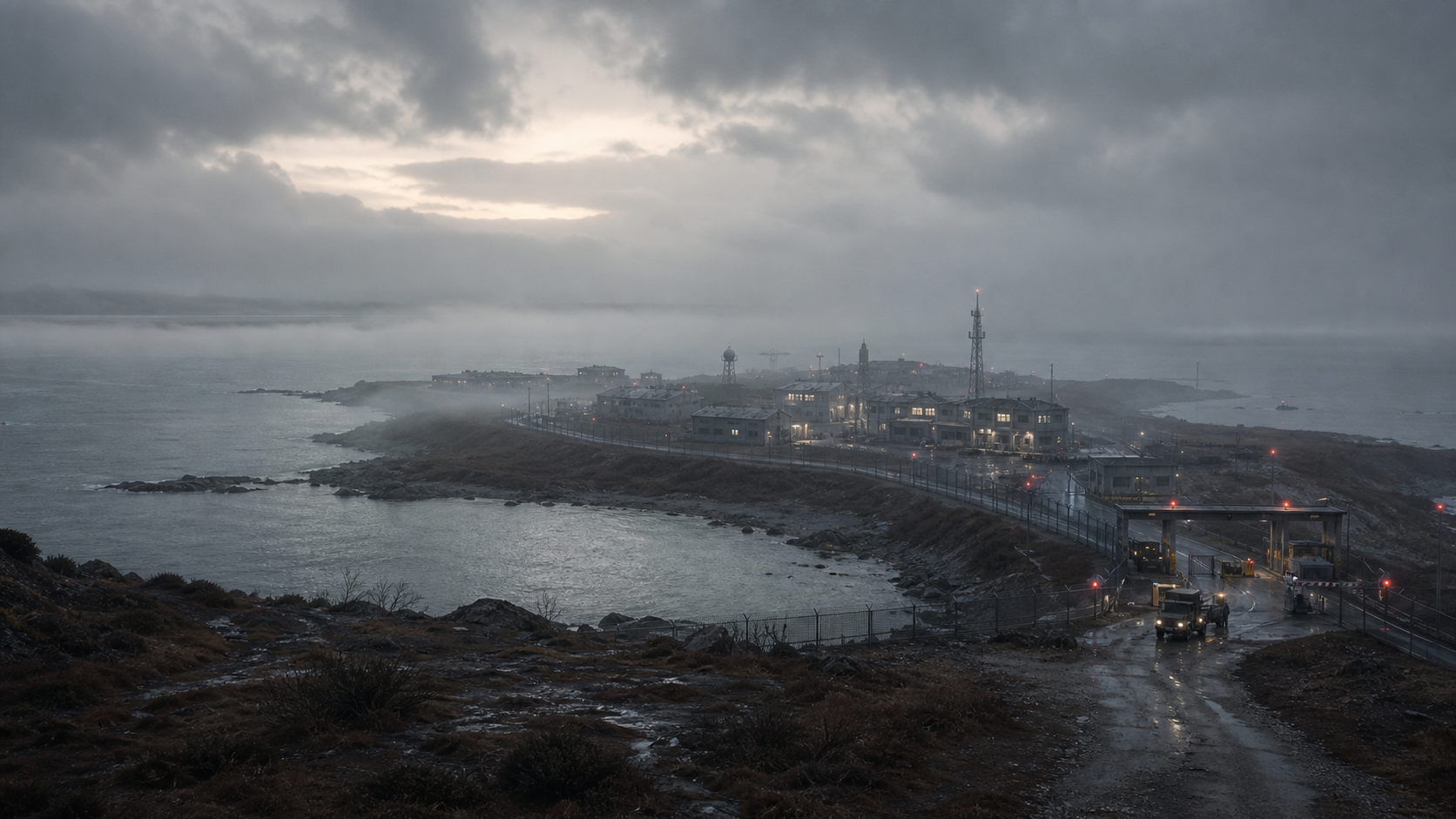
The Plum Island specimen mission is the live-infected capture operation undertaken by Reed Beckham, Parker Horn, Alex Riley, and Medical Corps specialists Preston and Wolfe in Niantic, Connecticut, during the early outbreak in Extinction Horizon. Colonel Gibson orders the mission after the evacuation of the Atlanta CDC team because animal models do not reproduce the infected humans' violent behavior and rapid anatomical change. Beckham agrees to return a subject within twenty-four hours in exchange for a helicopter ride that will take his team back to Fort Bragg.
Quick Facts
- Role
- Missions and Operations
- Aliases
- plum-island-specimen-mission
Overview
The operation produces two failed capture attempts before the team secures an infected boy estimated to be eight or nine years old. Wolfe kills a severely injured child as unsuitable for transport, and an adult tranquilized inside a warehouse is later killed when he regains consciousness. Preston dies during the first warehouse defense. The surviving team spends the night trapped above a boatyard full of infected people, captures the second child during a stairwell breakout, and reaches a beach extraction under Black Hawk covering fire.
The mission supplies Plum Island with a living human subject and establishes the field-to-laboratory chain that leads toward VariantX9H9. It is distinct from the later Patient 14 test and from Operation Condor's juvenile-Variant capture. The Niantic child is one of twenty infected people eventually held on the island after Gibson sends multiple teams into the field.
Mission information
- Field: Type; Detail: Live infected capture, containment, and air extraction
- Field: Period; Detail: Early outbreak, after the Atlanta CDC extraction and before VariantX9H9 testing and Operation Depletion
- Field: Location; Detail: Niantic, Connecticut, including Main Street, Niantic River marina, boatyard, warehouse, surrounding buildings, and beach landing zone
- Field: Ordering authority; Detail: Colonel Gibson under the surviving Medical Corps and Operation Reaper command structure
- Field: Field leader; Detail: Master Sergeant Reed Beckham
- Field: Team Ghost personnel; Detail: Reed Beckham, Parker Horn, and Alex Riley
- Field: Medical Corps personnel; Detail: Specialist Preston and Specialist Wolfe
- Field: Protective equipment; Detail: Sealed CBR suits and respirators
- Field: Capture equipment; Detail: Five tranquilizer pistols described as capable of bringing down a rhinoceros, plus a secured metal transport cage in the Black Hawk
- Field: Conventional weapons; Detail: MP5, M27, M4-pattern rifles, shotgun, sidearms, and helicopter door gun
- Field: Initial subject; Detail: Severely injured infected boy, killed by Wolfe before capture
- Field: Second subject; Detail: Adult infected man, tranquilized and later killed by Horn after reawakening
- Field: Recovered subject; Detail: Infected boy approximately eight or nine years old, tranquilized during the stairwell escape
- Field: Team casualty; Detail: Preston, killed at the warehouse staircase
- Field: Outcome; Detail: Beckham, Horn, Riley, Wolfe, and the child return to Plum Island; the field team earns transport toward Fort Bragg
- Field: Primary work; Detail: Extinction Horizon
Scientific need
Kate Lovato and Pat Ellis reach Plum Island with samples, data, and urgent questions but no adequate human disease model. Mice infected with the Hemorrhage Virus do not display the full violent transformation observed in Atlanta and Building 8. Rhesus monkeys provide closer biology and later reproduce important symptoms, but the crisis is changing people in ways no animal can represent exactly.
Gibson treats that need as sufficient authority to bring contagious, violent people onto the island.
Kate objects. Live virus samples are one level of risk; a mobile infected person capable of climbing walls, breaking restraints, and transmitting through blood is another. She argues that the plan violates laws and regulations and could compromise the only major laboratory still functioning. Cindy responds that ordinary law has collapsed, while Ellis accepts the risk as scientifically necessary.
The dispute defines Plum Island's contradiction. The facility is valuable because it is secure and isolated. The research can progress only by importing the very threat from which that security protects it.
Gibson's bargain with Beckham
Beckham, Horn, and Riley want to return to Fort Bragg. Horn's wife and daughters are there, and the island has entered lockdown after the Atlanta flight. Gibson controls the aircraft and invokes the Medical Corps' authority over Operation Reaper.
Beckham understands that the request is also leverage. He agrees to lead the capture if Gibson provides a helicopter to Fort Bragg, promising the subject within twenty-four hours. Gibson accepts.
The bargain is strategic and personal. Gibson receives the human evidence his program requires. Beckham obtains a possible route home for Horn and Riley. Neither man trusts the other, but the collapse has made access to transport a form of command power.
Team and equipment
The Black Hawk contains a large metal cage secured to the floor and wall. Preston and Wolfe, young Medical Corps specialists with little or no comparable field experience, join the three operators. Their task is to help preserve and manage the subject rather than simply kill contacts.
The specialists fit the team with sealed suits and verify the respirators. Beckham remembers earlier equipment failure and treats the check as essential. The suits protect against contaminated blood and fluid but restrict vision, hearing, heat control, and movement.
Each member receives a tranquilizer pistol. Wolfe claims the dose can take down a rhinoceros. Horn distrusts the light weapon and prefers his M27 because a creature that remains partly mobile after injection can kill an operator before the drug takes effect. The mission's central tactical problem is already visible: the weapon that secures the objective cannot provide immediate stopping power.
Insertion into Niantic
The pilot brings the team over Niantic and waits for Beckham to select an insertion point. Streets appear quiet, but hundreds of boats under white winter covers fill the marina, while more vessels sit on trailers in a nearby yard. Each tarp and hull creates concealment.
The group moves with Beckham on point, Horn and Riley watching high and low sectors, and Preston and Wolfe protected near the rear. Rain and wind reduce visibility and create constant background noise. The Niantic River, parked vehicles, houses, marina, and warehouse divide the area into short lines of sight.
Beckham chooses the large boatyard warehouse as cover. Smoke from a bullet-riddled pickup indicates recent violence. The absence of moving people does not mean the port is empty; it means the infected are concealed among hundreds of structures designed to store and transport objects.
The first child
Near the truck, Beckham hears breathing and finds an infected boy curled behind a sedan. Both legs are mangled beyond recognition, yet he remains alive and responsive. The injuries demonstrate the altered body's endurance before the team has captured a subject.
Wolfe decides that the boy will not survive transport and raises his rifle. Beckham orders him to stop, but Wolfe fires, destroying the child's head. Horn shoves him against a car and challenges both the decision and its tactical consequence.
Wolfe describes the shot as mercy and argues that the boy was unsuitable and dangerous. The mission does not resolve the ethical question through his explanation. The child was infected and suffering, but he was also the first available subject and had not yet attacked the team. More immediately, the gunshot announces the group's position.
Calls answer from the surrounding area. An infected man appears on a rooftop holding a severed limb, and additional creatures emerge from concealment. Horn's warning is confirmed: noise draws them toward prey.
Warehouse capture
The team runs for the warehouse rather than attempting an extraction in the open. Beckham fires the tranquilizer pistol into the throat of an infected adult who rushes inside. The man collapses, giving the group a live subject and what appears to be the required package.
Preston and Wolfe drag him while the others move toward a metal stairway and second-floor offices. The warehouse floor contains boat engines and parts, while the staircase creates a narrow defensive point. It also forces the medical specialists to carry the adult directly through the line of attack.
Infected people break into the building and mass at the stairs. Riley fires from above, Horn and Beckham help move the unconscious man, and Preston remains near the lower steps. Bodies pile into a ramp that allows more creatures to climb.
Beckham's weapon jams as a mutilated former soldier reaches Preston. The creature drives the jagged end of an arm through the specialist's visor and feeds through the opening. Beckham clears the malfunction and kills the attacker, but Preston is already dead. The team cannot recover his body while holding the staircase.
Failed extraction and overnight siege
Beckham reports that the package is secured and requests extraction. Echo 1 refuses the immediate landing because the zone is covered with infected people. The team is surrounded and must spend the night inside the warehouse.
The survivors barricade the office area and maintain security. Horn keeps a boot on the restrained adult. Wolfe enters battle shock after seeing Preston die, and Beckham must determine whether the remaining medic can still function. The field force has lost one-fifth of its personnel and cannot call a replacement.
At 0011 hours, the adult's breathing is labored and blood flows from multiple openings. He then regains awareness and fights the restraints. Before Horn can apply another tranquilizer, the man screams. Horn crushes his skull with a boot, preventing an immediate attack but eliminating the captured subject.
The adult's scream does not trigger the expected rush at once. The creatures have climbed the neighboring building and gather on the roof, sniffing and searching. One reaches the warehouse window and breaks through after pressing its altered mouth against the glass. Beckham kills it and orders the group to move.
The sequence gives the operators early evidence that the infected hunt through scent, climb exterior walls, wait outside defended spaces, and retain occasional expressions that resemble despair or recognition. These observations later inform tactical assumptions about Variants.
Stairwell breakout and second capture
After leaving the offices, the team is cornered in a concrete stairwell with attackers pressing doors from two levels. Beckham and Wolfe hold one side while Horn and Riley hold the other. Ammunition is nearly exhausted, and the defenders coordinate a release of both doors so they can fire into the advancing groups.
Beckham uses his last available option when he reaches for a sidearm and instead finds the tranquilizer pistol. He fires at the closest creature and realizes it is a boy. Wolfe kills the final adult attacker, leaving the child partially buried under bodies as the drug takes effect.
Riley urges immediate movement, but Beckham returns. The boy is still alive, clawing weakly as sedation deepens. Beckham lifts him over his shoulders and carries him as the new specimen. The rescue of the objective after the first two failures turns the tranquilizer from an awkward secondary tool into the only reason the mission can still succeed.
Movement to the beach
The survivors leave through the warehouse's back route and move through streets without immediate detection. Beckham carries the child, reducing his ability to fire and exhausting him. Horn, Riley, and Wolfe must cover the group while preserving a clear approach for the aircraft.
The quiet ends near the beach. The infected mass behind them, and Echo 1 declares the landing zone hot. The Black Hawk banks and hovers while the crew chief opens fire with the compartment gun. The gunner tracks creatures attempting to flank on all fours and cuts a path around the team.
Beckham reaches the sand, lowers the boy, and waits for Horn, Riley, and Wolfe. The group hoists the child to the crew chief and climbs aboard. Preston is the only field-team member left behind.
Return to Plum Island
Beckham tells Kate the specimen is approximately eight or nine years old and in better physical condition than many infected people they encountered. Gibson's personnel take the child directly into containment when the helicopter lands.
The boy is not the island's only captive. Gibson sends other teams and ultimately holds twenty infected people in specialized rooms. Their strength makes ordinary restraints unreliable. The hallway of pounding, screaming subjects confirms Kate's fear that one containment failure could expose the facility.
Patient 14, a teenage girl selected for the VariantX9H9 live test, is one of the later subjects but is not identified as the Niantic child.
Scientific consequences
The mission does not by itself produce VariantX9H9. Kate and Ellis combine multiple evidence streams: Building 8 and Atlanta observations, virus samples, infected mice and rhesus monkeys, human captives, toxicology, microscopy, autopsy, and live testing. The Niantic child gives the laboratory a living human example within that chain.
Toxicology reveals VX-99 in hybrid nanostructure form attached to Ebola strands. Further work connects the compound to epigenetic reactivation, stem-cell proliferation, altered glands, rapid metabolism, and the hunger driving consumption of raw flesh. Human subjects allow the team to compare those findings with behavior and anatomy that animal models only partly reproduce.
The twenty captives also make final testing possible. Patient 14's death after VariantX9H9 proves the counter-virus can attack infected human endothelial systems. Operation Depletion follows from that validation.
The relationship is therefore sequential rather than one-to-one: the Niantic mission establishes live-human acquisition, the larger capture program creates a subject pool, and Patient 14 validates the final weapon.
Ethical significance
The mission repeatedly shifts between the words patient, victim, infected, creature, package, and specimen. Each term emphasizes a different duty. The captured children occupy all of those categories at once.
Wolfe's shooting of the first boy and Beckham's recovery of the second expose the absence of a settled rule. Killing an unsalvageable child may be mercy, tactical necessity, destruction of evidence, or all three. Capturing another child may serve humanity while condemning that individual to confinement and experimentation.
Kate's objection is not anti-scientific. Her concern is that necessity can eliminate safeguards so quickly that no one remains responsible for the people inside the cells. Gibson's secret facility and prior VX-99 work make that concern more than procedural caution.
Distinction from later capture missions
The Niantic operation is sometimes blurred with two later events.
Maintaining the distinction preserves the scientific chronology. The first mission asks what the Hemorrhage Virus and VX-99 are doing to people. Condor asks whether a second-generation weapon works on a specialized descendant.
- Patient 14 testing: Patient 14 is an infected teenage girl already held at Plum Island when Kate tests VariantX9H9. She is not the eight- or nine-year-old recovered by Beckham.
- Operation Condor: Condor occurs after Kryptonite development begins and seeks a live juvenile Variant to determine whether the adult-targeting antibody will bind to juvenile biology. The Niantic child is an early infected human, not a later armored juvenile captured for Kryptonite validation.
Operational outcome and legacy
The mission achieves its objective at high cost. One specialist dies, two potential subjects are lost, and the survivors spend a night under siege. The recovered child reaches Plum Island, and Beckham earns the transport Gibson promised toward Fort Bragg.
Strategically, the event makes specimen recovery a recurring military function. Scientists specify the unknown; soldiers enter hostile terrain to acquire a body, drug, logbook, or living creature; and the resulting knowledge changes the next operation. Later missions repeat the pattern with juveniles and specialized forms.
The mission also exposes the instability of Plum Island's safety. The island is not merely a refuge from the infected world. It becomes a prison holding twenty highly contagious attackers because the research effort cannot proceed without them.
Important connections
- Reed Beckham: Field leader who negotiates the mission, captures the adult, returns for the second child, and carries him to extraction.
- Parker Horn: Operator focused on containment and the promised return to his family; kills the adult when it awakens.
- Alex Riley: Team Ghost operator providing building clearance and stairwell defense.
- Preston: Medical Corps specialist killed when an infected attacker breaches his visor.
- Wolfe: Surviving specialist who kills the first child, experiences battle shock, and helps complete the escape.
- Colonel Gibson: Commander who orders multiple captures and uses transport as leverage.
- Kate Lovato and Pat Ellis: Scientists whose research requires closer human evidence but who disagree over the mission's acceptable risk.
- Patient 14: Separate later test subject used to validate VariantX9H9.
- Operation Condor: Later juvenile mission with a different target and scientific question.
- Plum Island: Laboratory, refuge, and containment site whose security is tested by the captive population.
Chronology and consequences
- Extinction Horizon, Atlanta and Plum Island chapters - Scientific need, Gibson-Beckham bargain, Kate's objection, Niantic insertion, three capture attempts, Preston's death, overnight siege, stairwell breakout, and beach extraction.
- Later Extinction Horizon - Twenty-subject containment program, Patient 14, VariantX9H9 test, and Operation Depletion.
- Extinction Edge - Surviving Variant analysis and the military consequences of the countermeasure.
- Extinction Evolution - Operation Condor and the distinct need for a live juvenile to test Kryptonite.
Continue Exploring
Connected Universe
Books and Stories
Characters
Groups and Factions
Locations, Events, and Lore
Sources
- Extinction Horizon, Extinction Horizon - Prologue
- Extinction Horizon, Extinction Horizon - Chapter 1
- Extinction Edge, Extinction Edge - Chapter 1
- Extinction Edge, Extinction Edge - Chapter 2