
Politics and Society
Government and Military Command Failures
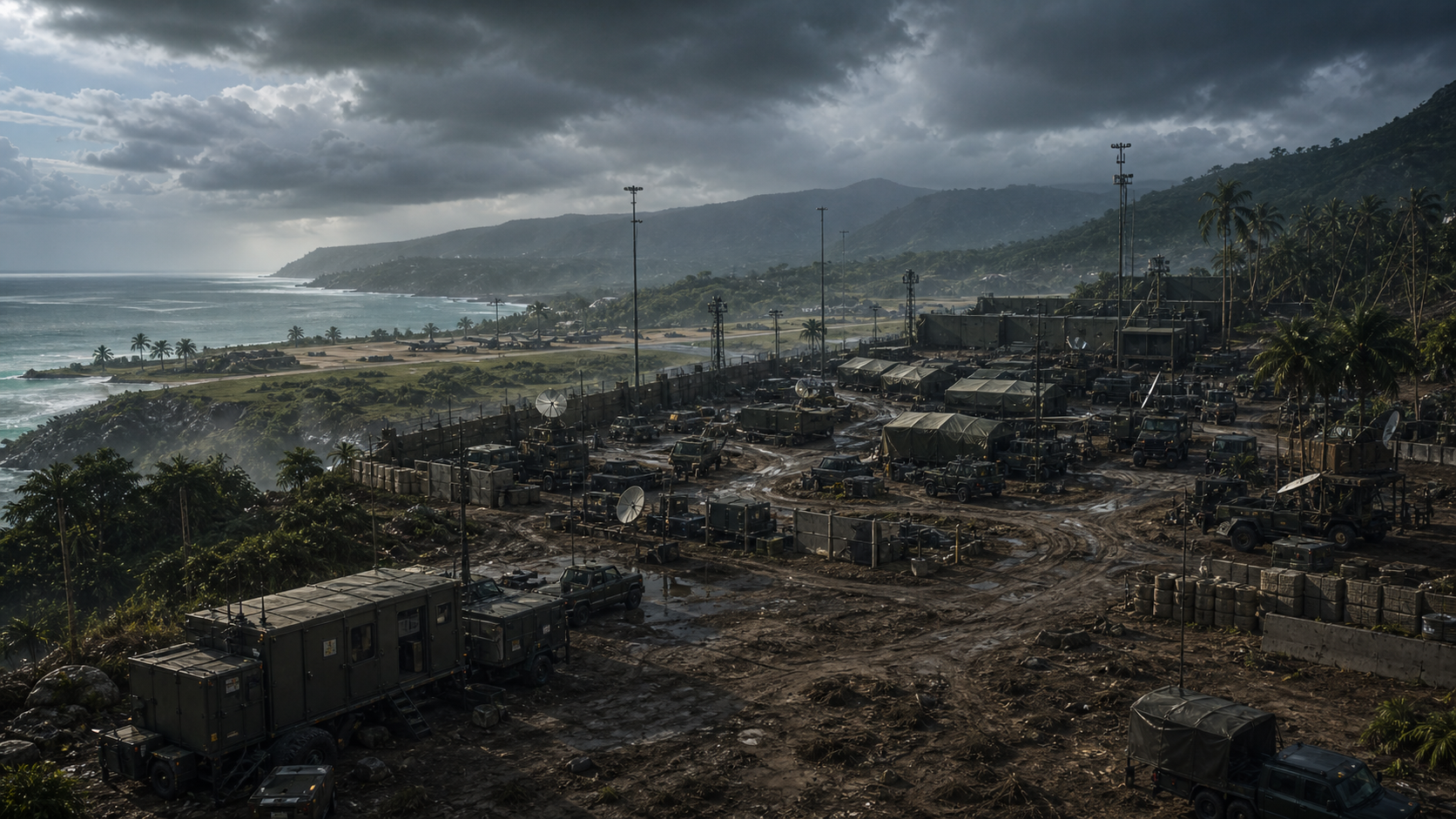
Government and military command failures are the repeated institutional decisions that make the Extinction Cycle worse: secret experiments, incomplete briefings, biological weapons programs, bad assumptions, political panic, reckless operations, internal betrayal, and the refusal to admit when the enemy has changed.
Open the interactive Government and Military Command Failures view
Quick Facts
- Role
- Politics and Society
Overview
Military command failure is one of the recurring engines of catastrophe in the Extinction Cycle. The soldiers on the ground are often brave, capable, and loyal, but they are repeatedly sent into missions shaped by secrecy, arrogance, incomplete intelligence, and institutional fear of admitting uncertainty. The series is not anti-soldier. It is sharply critical of command systems that confuse firepower with understanding. The Variants evolve, adapt, hide, coordinate, and use terrain. Commanders who insist that tanks, missiles, and plans are enough repeatedly create disasters. The contrast between field leaders and high command is central. Reed Beckham, Parker Horn, Ray Jensen, Jose Garcia, Rachel Davis, and Joe Fitzpatrick survive because they adapt. Gibson, Kennor, Nixon, and others fail because they impose assumptions on a battlefield that has already changed.
- Theme type: Institutional and military critique
- Key examples: Operation Burn Bright, Building 8, Operation Reaper, Operation Liberty, Operation Condor,
- Operation Beachhead: Major figures
- Counter-models: Beckham, Jensen, Ringgold, Johnson, Fitz
Operation Burn Bright
The earliest command failure is Operation Burn Bright in Vietnam. Lieutenant Trevor Brett and his Marines are given VX-99 under false or incomplete pretenses. Command claims the experimental drug will help counter chemical exposure, but the operation effectively uses Marines as test subjects in a super-soldier program. The result is an atrocity. The men experience pain, heightened senses, violent impulses, and loss of human identity. Burn Bright establishes the series' foundational pattern: military science is hidden from the people expected to pay the physical price. Because Burn Bright happens decades before the main outbreak, it frames the Extinction Cycle as a long institutional failure rather than a sudden mistake. The apocalypse is seeded by old choices that were buried instead of confronted.
Building 8 and Gibson's secrecy
The Building 8 mission repeats the same sin in modern form. Team Ghost is sent into a classified facility without the truth it needs. Reed Beckham senses that the briefing is incomplete, and his instincts are correct. The mission is shaped by Rick Gibson's secretive Medical Corps program and the government's refusal to admit what it has created. Beckham loses half his team because the mission is built around containment, sample recovery, and deception rather than honest assessment. Tenor, Spinoza, and Edwards become casualties not simply of the Variants, but of the information failures above them. Building 8 becomes the moral point of origin for Team Ghost's distrust of command. Beckham remains a soldier, but he no longer confuses rank with moral authority.
General Kennor and Operation Liberty
General Kennor represents overconfident military aggression at its clearest. Ray Jensen and Kate Lovato identify that the Variant population numbers in New York do not add up. They suspect the creatures have gone underground and that Operation Liberty may be walking into a trap. Kennor refuses to delay the mission. He argues that the United States military has the most advanced weapons in the world and that Variants cannot drive cars, fly jets, or fire handguns. His confidence is based on a conventional hierarchy in which modern military technology must defeat primitive enemies. The flaw is that the Variants are not primitive in the way Kennor assumes. They are evolving predators using darkness, tunnels, numbers, and terrain. Jensen recognizes this. Kennor does not. The result is a slaughter that confirms the danger of fighting yesterday's war against tomorrow's enemy.
Operation Condor and the cost of success
Operation Condor succeeds in capturing a live juvenile specimen, but the victory is so costly that Ringgold immediately senses there is more bad news. The operation drains resources, kills many soldiers, and is followed by the human-collaborator-facilitated attack on Plum Island. Condor illustrates a more complicated command failure. The mission achieves its objective, but the larger system remains exposed. Capturing the specimen cannot save Plum Island from betrayal and assault. Tactical success does not equal strategic security. Ringgold's response marks a shift away from blank-check military command. She tells Johnson that President Mitchell may have given Kennor that freedom, but she will not. This is one of the clearest moments where political leadership corrects military overreach.
Operation Beachhead and post-war overreach
After the main American victory, military overconfidence resurfaces in overseas operations such as Operation Beachhead. News of the slaughter of the 24th MEU and failures in Spain and Germany show that large operations can still collapse when leaders misunderstand the evolved enemy. General Nixon, like Kennor before him, is described as being caught unprepared while still pushing further operations. The failures also expand the theme globally. The American command problem is not unique. Humanity everywhere is trying to reassert old forms of power against a new biological enemy. Counter-models of leadership The series does provide better models. Beckham leads from responsibility and adapts under pressure. Jensen listens to science and tries to warn command. Ringgold divides authority between military and civilian expertise. Fitz leads Team Ghost through disciplined hunting rather than grandstanding. These leaders are not perfect. They still make hard choices and lose people. The difference is that they treat uncertainty as real, grief as information, and people as more than expendable pieces. Military command failure therefore exists to clarify what good command looks like. Good leaders listen, adapt, tell the truth, and carry the cost of orders. Bad leaders hide, assume, rush, and call the consequences unavoidable.
Plain-language definition
The series honors soldiers constantly. Its criticism is aimed at command structures that turn loyal people into expendable tools and then hide the cost.
First major appearance
The first chronological failure is Operation Burn Bright, where Marines are given VX-99 in Vietnam under false pretenses. The first modern failure is Building 8, where Team Ghost is sent into a secret disaster without the truth needed to understand the threat.
Why it matters
Command failures matter because the Variants are not humanity's only enemy. Again and again, the people fighting on the ground are brave enough, but they are undermined by secrecy, arrogance, bad intelligence, and leaders who think a mission objective can erase human cost. Reed Beckham's distrust of command grows from this wound.
Story evolution
Operation Burn Bright
The VX-99 program begins with soldiers treated as test subjects. Trevor Brett and his men are told one thing and used for another. That decision creates the moral pattern for everything that follows: command hides the truth, bodies pay the price, and survivors are left with consequences no briefing prepared them for.
Building 8
Team Ghost's Building 8 mission is another failure of truth. Beckham, Horn, Riley, Tenor, Spinoza, Edwards, and Ellis enter a facility whose real danger has been concealed. The deaths of Team Ghost members are not only battlefield losses. They are institutional casualties.
Plum Island and Medical Corps secrecy
Gibson and the Medical Corps reveal how grief and ambition can become policy. The desire to control VX-99 or turn it toward military advantage produces a response that is morally compromised from the beginning.
Operation Liberty
General Kennor's use of soldiers as bait in New York shows command failure in battlefield form. The mission fights the right enemy, but the cost and deception make it another example of leadership treating human beings as expendable variables.
ROT and mutiny
Andrew Wood's ROT movement shows command failure after the war. The crisis proves that military hardware without legitimacy can be turned against the survivors it was meant to protect.
Dark Age complacency
By Dark Age, the Allied States believes surviving Variants and collaborators are starving in the shadows. The outpost attacks prove that quiet has been misread. This is a different kind of failure: not reckless overconfidence in weapons, but political and strategic underestimation of an enemy allowed to evolve.
Connection Map
VX-99: Origin failure. Secret program begins the chain
Building 8: Modern failure. Team Ghost pays for withheld truth
Rick Gibson: Institutional figure. Embodies corrupt military-science logic
General Kennor: Battlefield failure. Operation Liberty uses soldiers as bait
Andrew Wood: Postwar failure. Turns military assets into terror tools
Jan Ringgold: Corrective authority. Tries to restore lawful accountability
Reed Beckham: Ground-level witness. Carries the emotional cost of bad command
Continue Exploring
Connected Universe
Books and Stories
Characters
Groups and Factions
Sources
- Extinction Red Line, Extinction Red Line - Prologue
- Extinction Red Line, Extinction Red Line - Chapter 1
- Extinction Horizon, Extinction Horizon - Prologue
- Extinction Horizon, Extinction Horizon - Chapter 1
- Extinction Age, Extinction Age - Chapter 1
- Extinction Age, Extinction Age - Chapter 2
- Extinction End, Extinction End - Chapter 1
- Extinction End, Extinction End - Chapter 2
- Extinction War, Extinction War - Prologue
- Extinction War, Extinction War - Chapter 1