
Comedy-horror survival stress test
How Long Would Zombieland or Shaun of the Dead Characters Survive in Extinction Cycle?
Test Zombieland and Shaun of the Dead survival habits against fast Variants, Team Ghost conditions, and the discipline required inside Allied States outposts.
·
Category: Analysis and Opinion
Comedy-zombie survival works because the joke can coexist with a threat the characters eventually learn to read. The Extinction Cycle changes the rules. Variants are fast, predatory, adaptive, and embedded in a world where survival increasingly depends on military coordination, scarcity management, guarded outposts, and people doing the job they were assigned to do. So how long would Columbus, Tallahassee, Wichita, Little Rock, Shaun, Ed, Liz, Dianne, David, and Barbara actually last?
Spoiler warning: Major events and character behavior from Zombieland and Shaun of the Dead follow, along with broad threat and reconstruction details from the Extinction Cycle. The crossover is entirely speculative.
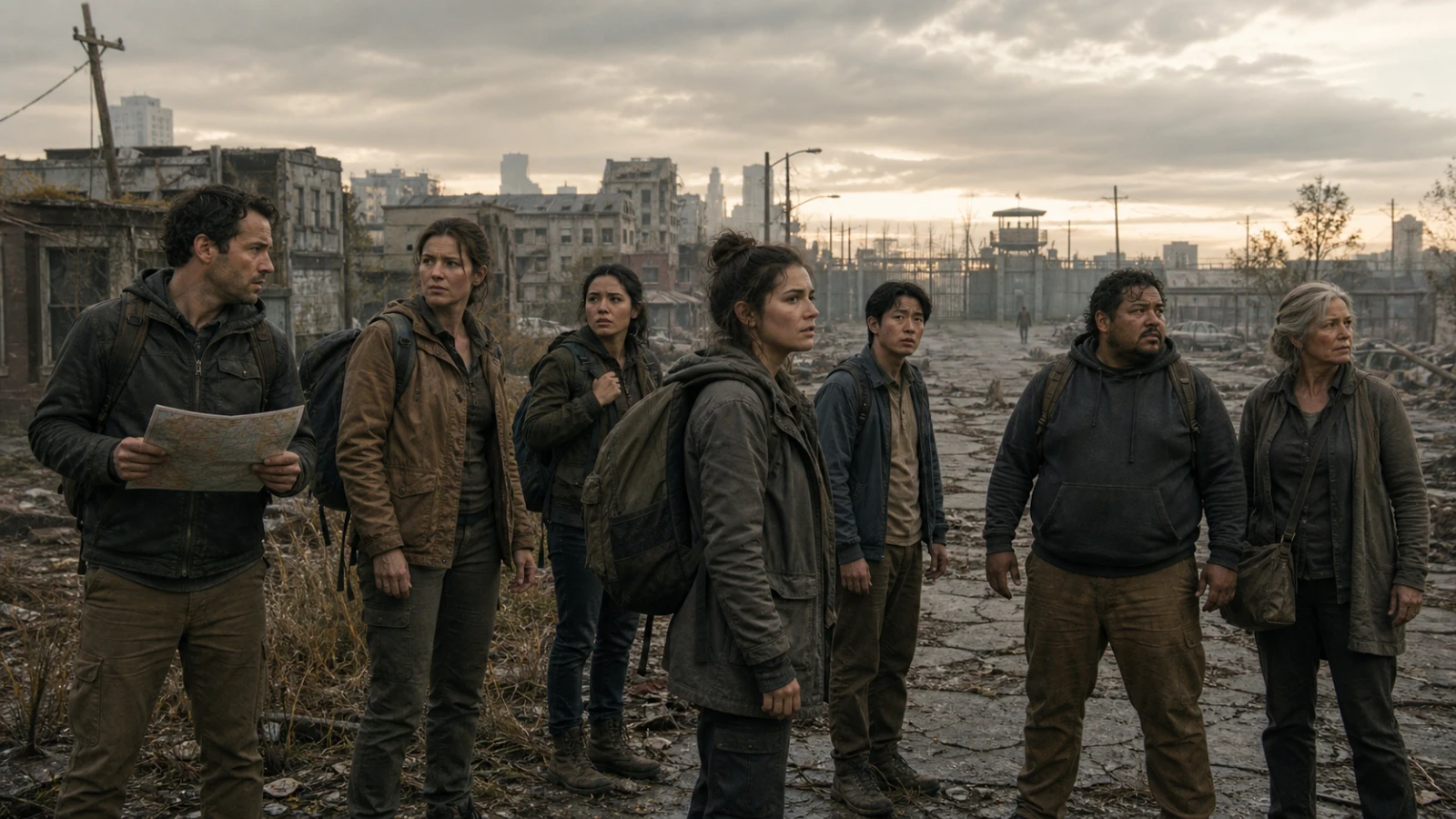
There is a reason comedy works so well with zombies.
Traditional zombies give people time to be ridiculous.
They are deadly, but much of the danger comes from bad decisions, crowding, denial, accidents, interpersonal conflict, and the human tendency to pretend a worsening situation is still manageable. A character can make the wrong plan, argue about it, revise it, stop for a sentimental reason, and still have a chance to get away because the thing coming down the street is walking.
Zombieland turns that structure into a survival manual. Sony Pictures describes Columbus as a frightened college student who survives precisely because he is afraid of almost everything, while Tallahassee is the fearless, gun-toting opposite. Columbus converts fear into rules. Cardio. Double tap. Beware of bathrooms. Seatbelts. Travel light. Know your way out. Find a good partner. Do not take unnecessary risks.
Shaun of the Dead turns the same basic threat into a test of ordinary people who are astonishingly slow to recognize how bad things have become. Focus Features highlights one of the film's central jokes: Shaun can walk through a visibly collapsing neighborhood and barely notice because his routine is so familiar. Once he finally understands the crisis, his solution is equally familiar. Get the people he loves, get to the Winchester, have a pint, and wait for the problem to pass.
Both strategies make sense inside their own comedies.
Neither survives unchanged inside the Extinction Cycle.
That is because Nicholas Sansbury Smith's Variants are not merely faster zombies. The core books repeatedly show them climbing walls, moving across ceilings, stalking teams, adapting behavior, surviving environments that used to look secure, and forcing experienced soldiers to abandon tactics that worked only days earlier. Operation Liberty fails in part because human planners underestimate the enemy's capabilities. In the New York tunnels, Reed Beckham's surviving force has no reliable map, almost no ammunition, and creatures moving through three-dimensional spaces that humans are accustomed to treating as barriers. The later Dark Age makes the social difference just as important: surviving Americans now live inside defended outposts with guards, dogs, crops, strategic food production, communications, and a national system whose security procedures exist because one mistake can expose hundreds of people.
So this comparison has to ask more than who is funniest with a shotgun or cricket bat.
It has to ask who can unlearn the zombie movie they came from.
Ground Rules: What "How Long Would They Survive?" Means
Any exact number would be fake precision.
A character dropped beside Team Ghost during a mission has a radically different survival chance from the same character waking up inside Outpost Portland. Someone with ten minutes of warning survives differently from someone who gets a week of training. A Tallahassee carrying a familiar firearm is not the same scenario as Tallahassee disarmed at an Allied States checkpoint.
Two survival tests separate first contact from life after rescue.
Test One: Open-Zone Survival
The character enters exposed Extinction Cycle territory with the habits and skills demonstrated in the movie, but without a formal Team Ghost briefing.
This is the harsh test.
It asks how quickly the person recognizes that a Variant is not a walker, how they react to speed, whether they waste ammunition, whether they seek elevation or concealment intelligently, and whether they cooperate when a military unit tells them to move.
Test Two: Outpost Survival
If the character survives first contact and reaches a functioning Allied States outpost, the question changes.
Can they live under a guarded system?
Can they accept screening, assigned work, ration discipline, restricted access to weapons and supplies, perimeter procedures, and a chain of command built around protecting hundreds of people instead of preserving one small friend group?
The Dark Age world gives people something Zombieland and Shaun of the Dead largely do not: an organized civilization worth joining.
That dramatically improves some characters' chances.
It also exposes characters who only function when nobody can tell them what to do.
The Extinction Cycle Reality Check
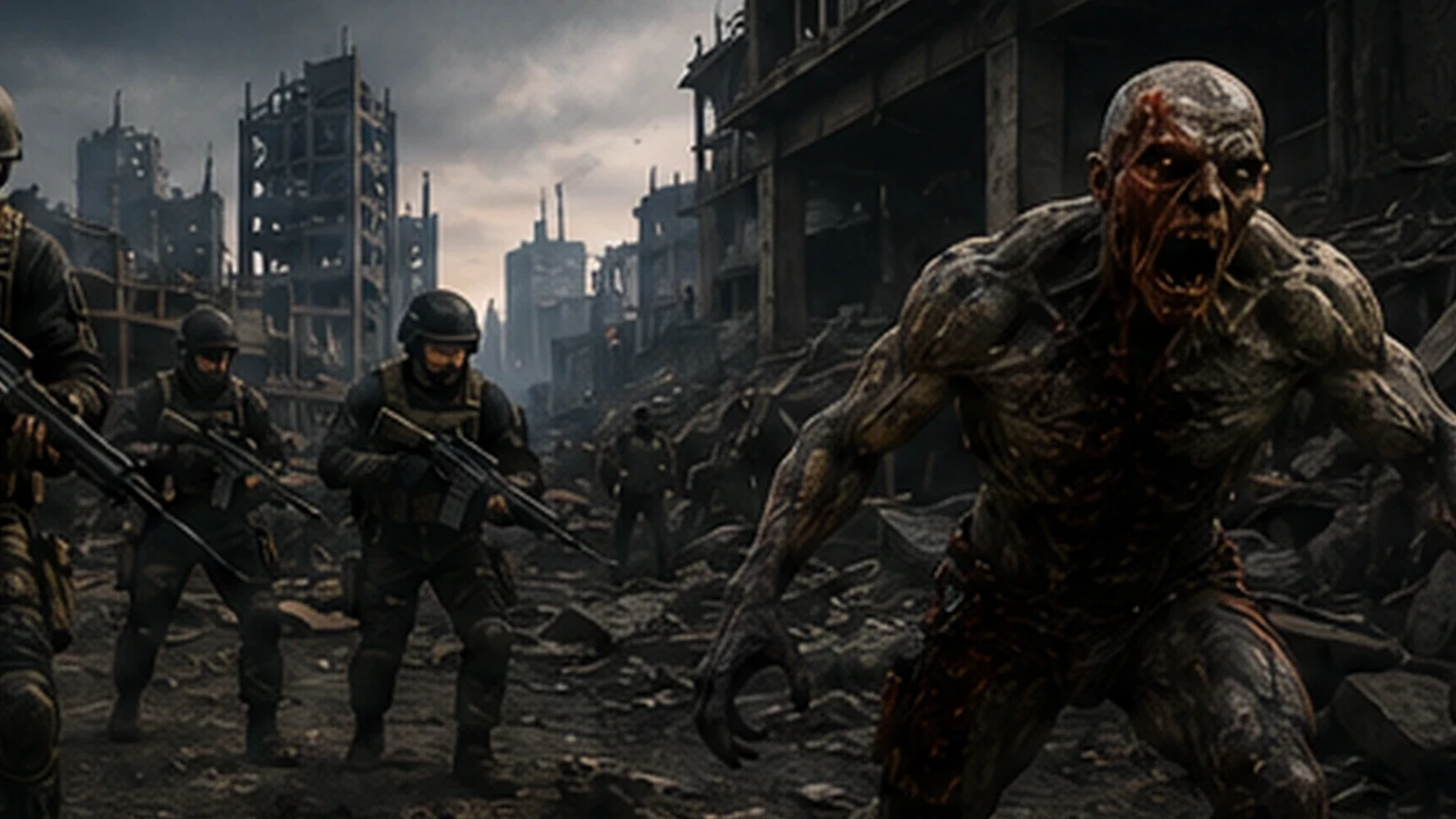
Before ranking anyone, the comedy-zombie characters need a new threat briefing.
Variants are fast enough to erase the normal comedy beat
In Shaun of the Dead, Shaun and Ed can spend time testing improvised weapons in a garden because their targets approach slowly enough for trial and error.
Against Variants, trial and error happens once.
If the first experiment fails, the creature is already inside striking distance.
Variants use vertical space
The New York tunnel sequences in Extinction Age show creatures moving along walls and ceilings. That destroys one of the unconscious assumptions traditional zombie survivors make: that the main danger approaches horizontally through doors, streets, hallways, or windows.
A Zombieland survivor who checks the room but not the ceiling has not finished clearing the room.
Variants adapt
The series repeatedly turns previous knowledge into expired knowledge.
Different theaters produce different forms. Juveniles change the war. European operations reveal regional threats. Dark Age introduces increasingly organized enemies.
Columbus would understand this intellectually faster than most.
The harder part would be emotionally accepting that his rulebook is a draft, not scripture.
The military still matters
Comedy-zombie worlds often strip away institutions quickly enough that individual survival becomes the dominant skill.
The Extinction Cycle repeatedly retains fragments of organized military power, scientific command, special operations, naval forces, fortified facilities, and later an Allied States government.
That means survival is not just "be tough."
It is also "do not compromise the team."
Scarcity changes what good weapons behavior looks like
Tallahassee can enjoy extravagant zombie killing because Zombieland treats firearms and ammunition with the elastic logic of an action comedy.
Team Ghost cannot.
A magazine is finite. A resupply mission can kill people. A weapon belongs inside a larger fire plan.
This is where "double tap" becomes more complicated. Confirming a kill is smart. Automatically firing a ritual extra shot every time may not be.
Safe places are systems, not buildings
The Winchester is a building.
Turkey River is a system.
That difference may be the most important lesson in the entire crossover.
A genuine Extinction Cycle outpost has perimeter defense, guards, routines, communications, food production, and people whose behavior affects everyone else.
The Winchester has windows, doors, alcohol, emotional history, and a very limited escape plan.
One is designed to remain safe.
The other merely feels safe.
Zombieland's Rules: Which Ones Still Work?
Columbus deserves credit before the Extinction Cycle tears up his notebook.
The rule system is fundamentally intelligent.
He takes repeated mistakes and converts them into habits. That is exactly what professional organizations do with after-action reviews. Team Ghost survives because it learns. Columbus survives because he writes down what he learns.
The problem is not the existence of rules.
It is that the rules were written for the wrong enemy.
Comedy-Zombie Strategy Transfer Matrix
| Strategy | Origin | Extinction Cycle value | Required rewrite |
|---|---|---|---|
| Cardio | Zombieland | Partly useful | Do not race the Variant. Avoid being detected in the first place. |
| Double Tap | Zombieland | Needs revision | Confirm the kill without wasting ammunition or losing your sector. |
| Beware of Bathrooms | Zombieland | Strong | Clear every confined space before relaxing. |
| Seatbelts | Zombieland | Strong | Vehicle safety remains survival. |
| Travel Light | Zombieland | Excellent | Travel light, but never travel under-equipped. |
| Know Your Way Out | Zombieland | Excellent | Have primary, alternate, contingency, and emergency routes. |
| Buddy System | Zombieland | Excellent | Never confuse independence with being alone. |
| Go to the Winchester and wait | Shaun of the Dead | Very poor | Move to a hardened site with perimeter security, supplies, communications, and multiple exits. |
| Imitate the zombies | Shaun of the Dead | Fails | Use camouflage, concealment, noise discipline, and distance. |
| Cricket bats, records, improvised melee | Shaun of the Dead | Catastrophic as primary doctrine | Avoid melee unless contact has already gone catastrophically wrong. |
| Rescue everyone in one improvised loop | Shaun of the Dead | Emotionally understandable, tactically dangerous | Prioritize, communicate, secure the route, and do not turn a rescue into five separate missions. |
Cardio: useful, but no longer a complete escape plan
Columbus is right that fitness matters.
He is wrong if he interprets that as "I only need to be able to keep running."
Against slow zombies, distance is safety.
Against a fast Variant, the critical decision may happen before the chase begins. Did you hear it? Did you maintain concealment? Is the route open? Is there hard cover? Does the team know where you are? Did you choose terrain that prevents the enemy from using walls, rooftops, or tunnels?
The revised rule would be harsher:
Do not race the Variant. Prevent the race.
Double Tap: good instinct, bad ritual
The instinct behind Double Tap is confirmation.
That survives.
The automatic second shot does not always.
The Extinction Cycle world treats ammunition as a real operational resource. Team Ghost counts magazines because running dry is a mission-ending problem. Some Variant encounters require multiple controlled hits. Others demand immediate movement rather than standing over a target to perform a rule.
Columbus would have to learn target assessment instead of target ritual.
Beware of Bathrooms: still excellent
This rule gets funnier and more useful in the crossover.
The bathroom itself is not the point.
The point is vulnerability.
Do not enter confined spaces casually. Do not put down your weapon where you cannot reach it. Do not allow routine to suspend situational awareness.
That lesson works anywhere.
Seatbelts: survives completely
A comedy rule becomes boringly professional.
Vehicles roll.
Roads collapse.
Drivers panic.
Ambushes happen.
Wear the seatbelt.
Team Ghost would approve.
Travel Light: excellent after one correction
The Extinction Cycle rewards mobility.
But "light" cannot mean "under-equipped."
Water, ammunition, protective equipment, a radio, trauma supplies, navigation, and appropriate clothing may all be non-negotiable.
The revised rule is:
Carry nothing useless. Never omit something essential.
Know Your Way Out: almost a Team Ghost rule already
This may be Columbus's best transferable instinct.
The Ghost version would simply add more exits.
Primary route.
Alternate route.
Contingency.
Emergency.
And a plan for what happens when the Variants are already standing on the one you preferred.
Buddy System: better than Columbus realizes
The Extinction Cycle punishes lone survival.
Even its elite operators depend on overlapping observation, radio communication, medical aid, ammunition sharing, and someone else watching the direction they cannot see.
The more intelligent the enemy becomes, the less attractive lone-wolf behavior is.
Enjoy the Little Things: strategically underrated
This sounds ridiculous next to Variant biology.
It is not.
The Dark Age exists because survival without ordinary life is incomplete. Farms, families, rebuilt communities, routines, and relationships are the point of winning.
Morale is not ammunition.
But people who lose the reason to survive make worse decisions with the ammunition they have.
Columbus gets to keep this one.
Zombieland Characters
Wichita: Best Overall Chance
Open-zone estimate: 2 to 8 weeks Outpost outlook: high
Wichita is probably the best crossover survivor because she combines distrust with adaptability.
Those traits are not identical.
Distrust says, "Do not believe the stranger."
Adaptability says, "Change the plan when the evidence changes."
The first could cause trouble at an Allied States checkpoint. The second could keep her alive long enough to reach one.
Wichita already understands that survival can require lying, stealing a vehicle, abandoning a bad situation, or manipulating a person who thinks they understand the rules. That makes her unusually well suited to the human side of the Extinction Cycle, where collaborators, frightened civilians, political factions, and raiders can be as dangerous as the infected.
Her first Variant encounter would still be terrifying.
The speed would invalidate any casual confidence created by years of dealing with Zombieland's infected. But Wichita is not sentimental about tactics. She is less likely than Columbus to defend an old rule just because it has a number.
She would change.
That is why she survives.
Her major problem comes after the gate closes behind her.
A real outpost requires trust at scale. Not blind trust, but enough trust to surrender a weapon for inspection, disclose where you have been, accept screening, follow perimeter procedures, and believe a guard who says an area is restricted.
Wichita's old rule is essentially "trust no one except Little Rock."
The Allied States requires a harder rule:
Trust systems carefully enough that everyone benefits from them.
If she learns that, she could last years.
She would not automatically become Team Ghost. Her experience is survival experience, not special-operations training. But she could become a valuable perimeter defender, scout, or human-threat observer.
Columbus: His Rules Save Him, Then Nearly Kill Him
Open-zone estimate: 1 to 6 weeks Outpost outlook: high
Columbus may have the most interesting adaptation curve.
His caution is exactly what the Extinction Cycle rewards.
His confidence in his caution is exactly what it punishes.
He survives Zombieland because he assumes the world is dangerous. He checks things. He plans. He avoids bravado. He creates habits that reduce stupid accidents.
That gives him a major head start over the Shaun group.
But he is also vulnerable to what psychologists and military planners would call model failure.
His rules tell him what zombies do.
Variants violate the model.
The first one on a ceiling is a crisis.
The first one that survives the kind of engagement he expected to end it is a crisis.
The first ambush by coordinated creatures is a crisis.
Columbus either rewrites his rules in the first several days or dies while obeying rules that used to work.
If he reaches an outpost, however, his survival odds improve dramatically.
He is built for systems.
Inventory control would appeal to him.
Safety procedures would appeal to him.
Evacuation maps would appeal to him.
Written protocols would appeal to him.
He would probably be happier organizing stores, vehicle checklists, route plans, and shelter drills than patrolling Variant territory.
Team Ghost would not want him on point.
The outpost quartermaster might love him.
Tallahassee: Deadly Until He Treats the Mission Like a Mission
Open-zone estimate: 3 days to 3 weeks Outpost outlook: moderate to high
Tallahassee looks like the easiest answer because he is the best obvious fighter in the Zombieland quartet.
That is why he ranks below Wichita.
The Extinction Cycle does not simply reward aggression.
It rewards controlled aggression.
Tallahassee is fearless around zombies. He enjoys the destruction. He can use firearms under pressure. He does not freeze.
Those are excellent attributes during a perimeter breach.
They are dangerous during a reconnaissance mission.
Team Ghost survives by knowing when not to fire. A shot gives away position. A fight consumes ammunition. A heroic stand can compromise extraction.
Tallahassee's most Zombieland quality is that killing zombies is emotionally satisfying.
The Variants are the kind of enemy that turns that satisfaction into a trap.
A large infected target may tempt him to keep shooting while another comes through an unseen angle.
A horde may trigger his instinct to make a stand when the right answer is to withdraw.
A military officer telling him to hold fire may receive exactly the attitude Team Ghost has no patience for.
Still, if Tallahassee accepts one fundamental change, his long-term odds become strong.
He has to stop treating combat as personal expression.
He has to treat it as a job.
Inside an outpost defense force, with clear fields, ammunition discipline, and people he cares about behind the wall, he could become formidable.
Little Rock: The Outpost Changes Everything
Open-zone estimate: 3 days to 2 weeks Outpost outlook: high
Little Rock's biggest disadvantage is not that she is weak.
It is that the Extinction Cycle gives young survivors less margin for independence.
The Zombieland quartet can remain mobile and improvise as a family-sized group. Little Rock has learned that world early enough for abnormal life to feel normal.
That helps.
She does not need to mourn the old routines before moving.
She understands that strangers may be dangerous.
She can use weapons.
But independent field survival against Variants is a much harder developmental environment than road survival against slower infected.
Her best outcome is rapid integration into an outpost.
There, her survival experience becomes useful instead of being the only thing keeping her alive. She can train. She can learn formal security habits. She can grow up inside a community that has schools, work, agriculture, and people whose identities are not limited to "survivor."
The Dark Age's existence is almost designed for Little Rock.
Zombieland taught her how to survive the end of the world.
The Allied States could teach her how to live after it.
Shaun of the Dead: The Winchester Plan Fails in Minutes
The Shaun group enters this comparison with a major disadvantage.
They are not professional survivors.
That is the point of the movie.
Shaun is an ordinary man who rises to a crisis. Ed is an irresponsible friend whose loyalty is real even when his judgment is terrible. Liz is more mature and frustrated by Shaun's inability to change. David and Dianne bring their own tensions. Barbara is a mother inside a family crisis before she ever becomes part of a survival problem.
The comedy comes from watching ordinary social dysfunction collide with extraordinary horror.
The Extinction Cycle is much less patient with ordinary dysfunction.
The Plan: Take Car, Get Mum, Get Liz, Go to the Winchester
As character writing, the plan is perfect.
As Variant doctrine, it is a disaster.
Every stop increases exposure.
Every reunion creates noise.
Every passenger changes mobility.
Nobody has reliable reconnaissance.
Nobody has a meaningful ammunition plan.
The destination is selected because it is emotionally familiar, not because it has a defensible perimeter.
The Winchester has ground-level access, multiple windows, limited strategic food and water, no protected communications system, and no military relationship.
The plan's emotional logic is:
Go somewhere that feels safe.
The Extinction Cycle requires:
Go somewhere that was designed to remain safe when attacked.
That is not the Winchester.
Shaun: The First Day Is the Entire Test
Open-zone estimate: 1 to 5 days Outpost outlook: moderate
Shaun survives his own film because he improves.
That matters.
The man who begins the day unable to recognize catastrophe outside the convenience store is not the same man who eventually accepts responsibility for protecting other people.
His problem in the crossover is whether the improvement happens fast enough.
Against walkers, delayed recognition is dangerous.
Against Variants, it is usually final.
Shaun's most famous strength is not combat.
It is that responsibility activates him.
Once people truly depend on him, he becomes more decisive. He is willing to leave routine, move through danger, and keep a group together longer than his earlier life suggests.
That trait could save him after the first shock.
It would not make him Team Ghost material.
Shaun's useful future is civilian.
An Allied States outpost needs thousands of people who are not elite operators. It needs stores, maintenance, food distribution, work crews, parents, administrators, repair personnel, and neighbors.
Shaun could become very good at the boring part of civilization.
That is a compliment.
The reason Dark Age civilization exists is that ordinary people resumed ordinary work behind extraordinary defenses.
If Shaun reaches the gate, accepts instruction, and stops choosing safe places because he already likes drinking there, he has a real future.
Liz: The Shaun Group's Best Long-Term Survivor
Open-zone estimate: 2 to 10 days Outpost outlook: moderate to high
Liz is the person most likely to recognize that the old plan is failing.
That gives her a better Extinction Cycle survival profile than Shaun even if she is not the protagonist.
She challenges stagnation before the outbreak.
She questions bad assumptions.
She is less emotionally attached to Ed's chaos.
She wants Shaun to become someone capable of functioning in a larger adult world.
An outpost is that larger adult world with guard towers.
Liz would still be badly undertrained for Variant contact. She has none of Team Ghost's combat experience and no reason to understand how rapidly an intelligent infected threat changes tactical space.
But she has the psychological trait most important to survival after the first briefing:
she can accept that reality is not obligated to preserve the old routine.
Give Liz a secure gate, training, a civilian job, and a community with rules that make sense, and her odds improve sharply.
Dianne: Cleverness Does Not Make Zombie Acting Work
Open-zone estimate: 12 hours to 3 days Outpost outlook: moderate
Dianne's zombie-imitation idea is clever inside Shaun of the Dead.
It is one of the worst ideas to import into the Extinction Cycle.
The problem is not that she lacks observational ability.
It is that she is observing the wrong category of creature.
Traditional zombie imitation assumes the threat is visually simple enough to fool through gait, posture, vocalization, and group movement.
Variants hunt.
They smell.
They react.
They learn.
Even if one form could theoretically be confused for a second, building a survival plan around theatrical imitation would be reckless.
Dianne's better skills are social.
She watches people.
She cooperates.
She is empathetic.
Those are valuable inside a settlement.
Her open-zone danger comes from emotional rescue behavior. Running into a mass of infected after David is taken is tragic and understandable in her own film. Against Variants, that impulse ends even faster.
Ed: The Funniest Person Is the Biggest Security Problem
Open-zone estimate: 1 to 12 hours Outpost outlook: low unless behavior changes immediately
Ed is loyal.
Ed is funny.
Ed can help people endure misery.
Ed is also almost purpose-built to violate security procedures.
Noise discipline is not a personality preference in the Extinction Cycle.
It is survival.
Improvised gunfire is not funny when every round matters.
Refusing to take the danger seriously is not just irresponsible when a group is hiding from predators that can track and coordinate.
The brutal crossover judgment is that Ed probably dies first unless somebody physically puts him inside a protected vehicle or outpost before his normal habits matter.
Even outpost life would be difficult.
The question would not be whether guards like him.
It would be whether he can understand that a rule protecting five hundred people outranks whatever seemed funny in the moment.
If he changes, he has a place.
Communities need morale.
They need people who keep others laughing.
But Ed has to learn that humor happens after security, not instead of it.
David: Being Right About a Bad Plan Does Not Make You Good in a Crisis
Open-zone estimate: 1 to 24 hours Outpost outlook: low to moderate
David's role is complicated because he is sometimes correct for the wrong reasons.
He is skeptical of Shaun's leadership.
Shaun's plan genuinely is weak.
David's problem is that resentment distorts whatever value his skepticism might have.
Under pressure, he creates division rather than better coordination.
The Extinction Cycle has plenty of arguments.
Its competent units simply know when the argument has to end.
If Reed Beckham says move because a Variant is coming, the group moves. The debrief can happen later.
David's danger is spending the evacuation window proving that he was right.
Inside an outpost, he might function better because the chain of command does not depend on personal popularity. A written job and clear procedure could actually reduce interpersonal friction.
But he is an extremely poor candidate for a small field team.
Barbara: The Field Is Not a Fair Test
Open-zone estimate: hours Outpost outlook: possible with immediate protection
Barbara's low ranking is not a moral judgment.
It is a reminder that the Extinction Cycle is physically cruel.
She lacks the mobility, threat awareness, weapons training, and field instincts needed to survive exposed Variant territory.
Her most dangerous on-screen behavior is also directly relevant to outpost security: an injury or bite that is not immediately communicated can endanger everyone.
The Allied States would have medical screening for exactly this kind of problem, even if the specific procedures vary by location and era.
Inside a protected community, Barbara could live.
Outside one, the gap between her capabilities and the Variant threat is simply too large.
Who Actually Survives Longest?
Survival Outlook Table
| Character | Franchise | Open-zone estimate | If they reach an outpost | Best role |
|---|---|---|---|---|
| Wichita | Zombieland | 2 to 8 weeks | High if she accepts screening, rules, and shared command | Perimeter security, reconnaissance support, human-threat screening |
| Columbus | Zombieland | 1 to 6 weeks | High inside a stable outpost | Logistics, safety planning, stores control, evacuation planning, records |
| Tallahassee | Zombieland | 3 days to 3 weeks | Moderate to high if he accepts discipline | Outpost defense or conventional combat after retraining |
| Little Rock | Zombieland | 3 days to 2 weeks | High if protected by a functioning community | Civilian resident, education, later militia or logistics training |
| Liz | Shaun of the Dead | 2 to 10 days | Moderate to high | Community administration, civilian coordination, evacuation support |
| Shaun | Shaun of the Dead | 1 to 5 days | Moderate if he survives first contact and accepts training | Stores, maintenance coordination, civilian work teams, local response after training |
| Dianne | Shaun of the Dead | 12 hours to 3 days | Moderate if she reaches safety | Education, morale, civilian support, communications assistance |
| Ed | Shaun of the Dead | 1 to 12 hours | Low unless he changes behavior quickly | Supervised labor or support work after strict orientation |
| David | Shaun of the Dead | 1 to 24 hours | Low to moderate only inside a structured civilian system | Civilian work detail if he can function under rules |
| Barbara | Shaun of the Dead | Hours | Possible only with immediate protection and medical screening | Protected civilian community member |
The result is not "Zombieland good, Shaun bad."
It is more specific.
The Zombieland quartet begins with apocalypse habits.
The Shaun group begins with ordinary-life habits.
That gap matters most in the first several days.
After an outpost absorbs them, the ranking changes.
Liz may become more useful to a community than Tallahassee.
Shaun may have a safer long-term life than a fighter who insists on patrolling.
Little Rock may become more valuable after years of education and training than her first-week survival odds suggest.
The military world changes the question from "Who can kill the most zombies?" to "Who can become part of a functioning survival system?"
What Team Ghost Would Think of Them
Team Ghost would not recruit this group because they survived a comedy.
Special operations training is not a personality test.
It is training.
Still, the unit would notice useful traits.
Wichita
Fitz would recognize awareness and adaptability.
He would also notice immediately if she withheld information.
That relationship begins with suspicion on both sides.
Columbus
Ghost would appreciate preparation and hate rigid rule worship.
Dohi might respect his instinct to observe patterns but remind him that tracks are information, not commandments.
Tallahassee
Every operator would recognize that he can fight.
The question is whether he can stop fighting when told.
That determines everything.
Little Rock
Ghost would protect her before trying to use her.
The outpost system is the correct destination.
Shaun
Beckham would probably understand him better than Shaun expects.
The series repeatedly values ordinary people who become responsible when there is no one else available.
But nobody would hand him a Team Ghost patch.
Liz
Likely the easiest Shaun-group adult to integrate into civilian systems.
Dianne
Useful behind the perimeter.
Not useful pretending to be a Variant.
Ed
Rico might laugh at him.
Then somebody would take away the gun until he completed training.
David
He would discover that military disagreement has timing rules.
Barbara
She goes directly to medical screening and protected housing.
That is not weakness.
That is what civilization is for.
Scarcity: The Comedy Worlds Have a Resource Problem
One reason comedy zombie survival looks more flexible is that the story rarely lingers on the full logistics of sustained war.
The Extinction Cycle does.
Ammunition matters.
Fuel matters.
Medical care matters.
Working aircraft matter.
Food production matters.
The Dark Age makes logistics even more visible because settlements survive through specialization and exchange. Turkey River is not just a wall. It is an agricultural outpost whose production supports a larger network.
That makes several comedy habits suddenly expensive.
Tallahassee's ammunition enthusiasm becomes a supply problem.
Constant road travel becomes a fuel problem.
Abandoning vehicles casually becomes a maintenance problem.
Choosing a pub instead of a logistics hub becomes a food and water problem.
Stealing from every stranger becomes a governance problem.
The moment a survivor joins a rebuilt society, "take what keeps me alive" has to become "manage what keeps everyone alive."
That is a profound shift.
Wichita and Columbus can make it.
Tallahassee can if he wants to.
Shaun and Liz probably can.
Ed might find it unbearable.
Outpost Rules: Why Safety Has a Price
A wall does not make an outpost safe.
People following procedures make the wall useful.
The books show defended communities with guards, dogs, crops, sensors, military oversight, and structured routines. They exist because the surviving government has moved beyond purely improvised refuge.
A new arrival is therefore not simply welcomed into a clubhouse.
They are a security problem until proven otherwise.
Where have they been?
Were they exposed?
What are they carrying?
Who are they traveling with?
Can they follow instructions?
What useful work can they do?
The Zombieland crew's old habit of running confidence tricks against strangers would become extremely dangerous here.
Wichita cannot steal a military vehicle and expect the misunderstanding to become a funny bonding moment.
Columbus cannot create private rules that override perimeter protocol.
Tallahassee cannot fire at something outside the wall because he feels like it.
Little Rock cannot treat the gate as a temporary stop on a road trip.
The Shaun group faces the opposite adjustment.
They would probably welcome structure.
Their problem is competence, not anti-institutional identity.
Shaun may be relieved that somebody has a real plan.
Liz may thrive when the adults in charge actually deserve to be in charge.
Ed may immediately discover how many things are prohibited near the armory.
The Comedy Advantage: Morale Is Real
The crossover should not become humorless simply because the Extinction Cycle is deadlier.
Comedy itself is a survival asset.
Not the jokes.
The ability to keep making them.
Soldiers joke.
Survivors joke.
People under prolonged stress use humor to create distance from fear, preserve identity, and prevent every conversation from becoming a funeral.
Tallahassee's obsession with a snack, Columbus's little rules, Ed's stupidity, and Shaun's desperate normality all contain versions of the same human impulse:
the apocalypse does not get to own every minute.
That is useful.
The problem begins when humor edits the threat.
If the joke makes the group move slower, talk louder, waste ammunition, or deny reality, it becomes dangerous.
If the joke keeps frightened people functioning after the perimeter is secure, it becomes valuable.
The Extinction Cycle would not kill the comedy.
It would teach it when to shut up.
Final Ranking
1. Wichita
Best combination of adaptability, combat competence, realism, and willingness to make hard decisions.
Best case: years, possibly permanently inside the Allied States.
2. Columbus
Best at converting experience into repeatable safety behavior.
Best case: long-term outpost survivor and excellent logistics or safety specialist.
3. Tallahassee
Most dangerous fighter, but also most likely to turn a survivable mission into a fight he enjoys too much.
Best case: long-term defender after discipline replaces performance.
4. Liz
Least apocalypse-trained of the top four, but psychologically well suited to structure and better judgment.
Best case: stable long-term civilian leader or coordinator.
5. Little Rock
Survival experience is real, but independence is less useful than reaching a community quickly.
Best case: grows into the rebuilt society rather than remaining a permanent road survivor.
6. Shaun
Bad first-day profile, surprisingly respectable long-term profile if he survives the shock.
Best case: ordinary citizen who becomes reliable because people depend on him.
7. Dianne
Good social and observational traits, poor field doctrine.
Best case: useful community member behind the wall.
8. David
Capable of seeing flaws in plans, poor at helping groups survive the disagreement.
Best case: structured civilian role away from field command.
9. Ed
Could survive longer than this ranking if somebody else protects him, but his normal behavior is almost perfectly designed to create contact.
Best case: morale asset after security culture is drilled into him.
10. Barbara
The open field is simply too dangerous.
Best case: immediate extraction into protected civilian life.
Final Verdict: Zombieland Rewrites the Rules, Shaun Needs a Real Plan
The Zombieland characters do better.
That should not be surprising.
They have already accepted that the apocalypse is permanent. Their emotional world is strange, but their survival world is mature. They move. They carry weapons. They distrust easy answers. They think about ambushes, fitness, vehicles, escape, and the cost of attachment.
The first Variant still shocks them.
The second one teaches them.
Wichita probably adapts fastest.
Columbus writes new rules.
Tallahassee learns, painfully, that killing the monster is not always the mission.
Little Rock gets inside the wall and has a chance to stop growing up on the road.
The Shaun of the Dead group has a much uglier first twenty-four hours.
Their greatest enemy is not lack of courage.
It is lag.
They are used to a story where recognizing the crisis late is funny before it becomes tragic.
The Extinction Cycle removes the funny interval.
Shaun may still become brave.
Liz may still become practical.
Dianne may still improvise.
Ed may still be loyal.
But the Variants do not wait for character development.
That is why the Winchester plan fails.
That is why pretending to be infected fails.
That is why cricket bats fail.
That is why loud arguments fail.
And that is why the best chance for every surviving comedy character eventually looks the same:
find the people who understand the enemy.
Listen.
Train.
Conserve what matters.
Accept that safety has rules.
Become useful to the community behind the wall.
And rewrite every zombie rule the moment a Variant proves it wrong.
Quick Verdict
Best overall survivor: Wichita Best rule-based adapter: Columbus Best raw fighter: Tallahassee Best Shaun of the Dead survivor: Liz Best comeback if he reaches an outpost: Shaun Most dangerous personality for outpost security: Ed Worst imported strategy: Going to a familiar pub and waiting Best imported strategy: Know your way out Most important Extinction Cycle lesson: Detect, adapt, coordinate, and never assume the enemy still behaves like the last one you survived.
FAQ
Would Columbus survive the Extinction Cycle?
Probably longer than most comedy-zombie characters. His caution, route planning, and rule-based thinking are useful, but he would need to rewrite rules built for slower zombies. His best long-term fit is inside a structured outpost rather than as a frontline operator.
Would Tallahassee be good enough for Team Ghost?
Not without formal training. His firearms confidence and aggression are useful, but Team Ghost requires communications, fire discipline, mission obedience, and the ability to avoid unnecessary contact. He could become a strong conventional defender if he accepts that structure.
Would Wichita survive Variants?
She has one of the best chances. Her adaptability and willingness to abandon a bad plan translate well. Her biggest challenge would be learning to trust legitimate outpost procedures rather than treating every authority as another stranger to deceive.
Would Shaun survive?
The first encounter is the problem. Shaun initially misses obvious warning signs in his own film, and that delay would be far more dangerous against Variants. If he reaches an outpost alive, his willingness to take responsibility makes a longer civilian life plausible.
Would Ed survive?
His independent odds are poor. Noise, reckless weapon handling, distraction, and failure to take danger seriously are especially dangerous around Variants. An outpost could keep him alive only if he accepts strict behavior changes.
Would pretending to be a zombie work against Variants?
It would be a terrible strategy. The Extinction Cycle depicts fast, predatory and increasingly intelligent infected with hunting behaviors that are very different from the slow zombies Dianne imitates.
Would the Winchester be a good Extinction Cycle safe zone?
No. Familiarity is not fortification. A viable Extinction Cycle refuge needs perimeter security, supplies, communications, controlled access, and multiple defensive layers. A ground-level pub chosen because the characters like it would be a poor substitute.
Which Zombieland rule works best in the Extinction Cycle?
"Know your way out" transfers extremely well. Team Ghost repeatedly survives missions by planning extraction, adapting routes, and refusing to assume the original exit will remain available.
Is this crossover canon?
No. It is speculative comparative criticism using established behavior from Zombieland and Shaun of the Dead against source-grounded Extinction Cycle conditions.
Sources and Method
Extinction Cycle basis
The Extinction Cycle threat model rests on the novels and source-indexed canon records:
- Extinction Age depicts Variants moving on walls and ceilings during the New York tunnel escape and shows Operation Liberty collapsing under incorrect assumptions about the enemy.
- Team Ghost mission records track repeated intelligence failures, scarcity, extraction problems, and tactical adaptation.
- Extinction Cycle: Dark Age establishes a rebuilt Allied States with approximately one hundred outposts, while Turkey River and other locations demonstrate organized agriculture, guarded communities, and a postwar society that still depends on security discipline.
Zombieland basis
Sony Pictures' official film synopsis describes Columbus as surviving because he is frightened of nearly everything and Tallahassee as the fearless gun-toting contrast. The comparison also uses the film's on-screen survival-rule framework, including Cardio, Double Tap, and related rules.
Shaun of the Dead basis
Focus Features' official material describes Shaun as an ordinary slacker forced to save his friends and family during the outbreak. Focus also highlights the film's joke that Shaun initially walks through an obviously deteriorating neighborhood without recognizing what is happening, and summarizes the plan to collect loved ones and retreat to the Winchester.
The character survival ranges above are original editorial speculation. They are not claims made by any of the franchises.
Editorial Disclosure
This is independent fan criticism. Zombieland, Shaun of the Dead, and the Extinction Cycle are separate fictional properties. The survival estimates and crossover outcomes are speculative. Generated images included with this package are unofficial editorial illustrations, not official stills or promotional artwork.
Recommended next pages
Source and canon pack
- Canon treatment
- Explicitly speculative comparative criticism. Film behavior supplies the character evidence; source-grounded Extinction Cycle records supply the threat and settlement conditions; survival ranges are editorial judgments, not canon outcomes.
- Primary wiki source plan
- Extinction Age New York tunnel and Operation Liberty material; original-series Team Ghost and Variant records; later evolution and Dark Age outpost, agriculture, screening, infrastructure, and reconstruction records; local source-indexed Variant, Team Ghost, operation, and outpost pages.
- Spoiler scope
- Major character-behavior and event spoilers for Zombieland and Shaun of the Dead, plus broad Variant, outpost, and reconstruction spoilers for the Extinction Cycle.
- Safety boundary
- Independent speculative criticism using paraphrase and original or supplied-for-use unofficial artwork. It is not emergency advice. No long quotations, film stills, posters, logos, screenshots, actor likenesses, signature costumes, affiliation claims, ads, affiliate links, or graphic gore are used.
- Program article ID
- EC-14
- Scheduled publication
- 2026-09-04T09:00:00-04:00