
Politics and Society
Allied States
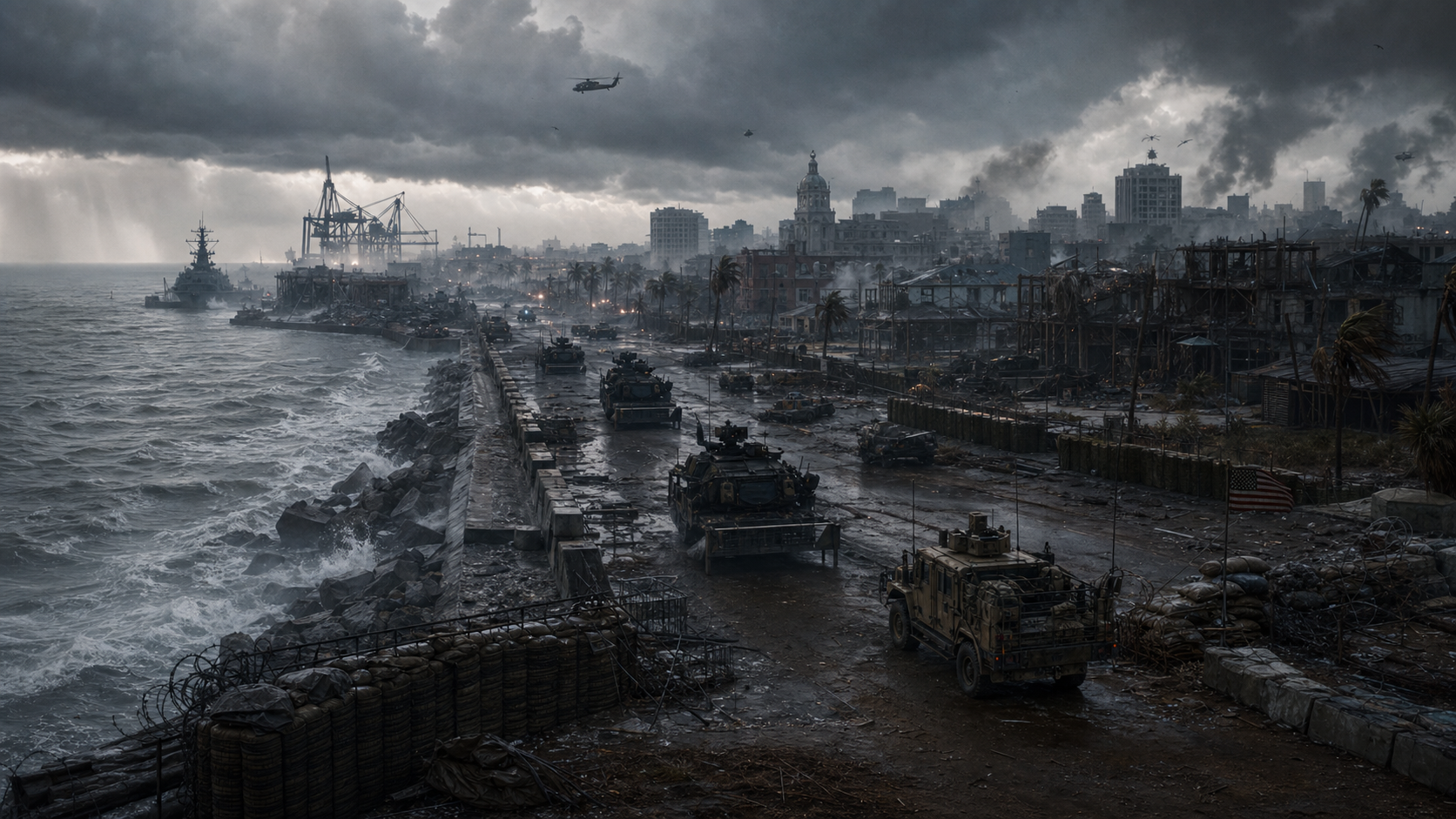
The Allied States is the postwar successor polity created from the surviving United States continuity government, regional safe zones, military remnants, scientific communities, and civilian settlements in the Extinction Cycle. Founded under President Jan Ringgold after the first Variant war and the Resistance of Tyranny crisis, it is not a complete restoration of the pre-outbreak United States. Its authority is concentrated in a defensible network of approximately one hundred fortified outposts, primarily in the Midwest and along the East Coast, while much of the West Coast and many former metropolitan areas remain frontier or lawless territory.
Quick Facts
- Role
- Politics and Society
Overview
By the opening of the Dark Age sequence, the Allied States has restored limited agriculture, manufacturing, energy production, rail transport, schools, laboratories, elections, and organized defense. Its survival strategy relies on fixed outposts supported by national supply links and small mobile forces such as Team Ghost. That model preserves a near-extinct population from mass mobilization but becomes the central political dispute between Ringgold's New America Coalition and General Mark Cornelius's Freedom Party, which supports conscription and aggressive reclamation.
The rise of Azrael's New Gods exposes the limits of the outpost era. Coordinated attacks, human collaborators, specialized creatures, and a biological webbing network destroy communities and target the state itself. Vice President Dan Lemke is captured and executed. Ringgold dies at Galveston after refusing submission. The surviving polity enters a succession crisis in which Reed Beckham and Cornelius move toward a unity arrangement, combining Ringgold's civic legacy with the demand for a stronger frontier response.
State information
- Field: Name; Detail: Allied States
- Field: Type; Detail: Post-collapse federal or allied republic centered on fortified communities
- Field: Predecessor; Detail: Surviving United States continuity government and postwar safe-zone system
- Field: Founding leader; Detail: President Jan Ringgold
- Field: Founding wartime partner; Detail: George Johnson, vice president and head of Central Command
- Field: Later vice president; Detail: Dan Lemke
- Field: Principal opposition leader; Detail: General Mark Cornelius
- Field: Major political groupings; Detail: New America Coalition and Freedom Party
- Field: Territorial basis; Detail: Approximately one hundred fortified outposts, concentrated in the Midwest and East Coast
- Field: Areas outside routine control; Detail: Many abandoned cities, frontier regions, lawless zones, and much of the former West Coast
- Field: Restored sectors; Detail: Agriculture, limited manufacturing, energy, rail and supply movement, education, medicine, science, elections, and military patrols
- Field: Primary mobile force; Detail: Team Ghost and other attached national or regional units
- Field: Principal external threat; Detail: Evolved Variants and Azrael's New Gods hierarchy
- Field: Principal internal and historical threats; Detail: ROT, secession, collaborators, corruption, infiltrators, and abuse of emergency power
- Field: Major crisis sites; Detail: Safe Zone Territories, frontier outposts, Puerto Rico command route, Outpost Manchester, and Galveston
- Field: End-state; Detail: Ringgold and Lemke dead; surviving institutions reorganize around coalition, military defense, and continued reconstruction
Origins in wartime continuity
The Allied States descends from a government that survives without a capital, stable territory, or intact bureaucracy. Earlier national leadership is destroyed, compromised, or discredited during the outbreak. Colonel Gibson hides the origin program and places scientific survival under classified command. General Kennor ignores biological intelligence during Operation Liberty. Other officials die before ordinary succession can operate.
Ringgold's wartime presidency is therefore both lawful continuity and practical reconstruction. Her swearing-in aboard the USS George Washington reflects the condition of the state: civilian authority exists, but its secure ground is a naval platform carrying soldiers, scientists, refugees, aircraft, and the remaining means of long-range command.
Ringgold chooses General George Johnson as vice president and head of Central Command. The arrangement binds civilian legitimacy to professional military capability without making either self-sufficient. Johnson can plan and execute operations, but the decision to risk the surviving population belongs within political authority. Ringgold can define public objectives, but declarations cannot replace pilots, laboratories, ships, and field teams.
This partnership supports the final stages of the first war, including Kryptonite and Operation Extinction. It also establishes a principle that later survives Ringgold personally: biology, military force, and civil government must share information. Whenever one isolates itself, the result resembles Building 8 secrecy, Operation Liberty's command failure, or ROT manipulation.
From refuge to state
The first stable communities are safe zones, naval groups, islands, military installations, rural camps, and local survivor enclaves. They exist to keep people alive, screen infection, concentrate food and medicine, and create defensible boundaries. They do not initially form a restored national system.
The Republic of Texas and ROT conflicts show why simple enclosure is inadequate. A secure settlement can be captured by political extremists, cut off from communications, or turned against the wider government. A ship can preserve enormous military capacity while remaining vulnerable to mutiny, infiltration, or contested command. Safety requires law and trust as well as walls.
Ringgold's administration connects communities through protection, exchange, communications, and political membership. The term Allied States describes a union built from surviving partners rather than an automatic claim that every former state has returned. A settlement joins a system whose value must be demonstrated through food, medicine, transport, defense, and representation.
The transition takes years. By the Dark Age opening, approximately eight years of reconstruction have produced permanent homes, farms, schools, workshops, power systems, laboratories, and transport links. Children grow up who remember little or nothing of the old country. The new state's legitimacy therefore cannot rest only on constitutional memory. It must arise from the society those children actually inhabit.
Territory and the outpost network
The Allied States controls points and corridors more reliably than broad continuous territory. Approximately one hundred outposts form its political and defensive skeleton. Their concentration in the Midwest and East Coast reflects population survival, farmland, water access, transport routes, and areas that can be supplied and defended. Much of the former West Coast remains abandoned or beyond routine authority.
An outpost is more than a fort. It may contain housing, fields, livestock, schools, clinics, workshops, storage, power generation, laboratories, local administration, and a garrison. Some emphasize agriculture, some control ports or urban edges, and others protect technical or command functions. Most combine several roles because specialization without local resilience creates a fatal dependency.
Walls, towers, patrols, mines, dogs, alarms, and sensors make sustained life possible. They also advertise where people, food, tools, and knowledge are concentrated. An enemy able to observe over time can study shifts, gates, supply schedules, drainage routes, and communications habits.
The state does not publish a complete outpost map or uniform charter in the available record. Known locations, including Turkey River, Portland and Peaks Island, Manchester, and Galveston, represent different functions rather than one standardized municipal model.
Frontier and lawless zones
Territory outside the network is not necessarily empty. Abandoned cities can contain Variants, Alpha-led lairs, human collaborators, prisoners, scavengers, independent settlements, laboratories, fuel, machinery, and archives. Rural regions can support homesteaders who survived without national help as well as raiders who target outpost routes.
The category "lawless" describes limited Allied States enforcement, not the moral status of everyone living there. Independent survivors may reasonably distrust a government that did not protect them during the collapse. Incorporation therefore raises questions of consent, property, quarantine, defense obligations, and representation.
Frontier cities create the hardest military problem. They contain strategic resources and potential enemies but also hidden civilians. Operation Liberty shows that bombing and mass advance can drive enemies underground, kill captives, and destroy the infrastructure intended for recovery. Leaving the same territory untouched can allow organized threats such as the New Gods to develop unseen.
The Allied States initially favors targeted penetration. Teams enter for a defined rescue, sample, reconnaissance objective, or confirmed threat and withdraw rather than claiming an entire city. The method limits exposure but cannot provide continuous observation everywhere.
Government and civilian authority
The postwar state retains a presidency, vice presidency, national command, political parties, elections, and local administration. The available continuity does not define a complete constitution, legislature, judiciary, or uniform code for every outpost. Its governmental character is established through functions: leaders are selected and opposed, military forces answer to public authority, communities exchange resources, and succession is treated as a legal and political question rather than simple victory by the strongest commander.
Ringgold's leadership begins through emergency succession but develops into an administration expected to end through peaceful transfer. She does not present military survival as a permanent substitute for civic life. Schools, elections, farms, and laboratories are state achievements equal to battlefield victories.
Local authority remains necessary. Outpost leaders manage immediate needs while national institutions coordinate threats and resources too large for one settlement.
This layered system creates tension. A local commander can protect a community from a distant mistake, but a compromised mayor or infiltrator can use the same autonomy to betray it. Central control can standardize quarantine and defense, but excessive control can reproduce the secrecy and coercion that helped create the first catastrophe.
Economy and infrastructure
The Allied States economy is organized around survival bottlenecks rather than prewar consumer abundance. Food, power, medicine, transport, ammunition, tools, replacement parts, and specialized labor determine whether a community remains viable.
Agriculture is the base. Farms need seed, breeding animals, water, fertilizer, machinery, storage, and armed protection across entire seasons. One attack can eliminate years of work by killing livestock or burning seed reserves even if many residents escape.
Energy supports refrigeration, pumps, clinics, laboratories, communications, workshops, and homes. Solar panels, wind turbines, local generation, batteries, and restored sections of grid reduce dependence on finite fuel. Aircraft, ships, heavy vehicles, and emergency generators still require fuel that must be produced, found, transported, or rationed.
Manufacturing prioritizes parts and goods that cannot be scavenged indefinitely: ammunition, filters, medical supplies, radio components, clothing, tools, construction material, and agricultural equipment. A single machinist, physician, engineer, pilot, or researcher may possess knowledge that the population cannot replace quickly.
Rail becomes strategically valuable because it moves bulk food, machinery, fuel, and people more efficiently than small road convoys. Tracks, bridges, switches, depots, and schedules also create exposed dependencies. National government earns legitimacy when it protects those links and ensures that an agricultural outpost receives medicine or machinery in return for surplus food.
Civil society
Outpost life includes families, school, work, meals, animals, worship or personal belief, recreation, grief, rules, and political disagreement. These details are not separate from the war. They are the purpose for maintaining a state.
Peaks Island and Portland show veteran and scientific families attempting ordinary life. Reed Beckham withdraws from national politics. Kate Lovato Beckham combines scientific work, teaching, and family responsibilities. Javier Riley Beckham grows up after the first extinction crisis. Tasha and Jenny Horn carry memories of Fort Bragg and Plum Island into a society whose younger children do not share those direct experiences.
Family structure often comes from survival rather than old records. Orphans are raised by teammates, relatives, and trusted adults. New partnerships form after bereavement. Disabled veterans and traumatized civilians remain essential workers and leaders. The state has to recognize lived obligations when certificates, courts, and archives have been destroyed.
New arrivals create recurring tension. Opening a gate may save a family or admit infection and collaborators. Closing it may protect stored food while condemning people the Allied States claims as members of the human community. Quarantine, identity checks, sponsorship, work, housing, and citizenship become one combined problem.
Defense and Team Ghost
Allied States security operates at several levels. Households and local watches respond first. Outpost garrisons defend walls and gates. Regional forces protect rail, roads, ports, and convoys. Naval remnants preserve long-range mobility and firepower. Central Command allocates scarce aircraft and strategic assets.
Team Ghost is the principal mobile force associated with frontier operations. Under Joe Fitzpatrick and later field structures, its operators investigate missing communities, eliminate confirmed leaders, recover prisoners, collect samples, and enter terrain a large formation cannot approach quietly.
The model protects population. Most young adults can remain farmers, clinicians, technicians, caregivers, and students instead of becoming occupation troops. A small expert unit can distinguish prisoners from targets and leave before a larger force arrives.
The limits are equally serious. Team Ghost cannot patrol every region, and its members age, accumulate injuries, and die. One delayed team can leave an outpost without reinforcement. A successful raid destroys a target without automatically creating governance in the space left behind.
The New Gods attacks expose gaps between local, regional, and national layers. Human collaborators approach using familiar vehicles or procedures. Webbing and specialized forms bypass defenses designed for visible hordes. A scientific warning may not reach a wall before communications fail.
Science and biological security
The Allied States is built by survivors of a catastrophe created through secret biological research. Scientific capacity is therefore indispensable and politically dangerous. Kate, Pat Ellis's legacy, Sammy Tibalt, Jeff Carr, Leslie, Ron, and other specialists help interpret changes that weapons alone cannot solve.
Laboratories preserve countermeasure knowledge, samples, equipment, and trained personnel. They also create high-value targets and containment risk. The state must give scientists enough independence to report unwelcome evidence while maintaining security and public accountability.
Dark Age makes biology part of command and communication. The webbing network behaves as infrastructure rather than inert nest material. Masterminds and specialized forms cannot be understood through the original Variant model alone. Laboratory results affect which sites are attacked, which prisoners can be rescued, and whether destroying a node will disrupt or spread danger.
The institutional lesson from VX-99 remains active: classification cannot become permission to hide risk from the people who bear it.
Political parties and the presidential contest
The emergence of competitive politics is evidence that reconstruction has moved beyond immediate emergency rule. The New America Coalition is associated with Ringgold's administration, Vice President Dan Lemke, defended outposts, targeted operations, and gradual restoration. The Freedom Party under Mark Cornelius argues for conscription, a larger military, and aggressive reclamation or destruction of hostile cities.
Both positions respond to real evidence. Ringgold's coalition remembers Operation Liberty, biological uncertainty, and the demographic cost of losing young adults. Cornelius points to attacks emerging from territory the state does not control and argues that permanent defense behind walls allows enemies to choose the time and place of war.
The Freedom Party's proposed draft includes men and women from eighteen through thirty. That age band contains people who survived the first war as children, including Tasha, Jenny, Timothy, Bo, and their peers. They are also workers, parents, medical trainees, mechanics, and farmers. Mobilization could expand defense while weakening every system the defense exists to protect.
The election is not fully reduced to a final ordinary vote because the New Gods crisis overtakes the transition. Cornelius gains support as outposts fall. Lemke represents continuation of Ringgold's model, but his capture turns electoral rivalry into a succession emergency.
New Gods war
Azrael's order is a rival political system as well as an evolved biological threat. It contains specialized ranks, human collaborators, captives, laboratories, transport, and a doctrine that defines altered bodies as New Gods and ordinary humans as inferior material.
Coordinated outpost attacks target the foundations of the Allied States. Destroying an agricultural site removes food. Capturing scientists removes knowledge. Taking civilians creates labor, hostages, possible transformation subjects, and propaganda. Silencing multiple communities makes national government appear blind.
The webbing network further undermines human assumptions about communication and command. A state organized around radios, rail, roads, and visible fortifications faces an enemy that can connect biological nodes, use underground approaches, and route activity through controlled bodies.
Outpost Manchester becomes an important scientific and security crisis. Attacks on researchers, including Jeff Carr's death and Sammy Tibalt's severe injury, show that the enemy can remove the people best able to understand it. Puerto Rico and other command movements demonstrate that relocating officials does not automatically preserve legitimacy if communication with the population is lost.
Lemke, Ringgold, and Galveston
Lemke is Ringgold's vice president and intended political successor. His capture and execution by the New Gods are designed to do more than remove one official. Azrael publicly demonstrates that lawful succession can be interrupted and that the state cannot protect the person expected to lead it.
Galveston becomes the final concentration of military resistance, political authority, and civilian survival during the Dark Age climax. Cornelius's regional power, once a source of rivalry, becomes necessary to the common defense. Reed, Kate, Team Ghost, naval forces, and surviving national personnel converge around the crisis.
Azrael demands submission. Ringgold refuses even when continued resistance may kill her because accepting life under a hierarchy of captivity and forced transformation would abandon the meaning of the government she built. Her death ends the founding administration, while Lemke's earlier death removes the ordinary successor.
The state survives as people and connected institutions rather than through an intact top line of officeholders. Galveston proves both the strength and fragility of the Allied States: eight years of cooperation create enough capacity to resist, but the loss of two leaders leaves constitutional continuity uncertain.
Post-Ringgold coalition
Reed Beckham emerges as a potential unity figure after Galveston. He has credibility with veterans and outpost families, firsthand knowledge of command failures, a partnership with the scientific community through Kate, and Ringgold's trust. He has also spent years resisting the idea that military fame automatically qualifies a person to govern.
Cornelius retains organized supporters, regional force, and a political argument strengthened by the discovery of the New Gods. He cannot be dismissed as merely an opposition agitator after fighting beside national forces.
Their movement toward cooperation suggests a coalition rather than a simple Freedom Party succession. Reed carries the warning of Operation Liberty and Ringgold's civilian standard. Cornelius carries the urgency of a frontier allowed to conceal an enemy state. A durable settlement must combine stronger intelligence and defense with consent, scientific oversight, and protection of the population from expendability.
No complete post-Galveston constitution or final division of offices is established in the available record. The known outcome is political necessity: rival camps must preserve a state whose normal succession has been violently broken.
Identity and legitimacy
The Allied States is not defined solely by its ability to kill Variants. Azrael's order can also organize territory, communicate, use labor, and defend its young. The difference claimed by Ringgold's state is moral and political: people remain citizens and family members rather than material assigned to a biological caste.
That claim is tested whenever government considers bombing a city containing captives, drafting a depleted generation, sealing a gate against refugees, or using an experimental countermeasure. Survival may require terrible choices. Legitimacy depends on acknowledging costs, sharing evidence, limiting coercion, and refusing to make sacrifice invisible.
The name Allied States captures this conditional identity. Communities remain together because alliance provides something worth preserving. If central authority becomes another structure of domination, the name loses its meaning even if the walls remain standing.
Relationship to other continuity branches
The main series supplies the direct institutional path from outbreak command to Ringgold's presidency, safe zones, ROT, and the later republic. The Redemption branch connects New York civilians and Texas recovery to that wider system. The Survival branch develops Lost Valley and Catalina through local leadership, military remnants, and maritime networks that parallel Allied States reconstruction. The New Zealand branch presents a separate national recovery shaped by its own geography and survivors.
These branches share the global biological catastrophe without requiring every community to fall under one administration. The Allied States is a major successor government in North America, not a universal world government or automatic owner of every surviving settlement.
Important connections
- Jan Ringgold: Founding president whose wartime legitimacy becomes the basis of postwar government.
- George Johnson: Military and vice-presidential partner during the transition from extinction war to recovery.
- Dan Lemke: Expected successor whose execution breaks the planned transfer of power.
- Mark Cornelius: Freedom Party leader, conscription advocate, Galveston power broker, and later coalition partner.
- Reed Beckham: Veteran and possible unity leader after the succession crisis.
- Kate Lovato Beckham: Scientific authority linking research, education, family, and national defense.
- Outpost system: Territorial, economic, and civic basis of the state.
- Team Ghost: Targeted frontier force that allows most citizens to remain outside full-time military service.
- Freedom Party and New America Coalition: Political expressions of aggressive reclamation and measured reconstruction.
- ROT: Earlier human movement that weaponizes the virus and attacks trust between safe territories.
- New Gods: Rival hierarchy that attacks communities, succession, and the premise of equal human citizenship.
- Galveston: Military and constitutional crisis that ends the founding administration.
Chronology and consequences
- Extinction End - Completion of the first war and consolidation of Ringgold's authority.
- Extinction Aftermath - Safe-zone recovery, continued military operations, and early postwar institutions.
- Extinction War - ROT biological terror, regional legitimacy, secession pressures, and the conditions from which the Allied States develops.
- Extinction Shadow - Mature outpost society, election, Lemke-Cornelius rivalry, frontier policy, and first coordinated New Gods attacks.
- Extinction Inferno - Expanded enemy network, scientific crisis, and pressure on outpost security.
- Extinction Ashes - Development of the response to webbing, masterminds, collaborators, and enemy hierarchy.
- Extinction Darkness - Lemke's death, Galveston, Ringgold's refusal and death, and the Reed-Cornelius coalition future.
Continue Exploring
Connected Universe
Books and Stories
Characters
Locations, Events, and Lore
Groups and Factions
Sources
- Extinction War and postwar continuity: the transition from surviving institutions to the Allied States.
- Extinction Cycle: Dark Age: the outpost network, civilian government, economy, parties, New Gods war, Galveston, and post-Ringgold succession.
- Extinction War, Extinction War - Prologue
- Extinction War, Extinction War - Chapter 1
- Extinction Cycle: Dark Age Box Set, Extinction Shadow - Chapter 1
- Extinction Cycle: Dark Age Box Set, Extinction Shadow - Chapter 2
- Extinction Cycle: Dark Age Box Set, Extinction Inferno - Chapter 1
- Extinction Cycle: Dark Age Box Set, Extinction Inferno - Chapter 2
- Extinction Cycle: Dark Age Box Set, Extinction Ashes - Chapter 1
- Extinction Cycle: Dark Age Box Set, Extinction Ashes - Chapter 2