
Missions and Operations
Kate, Meg, Tasha, and Jenny Rescue Mission
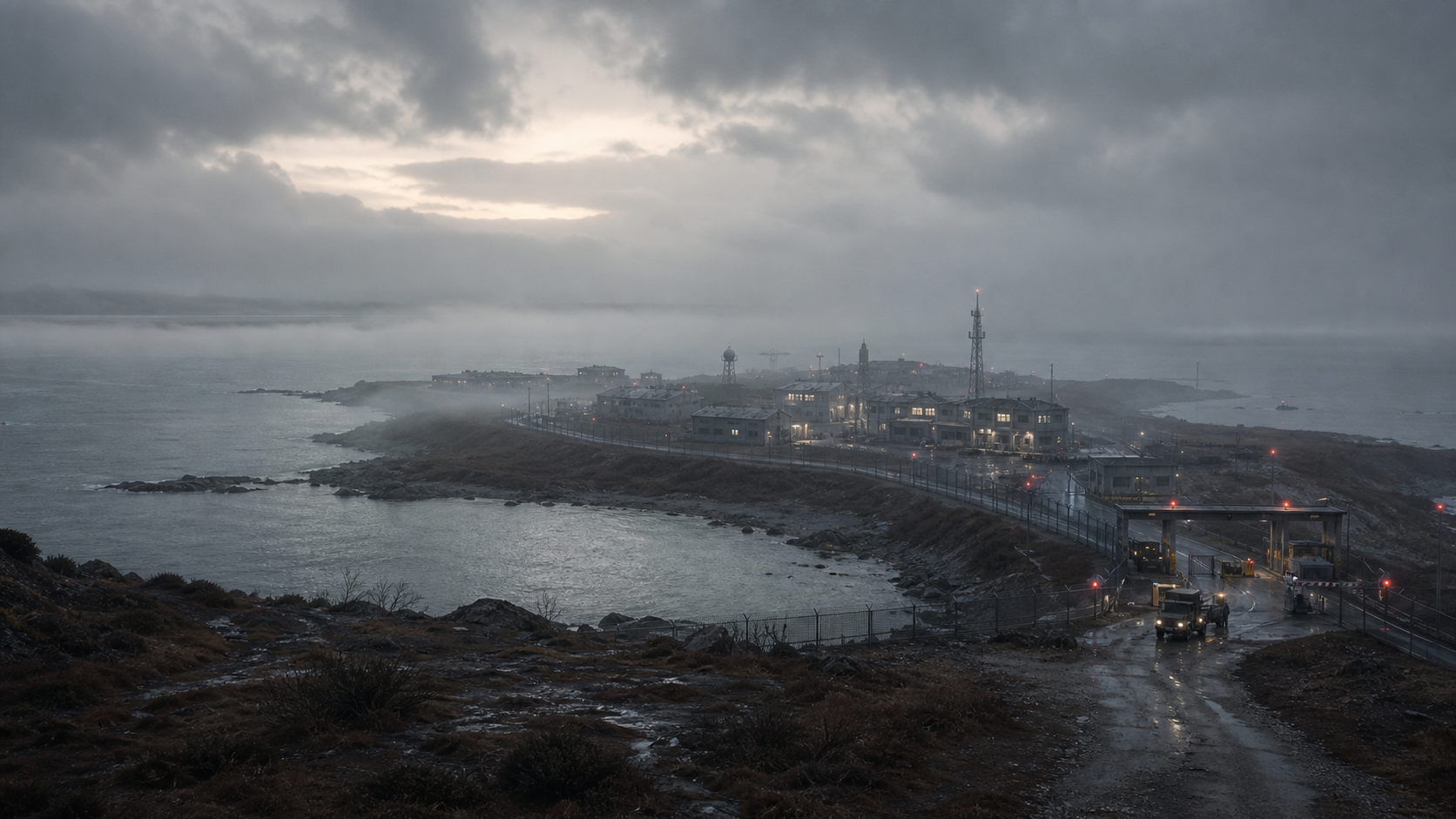
The Kate, Meg, Tasha, and Jenny rescue mission is a combined hostage-recovery and strategic-rescue operation launched after the fall of Plum Island. Its four named captives are Dr. Kate Lovato, firefighter Meg Pratt, and Parker Horn's daughters Tasha and Jenny Horn. Variant forces associated with the Bone Collector take them from the island and move them into New York, compelling Reed Beckham, Horn, surviving members of Team Ghost, and Jose Garcia's Variant Hunters to reenter enemy-controlled territory.
Open the interactive Kate, Meg, Tasha, and Jenny Rescue Mission view
Quick Facts
- Role
- Missions and Operations
- Aliases
- kate-meg-tasha-jenny-rescue-mission
Overview
The mission concentrates several levels of the original war into one objective. Kate is essential to the scientific work behind Operation Extinction and is carrying Reed's unborn child. Tasha and Jenny are children who have already survived the fall of Fort Bragg and the death of their mother, Sheila. Meg is a civilian survivor tied to Alex Riley, whose death during the Plum Island attack makes the pursuit a mission of grief as well as recovery. Saving any one of them would justify action for the people closest to them. Saving all four also preserves science, family continuity, and the principle that individuals still matter during a species-level emergency.
The operation is shaped by what the attackers have already demonstrated. The Bone Collector is not an ordinary infected predator. He commands other Variants, protects juveniles, uses human collaborators, retains fragments of speech and memory, and can keep prisoners alive for purposes beyond immediate feeding. His network makes New York a controlled environment rather than an empty ruin. The rescue succeeds, and the captives are recovered, but it cannot undo Riley's death, Plum Island's loss, or the trauma of being carried back into the city.
Mission information
- Field: Type; Detail: Hostage rescue, family recovery, and strategic-personnel operation
- Field: Chronology; Detail: Outbreak Year 0, immediately after the fall of Plum Island
- Field: Primary objective; Detail: Recover Kate Lovato, Meg Pratt, Tasha Horn, and Jenny Horn alive
- Field: Strategic objective; Detail: Preserve Kate's role in Operation Extinction and prevent loss of critical scientific knowledge
- Field: Principal field leaders; Detail: Reed Beckham; Parker Horn; Jose Garcia; Joe Fitzpatrick
- Field: Principal forces; Detail: Surviving Team Ghost personnel; Variant Hunters; attached military survivors; Apollo
- Field: Principal enemy; Detail: Bone Collector and associated Variants and human collaborators
- Field: Operational area; Detail: Plum Island aftermath, New York routes, ruined streets, lairs, and captive spaces
- Field: Immediate prior losses; Detail: Major Smith; Alex Riley; Plum Island personnel and infrastructure
- Field: Outcome; Detail: Four named captives recovered; Bone Collector threat ended; surviving forces continue Operation Extinction
- Field: Primary work; Detail: Extinction End
- Field: Related works; Detail: Extinction Evolution; "The Bone Collector"; The Fall of Fort Bragg
Background
Plum Island functions as a military-scientific refuge during the first war. It houses laboratories, soldiers, operators, families, and work necessary to produce the countermeasure used in Operation Extinction. The island's location creates distance from the main New York Variant population, but distance is not immunity. Evolved enemies can swim, use boats through collaborators, exploit insider knowledge, and coordinate an assault against targets more valuable alive than dead.
Extinction Evolution establishes the intelligence that makes the later abduction possible to understand. Garcia's Variant Hunters document rapid environmental adaptation and tactical bait in Key West. In Atlanta and New York, teams encounter juveniles, Alpha leadership, human collaborators, lairs, cocoons, and organized prisoner systems. The Bone Collector displays individual command and protection of young Variants. By the time he reaches Plum Island, the military has evidence that some enemies plan, preserve captives, and use humans as operational auxiliaries.
The fall of the island destroys any remaining assumption that laboratories and families occupy a protected rear area. Major Smith is killed. Alex "Kid" Riley dies during direct conflict with the Bone Collector. Survivors must move or preserve the bioreactor work while simultaneously responding to the abduction. The enemy has attacked the scientific center, the command structure, and the emotional core of Team Ghost in one event.
Kate Lovato
Kate is both a person Reed loves and a scientist whose knowledge affects the survival of the species. She has helped trace the origins and behavior of the Hemorrhage Virus, develop countermeasure strategy, and interpret Variant evolution. Capturing her threatens to remove expertise that cannot be recreated by recovering equipment alone.
She is also pregnant with Reed's child. Captivity therefore places two lives inside the objective and makes every delay personal. Reed must command while imagining what the Variants or collaborators may do to Kate and the baby. Kate must remain attentive to her own body while trying to protect Meg and the Horn girls.
Reducing Kate to a "strategic asset" would reproduce one of the series' recurring institutional failures. Scientists are valuable because of their knowledge, but they are also family members and decision-makers with their own agency. Both justify recovery.
Meg Pratt
Meg represents civilians whose survival becomes inseparable from military operations. A firefighter before the collapse, she has already endured New York, severe injury, displacement, and dependence on people she did not know before the outbreak. Her bond with Riley gives her a place in the extended Team Ghost community.
Riley's death immediately before the rescue intensifies her captivity. The person most closely connected to her future has been killed by the same enemy network now controlling her movement. Recovering Meg cannot restore Riley, but abandoning her would allow his death to become the first part of a complete destruction of the life they were beginning to build.
Her presence also prevents the mission from becoming a rescue of only scientists and soldiers' relatives. She has no national office or unique laboratory credential. Her life matters because the survivors still claim to be protecting people rather than merely preserving useful personnel.
Tasha Horn
Tasha is the older Horn daughter and has carried responsibility for Jenny since Sheila's sacrifice at Fort Bragg. Sheila's instruction that she protect her younger sister turns an ordinary sibling bond into a survival duty. During captivity, Tasha is again placed in a situation where adults and fortified institutions have failed, yet she remains expected to help keep Jenny composed.
For Parker Horn, Tasha is one of the last living links to Sheila and to the family he could not protect during Fort Bragg's collapse. Her capture threatens to repeat that loss. His strength as a Team Ghost operator does not shield him from the possibility that he will arrive too late a second time.
Jenny Horn
Jenny is younger and processes danger through immediate sounds, bodies, familiar adults, and concrete objects. At Fort Bragg, she offered her green blanket to cover Sheila because she could not understand that her mother would not wake. The later abduction repeats the terror of being moved through a world where the adults responsible for safety have been overwhelmed.
Her cries for Parker and her dependence on Kate and Tasha give the captive sequence its clearest child perspective. Jenny cannot plan an escape or understand why the Variants keep prisoners. Her survival depends on the captives maintaining solidarity and the rescuers refusing to treat New York as too dangerous to enter.
Command authority and mission force
President Jan Ringgold understands Kate's national importance and authorizes available forces to pursue recovery. The mission nevertheless depends on personal initiative. Reed and Horn would not view abandonment as an acceptable strategic choice, while Garcia and the Variant Hunters possess the most relevant recent experience with evolved Variant behavior.
The core field network includes Reed Beckham, Parker Horn, Jose Garcia, Rick Thomas, Ryan "Tank" Talon, Joe Fitzpatrick, Apollo, and surviving Team Ghost and Variant Hunter personnel. Exact team composition can change as casualties, injuries, and parallel Operation Extinction responsibilities divide available people. The defining feature is cooperation between units whose specialties have converged.
Team Ghost brings experience with New York, close rescue, tunnels, and the emotional discipline of operating around loved ones. The Variant Hunters bring field evidence on Alphas, juveniles, collaborators, aquatic movement, bait, and prisoner systems. Apollo contributes scent work and the ability to detect threats hidden from human vision. Naval and aviation survivors provide movement and extraction capability.
The operation is not a conventional assault to seize and govern New York. It is a limited mission to locate four people in terrain containing far more enemies than the rescuers can destroy. Success depends on tracking, speed, discrimination, and the ability to exploit conflict within the Variant population.
Operational problem
The first challenge is location. The captives are moved from Plum Island into a city of ruined streets, damaged buildings, tunnels, sewers, nests, and lairs. Variants climb and move faster than humans, possess acute senses, and can disappear through routes unavailable to vehicles. Collaborators can use boats, doors, radios, and weapons, adding human flexibility to the enemy network.
The second challenge is identification. The rescuers cannot solve the problem with indiscriminate bombardment because the four people they seek are inside the target environment. Every explosive, suppressive burst, or collapsed route may harm a captive or remove the only path to them.
The third challenge is time. Prisoner-taking proves the Variants can delay feeding, but it does not establish how long captives will remain alive or why each has been selected. The team cannot assume that strategic value recognized by humans will protect Kate, or that the Bone Collector shares a stable hostage doctrine.
The fourth challenge is emotional control. Reed has to avoid converting fear for Kate into a tactically reckless order. Horn must function while both daughters are missing and the memory of Sheila's death is active. Meg's connection to Riley gives the mission a revenge impulse. Garcia's own losses make any captive difficult to leave behind. Discipline means using those attachments as motivation without allowing them to destroy the rescue.
Captivity and movement through New York
The prisoners are carried or forced through ash, rain, streets, and controlled spaces while Kate tries to remain aware of Meg, Tasha, Jenny, and her pregnancy. Their condition demonstrates that the enemy can maintain a procession rather than merely attack whatever it encounters. Captives can be grouped, guarded, and moved toward a lair.
The Bone Collector's presence makes the environment more than a nest. His trophies, bone armor, limited speech, pack command, juvenile protection, and collaborators give him a recognizable authority. The captives are exposed to ritualized terror because violence communicates rank to both humans and Variants.
The mission also encounters rivalry or tension within Variant forces. The enemy is not a perfectly unified species under one consciousness. Leaders, packs, juveniles, and regional forms may have competing priorities. That fragmentation creates danger because behavior is unpredictable, but it can also create an opening. A rescue force may move while one group is focused on another threat.
For the captives, survival is collective. Kate's scientific value does not make her physically invulnerable. Meg's practical resilience does not remove grief. Tasha cannot guarantee Jenny's safety. Jenny's need, however, keeps the older captives oriented toward a human purpose. They remain people responsible to one another rather than becoming isolated pieces of prey.
Pursuit and recovery
The field force reenters New York under conditions created by earlier failed and partial operations. It knows the city contains concealed populations and that the Bone Collector can withstand punishment that would kill an ordinary Variant. The rescuers must move through a landscape where Operation Liberty, Variant occupation, fires, bombardment, and previous missions have altered routes.
Tracking is both physical and behavioral. The team searches for movement signs, scents, captive evidence, and the patterns of a leader returning toward protected territory. Prior knowledge of lairs and collaborator methods reduces uncertainty but cannot eliminate it.
Contact with the enemy becomes a fight to separate captives from the force controlling them. The rescuers cannot allow the Bone Collector's physical size or pack to fix them in place while the prisoners are moved elsewhere. Team Ghost and the Variant Hunters divide attention between security, pursuit, and direct engagement.
The four named captives are ultimately recovered alive. The success preserves Kate's work and pregnancy, reunites Horn with Tasha and Jenny, and returns Meg to the survivor network. The Bone Collector is killed during the culminating conflict. A fragment of Blake Chambers' human memory emerges near the end, distinguishing the man once lost in the East River from the creature whose body has to be stopped.
That recognition does not reduce the mission's stakes or excuse the Bone Collector's actions. It confirms one of the series' most disturbing biological themes: memory can persist inside a transformed body without restoring reliable human agency.
Losses and psychological aftermath
Riley's death is the operation's defining loss even though it occurs during the fall immediately before the pursuit. His absence affects Meg, Fitz, Reed, and the entire Team Ghost family. Recovering Meg ensures that his connection to the civilian future is not erased, but grief remains part of the victory.
Plum Island itself is a strategic loss. A place can be retaken or replaced, but confidence that it is a protected home is gone.
Kate returns with the knowledge that her work made her a target and that her unborn child can be threatened through her. Tasha and Jenny survive a second institutional collapse and another period of Variant control. Their later lives show continuing trauma rather than a clean reset. Jenny's sensitivity to scratching sounds and Tasha's protective vigilance belong to a history that includes both Fort Bragg and New York.
Meg returns without Riley. Her rescue is therefore an incomplete restoration by design. Survival creates the possibility of future relationships and purpose, but it does not reproduce the life she expected before the attack.
The rescuers also carry consequences. Horn has proof that he can recover his children, but no guarantee that a secure place will remain secure. Reed learns again that leadership cannot separate the national objective from his family. Garcia and the Marines add another mission to a casualty history already marked on their bodies and memories.
Strategic consequences
Kate's recovery keeps the scientific side of Operation Extinction viable. Equipment, notes, and bioreactors matter, but expertise is not interchangeable. Her ability to interpret new evidence and coordinate with other scientists remains necessary as the countermeasure moves from experiment to global operation.
The rescue confirms that evolved Variants take prisoners, preserve hierarchy, use collaborators, and display conflict within their own population. These findings affect doctrine far beyond the four captives. Future teams must plan for living prisoners in lairs, which limits bombardment and makes reconnaissance morally essential.
The mission also validates combined-unit operations. Team Ghost alone cannot carry every specialization. The Variant Hunters' biological reconnaissance and experience with advanced Alphas complement Team Ghost's rescue and urban expertise. Naval and aviation assets make entry and recovery possible.
Politically, Ringgold's willingness to recover Kate for both strategic and personal reasons helps define the government she later builds. Humanity will not be saved by treating people only as inputs to an operation. A state worth preserving must protect scientists, children, civilians, and soldiers as persons even when their usefulness differs.
Relationship and connection map
- Kate Lovato and Reed Beckham: Scientist and field leader whose relationship makes the national objective inseparable from family survival.
- Parker, Tasha, and Jenny Horn: Father and daughters confronting a second family-separation crisis after Sheila's sacrifice.
- Meg Pratt and Alex Riley: Civilian survivor and fallen operator; the rescue preserves Meg but cannot restore their expected future.
- Joe Fitzpatrick and Apollo: Team Ghost continuity figures who bring New York experience and personal loyalty to the pursuit.
- Jose Garcia, Rick Thomas, and Ryan Talon: Variant Hunters whose reconnaissance history helps interpret the Bone Collector's network.
- Bone Collector and collaborators: Enemy command structure combining altered strength, pack hierarchy, prisoner-taking, and human operational support.
- Operation Extinction: Species-level project whose continuity depends partly on recovering Kate alive.
- Fall of Plum Island: Triggering disaster and source of the mission's immediate deaths, displacement, and urgency.
Chronology and consequences
- "The Fall of Fort Bragg" - Establishes Tasha and Jenny's first collapse, Sheila's sacrifice, and the family history the rescue threatens to repeat.
- "The Bone Collector" - Establishes Blake Chambers' human past and transformation.
- Extinction Evolution - Documents the Bone Collector's command behavior, collaborators, juvenile protection, and the field intelligence later used by the rescuers.
- Extinction End - Contains the fall of Plum Island, abduction, pursuit, rescue, final Bone Collector confrontation, and return of the captives.
- Extinction Aftermath and Dark Age - Show the family and psychological consequences that continue after physical recovery.
Continue Exploring
Connected Universe
Books and Stories
Locations, Events, and Lore
Sources
- Extinction End, Extinction End - Chapter 1
- Extinction End, Extinction End - Chapter 2